
Moving a hot tub is a specialty task that goes far beyond simply loading it onto a truck. These units are incredibly heavy, complex pieces of equipment, and require specific preparation steps to ensure a safe and efficient relocation. One of the most frequently asked questions homeowners have is “how to prepare a hot tub for moving,” and the answer involves several critical stages that often require professional assistance.
From completely draining all water to ensuring the electrical power is safely disconnected, each step is vital. Neglecting proper preparation can lead to personal injury, damage to the hot tub, or even serious electrical hazards. This guide will outline the essential steps for draining a hot tub, ensuring a hot tub disconnect is handled correctly, and making sure the unit is dry and ready for professional hot tub movers.
💡 Key Takeaway: Proper hot tub preparation—draining, electrical disconnect, and thorough drying—is non-negotiable for a safe and successful move.
Essential Steps for Hot Tub Preparation
Step 1: Safely Disconnect Electrical Power
This is arguably the most critical and potentially dangerous step. Hot tubs are hard-wired into your home’s electrical system, and attempting to disconnect it yourself without proper knowledge can lead to severe injury or electrical shock. Your moving company will not handle this step; it is your responsibility to ensure the power is safely cut before their arrival.
- Turn Off Breaker: Locate the dedicated circuit breaker for your hot tub in your main electrical panel and switch it to the “OFF” position.
- Utilize GFCI Disconnect: Most hot tubs have a secondary Ground Fault Circuit Interrupter (GFCI) disconnect box located near the tub. Turn this off as well.
- Professional Electrician is Recommended: For hard-wired hot tubs, it is strongly recommended—and often legally required by code—to hire a licensed electrician to safely disconnect the wiring from the tub’s control panel. They will ensure all power is off and safely cap the wires.
- Plug-and-Play Tubs: If your hot tub is a smaller, “plug-and-play” 120V unit, simply unplug it from its dedicated GFCI outlet once the breaker is off. Secure the cord to prevent damage.
Never work with electrical wiring if you are uncomfortable or unqualified. Prioritize safety by engaging a professional.
Step 2: Thoroughly Drain All Water
A hot tub can hold hundreds of gallons of water, adding thousands of pounds to its weight. Moving a water-filled or partially filled hot tub is impossible and extremely dangerous. Complete draining is essential.
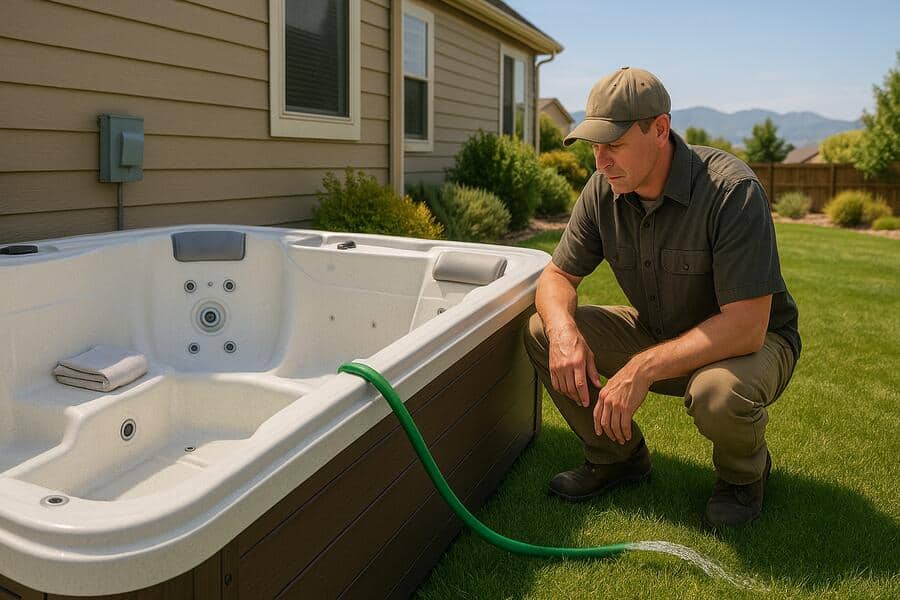
- Locate Drain Valve: Most hot tubs have a drain valve (spigot) located on the lower exterior. Attach a standard garden hose to this valve.
- Route Water Away: Direct the hose to a suitable drainage area, like a storm drain, street gutter, or a large patch of lawn where the water can be absorbed without causing damage or flooding. Be mindful of any chemicals in the water that might harm plants or pets.
- Use a Submersible Pump: For faster draining, or if your tub doesn’t have an easily accessible drain valve, a submersible pump can be placed inside the tub to quickly remove the water through a hose.
- Run Jets Briefly: Once the main tub is drained, turn the power back on briefly (if safe to do so after an electrician has worked on it, or if it’s a plug-and-play unit) and run the jets for a few seconds. This helps clear residual water from the internal plumbing lines. Immediately power off again.
Allow ample time for this step, as draining can take several hours depending on tub size and pump use.
💡 Key Takeaway: Always hire a licensed electrician for hard-wired hot tub disconnects to prevent serious injury or property damage. Movers will not handle electrical work.
Step 3: Ensure All Lines Are Dry and Clean
Once drained, it’s critical to remove any remaining moisture from the hot tub shell and internal plumbing. Residual water adds unnecessary weight, can leak during transport, and can even freeze and damage internal components if moving in colder climates.
- Wipe Down Shell: Use towels or a wet/dry vacuum to meticulously remove all standing water from the tub’s shell, seats, and footwells.
- Vacuum Plumbing Lines: A wet/dry vac can be used to suction out water from the jet nozzles and filter housing to ensure as much water as possible is removed from the plumbing lines.
- Remove Filters: Take out all filters, clean them, and allow them to dry separately. They can be transported in a box.
- Air Dry: Leave the hot tub open and uncovered for at least 24-48 hours (weather permitting) to allow air circulation to thoroughly dry all internal components and plumbing. In humid conditions, a small fan placed inside might accelerate drying.
A dry hot tub is a lighter, safer hot tub for transport.
Step 4: Secure the Hot Tub Cover and Clear Path
The hot tub cover is usually bulky and heavy, but essential for protecting the tub during transit. Ensure it’s prepared and that the path for the movers is clear.
- Clean and Secure Cover: Clean the hot tub cover thoroughly and allow it to dry. If it’s a folding cover, secure it tightly with straps or rope to prevent it from flapping open or being damaged during the move. If you use a cover lifter, remove it.
- Remove Accessories: Take out any removable items like pillows, headrests, or floating accessories. Pack them in boxes.
- Clear the Path: Walk the entire path from the hot tub’s current location to the street where the moving truck will be parked. Remove any obstacles such as garden furniture, planters, hoses, children’s toys, and clear any landscaping that might impede movement. Ensure gates are unlocked or removed if necessary.
Hot Tub Moving Preparation Checklist
| Preparation Task | Key Actions | Who Does It |
|---|---|---|
| Disconnect Electrical Power | Flip breaker/GFCI, unplug (if 120V), or hire electrician (if hard-wired). | Homeowner or Licensed Electrician |
| Thoroughly Drain Water | Use drain valve/submersible pump, run jets briefly. | Homeowner |
| Dry All Lines & Shell | Wipe, vacuum residual water, remove filters, air dry. | Homeowner |
| Secure Cover & Clear Path | Clean cover, strap tightly, remove all obstacles. | Homeowner |
💡 Key Takeaway: A clean, secured cover and a completely clear path from the tub to the truck will ensure movers can work efficiently and safely on moving day.
Conclusion
Knowing how to prepare a hot tub for moving is just as crucial as hiring the right professionals to move it. The process involves more than just a quick drain; it requires careful electrical disconnect, meticulous water removal, thorough drying, and securing all components. By taking these essential steps—especially engaging a licensed electrician for hard-wired units and ensuring the tub is bone dry—you not only safeguard your valuable investment but also ensure the safety of the moving crew and prevent unexpected delays. Proper preparation makes all the difference for a smooth and successful hot tub relocation.
Have questions about how to prepare a hot tub for moving? Reach out to our team today.
Frequently Asked Questions About Hot Tub Preparation for Moving
Do hot tub movers handle the electrical disconnect?
No, professional hot tub movers typically do not handle electrical disconnection or reconnection. For legal and safety reasons, this task must be performed by a licensed electrician. Your hot tub should be fully disconnected from its power source before the movers arrive.
How long does it take to drain a hot tub?
The time it takes to drain a hot tub varies depending on its size and the method used. Using the tub’s internal drain valve with a garden hose can take anywhere from 2 to 4 hours. A submersible pump can significantly speed up the process, often draining the tub in 30 minutes to an hour.
What if there’s residual water in the hot tub’s lines?
Even a small amount of residual water can add unnecessary weight and potentially cause damage. In colder climates, this water can freeze and expand, cracking internal plumbing. For this reason, it’s critical to dry the tub as thoroughly as possible, including using a wet/dry vac on the jets and allowing ample air dry time, especially if moving during winter.
Should I remove the hot tub’s cover lifter?
Yes, any attached hot tub cover lifter should be removed before moving day. These devices are typically not designed to withstand the stresses of relocation and can easily be damaged or cause damage to the tub if left attached. Detach it and transport it separately or reinstall it at the new location.

