The allure of a relaxing soak in a hot tub is undeniable, but the thought of relocating one can quickly turn that calm into a headache. Many homeowners wonder, “can you move a hot tub yourself?” While technically possible in some very specific, ideal circumstances, “DIY hot tub moving” is one of the most physically demanding, logistically complex, and potentially dangerous tasks you can undertake during a move. These large, awkward, and incredibly heavy items are notorious for causing personal injury and significant property damage if handled improperly.
From the delicate plumbing and electrical systems to the sheer bulk of the unit, “moving a spa” demands specialized equipment, a trained crew, and meticulous planning. This guide will explore the real risks involved in a DIY attempt and highlight why professional expertise is almost always the safest and smartest investment for relocating your hot tub. For complex moves, reaching out to a professional spa moving company is often the best choice.
💡 Key Takeaway: Moving a hot tub yourself is an extremely challenging and risky endeavor due to its immense weight, awkward shape, and delicate components, making professional help highly advisable.
The Real Challenges of DIY Hot Tub Moving
1. Extreme Weight and Awkward Shape
Hot tubs are far heavier than most people anticipate, even when completely empty. This makes them incredibly difficult to maneuver safely.
- Immense Weight: An empty hot tub, depending on its size, can weigh anywhere from 500 to over 1,000 pounds. Trying to lift and carry this weight with inadequate manpower and equipment is a recipe for disaster. Never attempt to move a hot tub that still contains water, as it can easily exceed 3,000-4,000 pounds, making it impossible to move and certain to cause structural damage.
- Awkward Dimensions: Their large, bulky, and often irregular shapes make hot tubs incredibly difficult to get a secure grip on. They are wide, long, and can be top-heavy, leading to unpredictable shifts in weight during movement.
- Access Challenges: Hot tubs are frequently located in backyards, on decks, or in challenging spaces with gates, stairs, narrow pathways, or soft ground. Maneuvering such a heavy, unwieldy object through these obstacles significantly increases the difficulty and risk.
2. High Risk of Damage to the Shell, Plumbing, and Electrical
A hot tub is more than just a large tub; it’s a sophisticated piece of machinery with delicate internal components that are easily damaged during a DIY move.
- Shell Damage: The acrylic shell of a hot tub can crack or chip if subjected to impacts, scrapes, or uneven pressure. Dragging the tub across rough surfaces can also severely scratch or damage the bottom skirt.
- Plumbing Leaks: The network of jets, pumps, and PVC piping within a hot tub is fragile. Twisting, dropping, or even tilting the tub improperly can stress and break these connections, leading to expensive leaks once the tub is reinstalled and filled. Residual water in the lines can also freeze and crack pipes if moved in colder climates.
- Electrical System Damage: Before moving, the hot tub’s electrical supply must be completely disconnected from the main power source (usually a dedicated 220V GFCI breaker). Attempting to move a tub while still connected to power is extremely dangerous. Improper handling can also damage the control panel, wiring, or heater elements, leading to costly repairs or safety hazards.
💡 Key Takeaway: “DIY hot tub moving” is perilous due to the tub’s extreme weight (500-1000+ lbs empty), awkward shape, and access challenges. It also carries a high risk of damaging the fragile acrylic shell, delicate internal plumbing (leading to leaks), and the complex electrical system if not handled by experts.
Professional Equipment and The Smart Solution
3. Specialized Equipment and Professional Techniques
Professional hot tub movers don’t just rely on brute strength. They use a combination of specialized equipment and proven techniques to ensure a safe and efficient relocation.
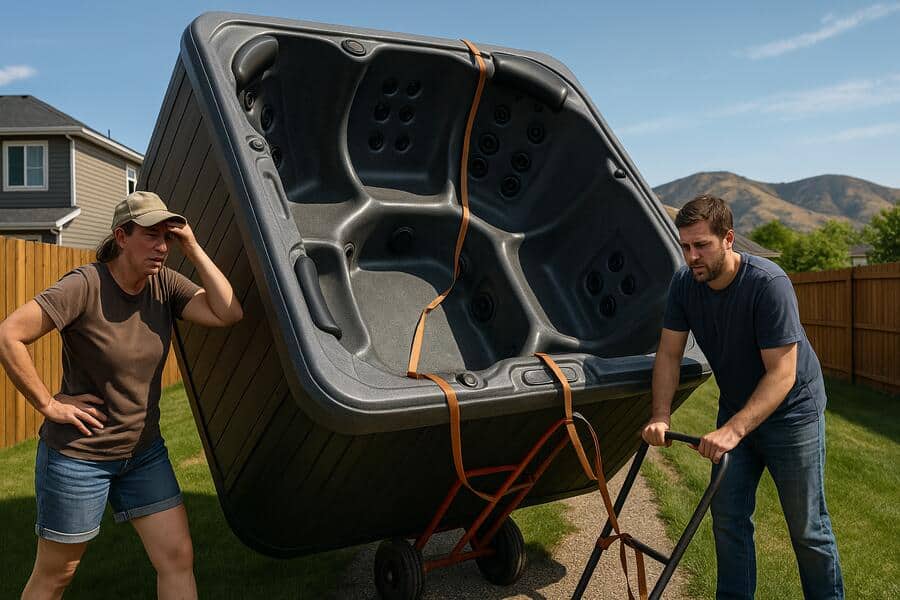
- Spa Dollies: These are heavy-duty, reinforced dollies specifically designed to support and move hot tubs. They often feature large, sturdy wheels to navigate varied terrain and ensure stable transport.
- Tilt Carts/Trailers: For maneuvering through tight spaces or loading onto trucks, professionals often use tilt carts or specialized trailers that allow them to safely tilt the hot tub on its side, reducing its footprint.
- Moving Straps and Blankets: Heavy-duty moving straps are used to secure the hot tub to dollies and to prevent shifting during transit. Thick moving blankets and padding protect the shell from scratches and impacts.
- Air-Ride Trucks: For long-distance moves, professionals often use trucks equipped with air-ride suspension, which minimizes vibrations and jolts, further protecting the hot tub’s delicate components.
- Experienced Crews: Beyond equipment, professional movers have trained crews who understand the physics of “moving a spa,” including proper lifting techniques, weight distribution, and how to navigate obstacles safely without causing damage.
4. The Importance of Draining and Disconnecting Properly
Before any moving begins, the hot tub must be meticulously prepared. This is a critical step that cannot be rushed or overlooked.
- Complete Draining: The hot tub must be completely drained of all water. This includes not just the main drain, but also tilting the tub slightly to ensure all water is out of the heater coils and plumbing lines, especially if moving in freezing weather.
- Electrical Disconnection: The power supply must be turned off at the main breaker, and the electrical connections at the tub itself must be safely disconnected by a knowledgeable individual. Never attempt to move a hot tub with any electrical connection still active.
- Cover and Secure: Once drained and disconnected, the hot tub cover should be secured in place or removed and packed separately. Any loose components, like headrests or filters, should be removed and stored safely.
- Winterization (if applicable): If moving in a cold climate or storing the tub, proper winterization procedures (blowing out lines, adding antifreeze) are essential to prevent damage from freezing water.
DIY vs. Professional Hot Tub Moving
| Aspect | DIY Moving | Professional Moving |
|---|---|---|
| Weight & Maneuverability | Extremely challenging, high risk of injury & damage. | Managed with specialized equipment & trained crew. |
| Equipment Needed | Basic appliance dolly, risk of inadequacy. | Spa dollies, tilt carts, heavy-duty straps, padding. |
| Damage Risk (Tub) | High: Cracked shell, broken plumbing, electrical damage. | Low: Expertise in handling, proper bracing & transport. |
| Damage Risk (Property) | High: Scratched floors, dinged walls, damaged landscaping. | Low: Protective measures, careful navigation. |
| Safety Concerns | Very High: Back injury, crush injuries, electrical shock. | Low: Safety protocols, trained personnel, appropriate gear. |
| Overall Cost | Low upfront, but high potential for costly repairs or injury bills. | Higher upfront, but cost-effective by preventing damage & injury. |
💡 Key Takeaway: Professional hot tub movers use specialized spa dollies, tilt carts, heavy-duty straps, and trained crews to navigate the challenges. Crucial preparation steps include completely draining the tub and safely disconnecting its power, with proper winterization if applicable.
Conclusion
While the question “can you move a hot tub yourself” might cross your mind, the myriad of risks associated with “DIY hot tub moving” makes it a task best left to the professionals. The immense weight, awkward shape, and delicate internal components of “moving a spa” pose significant threats to both personal safety and the integrity of the unit. The cost of potential injuries or repairs to your hot tub and home will almost certainly outweigh the savings of attempting a DIY move. For a stress-free, safe, and successful relocation of your hot tub, investing in experienced hot tub movers equipped with the right tools and expertise is the most reliable choice.
Have questions about how to moving a spa? Reach out to our team today.
Frequently Asked Questions About Moving a Hot Tub
How many people do you need to move a hot tub?
Even with specialized equipment, you typically need at least 3-4 strong, experienced individuals to safely move an empty hot tub. For larger tubs, challenging access, or if moving without specialized dollies, more people may be required.
What kind of dolly do you need to move a hot tub?
You need a heavy-duty appliance dolly or, ideally, a specialized spa dolly. Regular furniture dollies or hand trucks are usually insufficient and can break under the weight or damage the tub. Spa dollies are designed to support the hot tub’s weight and navigate various terrains.
Can residual water in the hot tub’s plumbing cause problems during a move?
Yes, absolutely. Even small amounts of residual water can cause significant issues. If moving in cold weather, this water can freeze and expand, cracking the pipes, pumps, or heater. Even in warmer climates, residual water adds unnecessary weight and can slosh around, creating imbalances and potentially damaging internal components. Thorough draining is crucial.
What if my hot tub needs to go over a fence or up a steep incline?
These are highly specialized scenarios that almost certainly require professional hot tub movers. They may use specialized lifting equipment (like cranes or forklifts) or specific rigging techniques. Attempting such a move yourself is extremely dangerous and could result in severe injury or irreparable damage to the hot tub and property.