
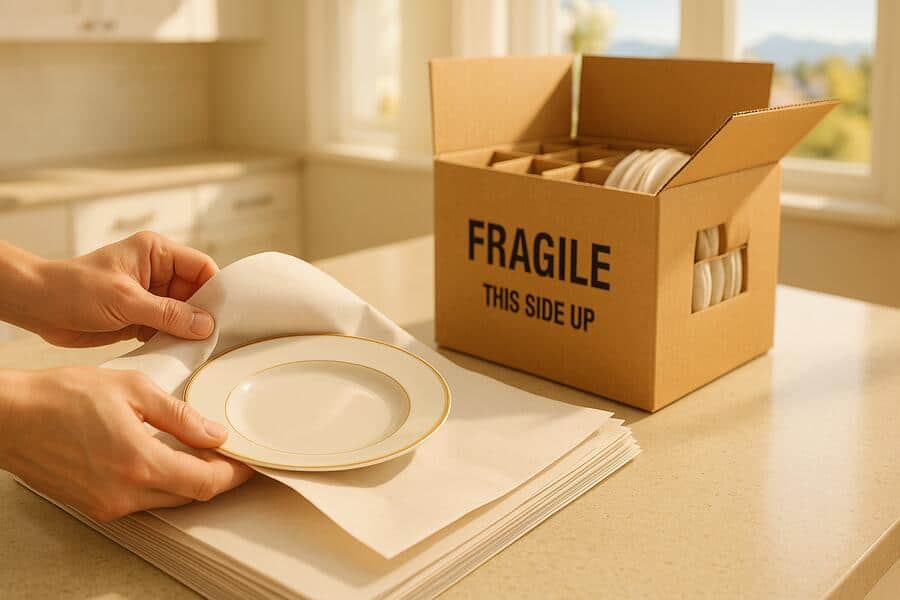
One of the most daunting tasks when preparing for a move is tackling the kitchen, especially when it comes to fragile items. Learning “how to pack dishes for moving” and glassware properly is crucial to prevent breakage and ensure your cherished items arrive safely. While it might seem intuitive to simply stack plates or toss glasses into a box, professional packers employ specific techniques and materials designed to withstand the rigors of transit.
From specialized boxes to expert wrapping methods, understanding “packing glassware” and other “packing fragile items” like pros can save you stress, time, and money on replacements. This guide will walk you through the proven strategies that professional movers use to ensure your most delicate kitchenware is protected every step of the way. For a more in-depth guide to all aspects of the moving process, you can read the full breakdown of our comprehensive services.
💡 Key Takeaway: Proper packing of dishes and glassware is essential for a stress-free move. Professional techniques involve specialized boxes, careful wrapping, and strategic placement to prevent breakage during transit.
Professional Techniques for Dishes and Glassware
1. Specialized Boxes: Dish Packs and Cell Kits
The foundation of safely packing fragile kitchenware starts with the right box. Professionals rarely use standard moving boxes for these items.
- Dish Packs (Dish Barrels): These are heavy-duty, double-walled corrugated boxes specifically designed for dishes. Their stronger construction provides superior protection against crushing and impacts compared to single-walled boxes. They come in various sizes, with larger ones often being called “dish barrels.”
- Cell Kits (Dividers): These are cardboard inserts that create individual compartments within a dish pack. They are indispensable for “packing glassware” and stemware, preventing items from touching each other.
- Cell kits typically come in different sizes to accommodate various glass heights and widths.
- They can be configured to create smaller or larger compartments as needed, offering flexibility for different types of items.
- Benefits: Using these specialized boxes minimizes movement, distributes weight evenly, and provides multiple layers of cushioning, drastically reducing the risk of breakage.
2. The Art of Paper Wrapping: Individual Protection
Each individual item, regardless of whether it goes into a cell kit, requires proper wrapping. This isn’t just about cushioning; it’s about creating a protective barrier.
- Packing Paper (Newsprint): This is the go-to material. It’s clean, soft, affordable, and flexible. Avoid using newspaper directly on items, as the ink can transfer.
- Individual Wrapping: Every plate, bowl, cup, and glass is wrapped individually.
- For Plates: Place the plate in the center of a stack of 2-3 sheets of packing paper. Pull one corner over the plate, then another, tucking the paper around the plate. Continue wrapping diagonally, crumpling excess paper around the edges to form a protective cushion.
- For Bowls: Use a similar technique, ensuring the entire surface is covered. For deeper bowls, crumple paper inside before wrapping.
- For Glasses/Stemware: Crumple a small piece of paper and stuff it into the glass’s opening. Then, lay the glass on its side on a stack of 2-3 sheets of paper, roll it up, and tuck the excess paper around the rim and base. Pay extra attention to delicate stems on wine glasses.
- Layering: For very delicate or valuable items, a second layer of bubble wrap over the packing paper provides an additional layer of shock absorption.
💡 Key Takeaway: Professionals use double-walled “dish packs” and “cell kits” (dividers) for superior protection. Each item is individually wrapped in clean packing paper, with extra care for delicate stems and a second layer of bubble wrap for added security.
Strategic Placement and Cushioning
3. Vertical Packing for Plates: The Golden Rule
This is perhaps the most counter-intuitive, yet crucial, rule for “how to pack dishes for moving.”
- Always Pack Plates Vertically: Plates should be placed on their edges inside the box, just like records in a crate. Never stack them flat on top of each other.
- Why Vertical? When plates are stacked flat, the weight from above (other plates, box contents, or even other boxes) concentrates pressure on the center of the plates, making them highly susceptible to cracking or breaking from vibration or impacts. When packed vertically, the pressure is distributed more evenly across the plate’s strongest dimension, making them much more resistant to breakage.
- Layering in Dish Packs:
- Start with a generous layer of crumpled packing paper (at least 2-3 inches thick) at the bottom of the dish pack for cushioning.
- Place the heaviest, largest plates first, vertically, along one side of the box.
- Use crumpled paper as dividers between each plate or small stack of plates.
- Continue layering lighter plates on top of each other, always vertically, separating with paper.
4. Cushioning, Gaps, and Labeling
Even with careful wrapping and placement, gaps in the box are an invitation for trouble. Proper cushioning and clear labeling are the final protective measures.
- Fill Every Gap: Once all items are in the box, fill any remaining voids or gaps with additional crumpled packing paper, bubble wrap, or soft towels. The goal is to make sure nothing can shift or move inside the box when shaken gently.
- Top Cushioning: Add another generous layer (2-3 inches) of crumpled paper on top of the packed items before sealing the box. This provides essential cushioning from above.
- Tape Securely: Use strong packing tape to seal all seams of the box. Reinforce the bottom with extra tape.
- Label Clearly: Label the box on at least two sides with “FRAGILE,” the room it belongs to (e.g., “Kitchen”), and “THIS SIDE UP” arrows. This alerts movers to handle it with extra care and ensures it’s placed correctly in the new home.
Fragile Item Packing Summary
| Item Type | Box Type | Wrapping Method | Placement |
|---|---|---|---|
| Plates | Dish Pack (Double-Walled) | Individually in packing paper, bundle of 2-3. | Vertically (on edge) with crumpled paper between. |
| Bowls | Dish Pack | Individually in packing paper, crumpled paper inside. | Stacked (nestable) with paper in between, or vertically if possible. |
| Glasses/Mugs | Dish Pack with Cell Kit | Crumpled paper inside, then wrapped individually in packing paper. | Into individual cell kit compartments. |
| Stemware | Dish Pack with Cell Kit | Extra care for stem; crumpled paper inside, then individually wrapped in paper & bubble wrap. | Into individual cell kit compartments, upside down if possible. |
💡 Key Takeaway: The golden rule for dishes is to pack plates vertically (on edge) to distribute pressure and prevent cracking. Always fill all voids with crumpled paper, and label boxes clearly with “FRAGILE” and “THIS SIDE UP.”
Conclusion
Mastering “how to pack dishes for moving” and “packing glassware” like the pros is an investment in the safety of your belongings and your peace of mind. By utilizing specialized dish packs and cell kits, meticulously wrapping each item in clean packing paper, and adhering to the crucial rule of vertical plate packing, you can significantly reduce the risk of breakage. Remember to fill all voids with cushioning and clearly label every box. While it takes extra time and attention, adopting these professional techniques ensures your fragile kitchenware arrives at your new home intact and ready to be enjoyed.
Have questions about how to packing fragile items? Reach out to our team today.
Frequently Asked Questions About Packing Dishes and Glassware
Can I use regular newspaper to wrap my dishes?
While newspaper can provide some cushioning, it’s generally not recommended for direct contact with dishes and glassware, especially lighter colored items. The ink from newspaper can easily transfer onto your items, requiring extra cleaning at your new home. Clean packing paper (newsprint) is a much better, ink-free alternative.
How much packing paper do I need for a typical kitchen?
Packing paper is used generously for fragile items. For a standard kitchen, you might need several bundles (25-50 lbs) of packing paper. It’s always better to overestimate than to run out mid-packing. You’ll need it for individual wrapping, internal cushioning, and filling voids.
Is bubble wrap always necessary for fragile items?
Bubble wrap provides excellent shock absorption, but it’s often used as a secondary layer over packing paper, especially for very delicate or valuable items like fine china or crystal. Packing paper creates a tight, protective layer directly around the item, while bubble wrap adds bulk and cushioning. For most everyday dishes and glasses in a cell kit, individual paper wrapping is often sufficient.
Should I wash dishes and glasses before packing them?
Yes, absolutely. Ensure all dishes, glasses, and kitchenware are thoroughly washed, rinsed, and completely dry before packing. Food residues or moisture can lead to mold, mildew, or odors during transit. Clean items also prevent any residue from hardening or affecting other items in the box.

