
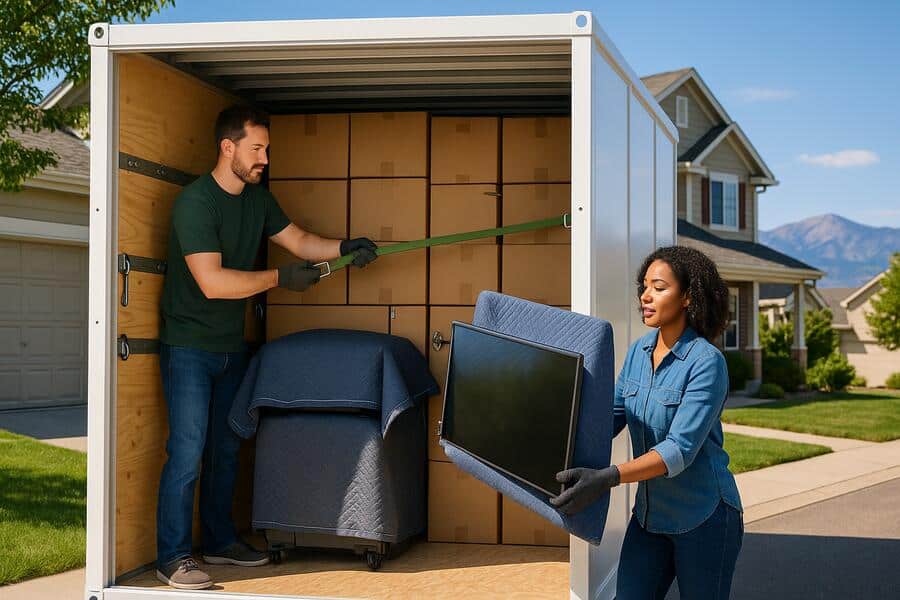
When you opt for a moving container or portable storage unit, you’re taking control of a significant part of your relocation. However, this control comes with the responsibility of understanding “how to load a moving container” correctly. Unlike a full-service move where professionals handle the packing and loading, DIY container loading requires strategic planning and execution to prevent damage to your belongings in transit.
The unique dynamics of a portable storage unit mean that what works for a moving truck might not be sufficient for a container that will be lifted, jostled, and potentially stacked. This guide will provide essential insights into proper “container loading,” focusing on weight distribution, securing your load, and why a tighter pack is crucial for these versatile moving solutions. For those who prefer a professional touch, our loading and unloading help can make all the difference.
💡 Key Takeaway: Proper loading of a moving container is critical for protecting your belongings. It requires specific strategies for weight distribution and securing items, often more stringent than those for traditional moving trucks.
Key Strategies for Effective Container Loading
1. Strategic Weight Distribution
Even weight distribution is paramount in a moving container. An unbalanced load can lead to shifting cargo, container instability during transport, and potential damage to your items.
- Heaviest Items First and Low: Always load your heaviest items (appliances, large furniture, boxes of books) on the bottom, centered over the container’s main structural beams. This lowers the center of gravity and enhances stability.
- Even Side-to-Side: Distribute heavy items evenly across the width of the container. Avoid concentrating all heavy items on one side, which can cause the container to tilt or stress its structure.
- Front-to-Back Balance: While loading from front to back is typical, ensure that the overall weight is balanced across the length of the container. Avoid putting all heavy items at one end. If you have multiple heavy items, try to distribute them throughout the length.
- Avoid Overloading: Be mindful of the container’s maximum weight limit. Overloading can void insurance, damage the container, and pose safety risks during transport. Refer to the provider’s specifications for exact limits.
2. Securing Your Load: No Gaps Allowed
Unlike a moving truck where items might be in contact with a driver for a shorter period, portable storage units are designed for independent transport, often over long distances or even via rail. This means preventing any movement inside is critical.
- Pack Tightly and Fill Voids: The golden rule for “portable storage loading” is to pack as tightly as possible. Every inch of space should be utilized, reducing opportunities for items to shift. Use soft items like blankets, pillows, towels, or crumpled packing paper to fill any remaining voids.
- Use Moving Blankets and Padding: Protect furniture, appliances, and delicate items with moving blankets or furniture pads. This prevents scratches, dents, and chips when items rub against each other during transit.
- Tie-Down Straps and Ratchets: Utilize the tie-down rings or rails typically found inside moving containers. Secure major sections of your load with heavy-duty moving straps or ratchet straps.
- Strap down appliances and large furniture pieces individually or in groups.
- Create “walls” of boxes and secure them with straps to prevent them from toppling forward or backward.
- Ensure straps are tight and secure but not so tight that they damage your belongings.
- Building a Wall: Start by loading heavy, sturdy items against the back wall, creating a solid base. Build upward, placing lighter items on top of heavier ones. Continuously brace and secure each section as you go.
💡 Key Takeaway: Prioritize weight distribution by loading the heaviest items low and centered, balancing weight side-to-side and front-to-back. Pack containers tightly, fill all voids, and use tie-down straps to secure major sections of your load, preventing any internal movement.
Advanced Considerations for Portable Storage
3. Why Containers Need Tighter Packing Than Moving Trucks
The structural differences and transport methods for moving containers necessitate a more rigorous approach to packing compared to traditional moving trucks.
- Multiple Modes of Transport: Moving containers can be transported by truck, rail, or even ship. Each mode introduces different types of forces and vibrations (e.g., vertical lifting, lateral sway, sudden stops). A tighter, more securely strapped load is better equipped to handle these varied dynamics.
- No Driver Intervention: Once your container is loaded and sealed, there’s no driver to “feel” the load shifting or make adjustments. Your packing job is the only defense against damage.
- Stacking Potential: Some portable storage units are designed to be stacked. This adds vertical pressure and introduces new vectors for movement, making internal stability even more critical.
- Weather Exposure: While containers are generally weatherproof, moisture and temperature fluctuations can still affect items if not properly packed and protected.
4. Essential Tools and Best Practices
Having the right tools and following best practices can significantly enhance the safety and efficiency of your “container loading” process.
- Appliance Dolly: Indispensable for moving heavy items like refrigerators, washers, and dryers.
- Furniture Dolly: Useful for larger, but lighter, furniture pieces.
- Moving Blankets/Pads: Essential for protecting surfaces and filling gaps.
- Ratchet Straps: Key for securing items to tie-down points.
- Utility Knife: For opening boxes and cutting packing materials.
- Markers: For labeling boxes clearly.
- Plan Your Layout: Before you even start loading, have a rough idea of where your largest and heaviest items will go.
- Hazardous Materials: Never load flammable liquids, aerosols, or other hazardous materials into a moving container. Federal regulations prohibit shipping many such items in household goods.
- Fragile Items: Pack fragile items meticulously in appropriately sized boxes, clearly labeled, and load them last, ensuring they are not crushed by heavier items.
Container Loading Checklist
| Step | Description |
|---|---|
| Preparation |
|
| Loading Heavy Items |
|
| Building Layers |
|
| Securing the Load |
|
| Final Steps |
|
💡 Key Takeaway: Moving containers demand tighter packing than trucks due to multiple transport modes and potential stacking. Employ appliance dollies and ratchet straps, plan your load meticulously, and strictly avoid hazardous materials to ensure safe transit.
Conclusion
Successfully “how to load a moving container” is a skill that combines common sense with specific best practices. By focusing on strategic weight distribution, eliminating voids with tight packing, and diligently securing your belongings with tie-down straps, you can significantly mitigate the risks of damage during transit. Remember that “container loading” often involves more intense forces than a standard moving truck, so a robust, well-braced load is your best defense. Taking the time to plan and execute a proper “portable storage loading” strategy will ensure your items arrive at their destination safe and sound, ready for your new chapter.
Have questions about how to portable storage loading? Reach out to our team today.
Frequently Asked Questions About Loading Moving Containers
How do I prevent my items from shifting during transport?
Preventing shifting is all about tight packing and securing. Pack boxes snugly against each other and against the container walls. Fill all empty spaces with soft items like blankets or crumpled packing paper. Crucially, use heavy-duty ratchet straps attached to the container’s tie-down points to create “walls” of items and secure large pieces of furniture and appliances.
Should I put furniture pads or moving blankets on everything?
While not every single item needs a pad, it’s highly recommended for all furniture with finished surfaces, appliances, and any large items that might rub against each other. Moving blankets act as a protective barrier against scratches, dents, and chips, and they also help fill minor gaps to reduce movement.
What items should never go in a moving container?
You should never load hazardous materials such as gasoline, propane tanks, paints, solvents, aerosols, or ammunition. Also avoid perishable foods, plants, and important documents or valuables (jewelry, cash, passports, medication) which should always travel with you.
Can I load my car into a moving container?
Some larger, specialized moving containers can accommodate a car, but this is not typical for standard household moving containers. Always check with your moving container provider specifically about vehicle transport options and requirements, as it often involves specialized securing methods and may have additional costs and limitations.

