Moving a safe, especially a heavy gun safe, is a complex task that requires careful planning and execution. One of the most common and critical questions that arises is, “should you empty a safe before moving it?” The short answer is almost always a resounding yes. While it might seem convenient to move a safe with its contents still inside, doing so can introduce a host of challenges and risks that far outweigh any perceived benefits.
Understanding why you should “empty gun safe before moving” is essential for ensuring safety, preventing damage, and complying with legal requirements, particularly concerning firearms and ammunition. This guide will explain the various reasons why emptying a safe is the best practice, how to handle “safe contents moving” securely and legally, and how shifting contents can pose risks to the safe itself and those handling it. For complex moves, especially those involving heavy gun safes, engaging professional gun safe movers is highly recommended.
💡 Key Takeaway: You should almost always “empty gun safe before moving.” This crucial step prevents increased weight, shifting contents, potential damage, and ensures legal compliance, especially when dealing with firearms and ammunition.
Why Emptying Your Safe is Crucial for Moving
1. Reducing Overall Weight and Improving Stability
Safes are inherently heavy, but their contents can add significant, often unpredictable, weight. This is the primary reason to “empty gun safe before moving.”
- Massive Weight Increase: While a safe itself is heavy (ranging from a few hundred pounds to several thousand), filling it with firearms, ammunition, precious metals, documents, and other valuables can easily double or triple its overall weight. This makes it exponentially harder and more dangerous to move.
- Center of Gravity: Contents can dramatically shift the safe’s center of gravity. As the safe is tilted, lifted, or moved across uneven surfaces, the internal items can slide, causing sudden, unpredictable weight shifts. This instability can lead to:
- Loss of control during maneuvering.
- Increased risk of injury to movers (back strains, crushed limbs).
- The safe tipping over unexpectedly.
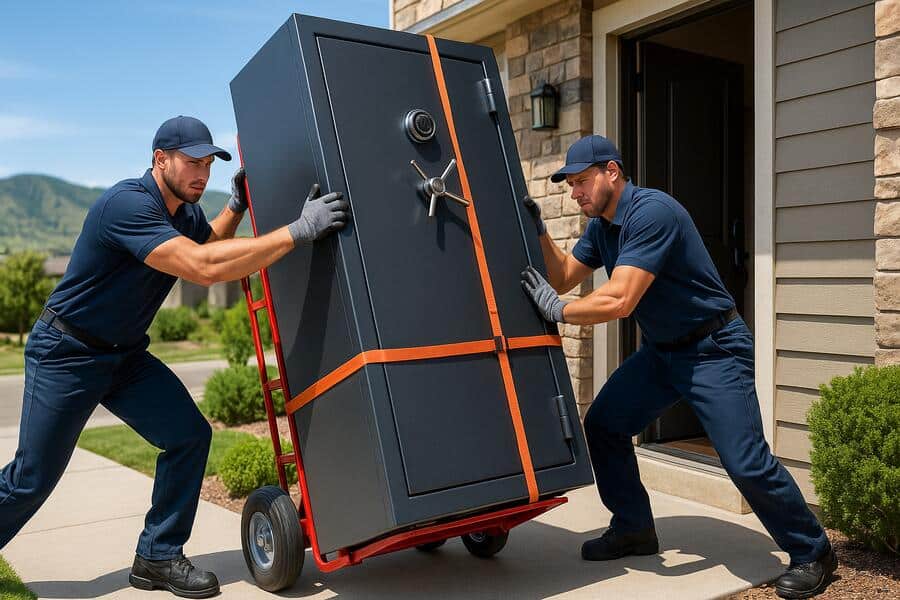
- Maneuverability: Even professional movers use specialized equipment. Adding excessive, uneven weight makes it more challenging to use dollies, skids, and lifts effectively, particularly on stairs, ramps, or tight corners.
2. Protecting Contents and Preventing Internal Damage to the Safe
The movement of contents isn’t just a hazard to movers; it’s a risk to the items themselves and the safe’s integrity. This is a critical aspect of “safe contents moving.”
- Damage to Valuables: During transport, items inside the safe can jostle, collide, or fall. This can lead to scratches, dents, or breakage of firearms, optics, jewelry, and other delicate items. Documents can be crumpled or torn.
- Damage to the Safe’s Interior: Heavy or sharp objects moving freely inside the safe can scratch, dent, or otherwise damage the interior lining, shelves, or even the door mechanism. This compromises the safe’s protective features and aesthetic.
- Compromised Fire Protection: Many gun safes offer fire protection. However, if the safe’s interior is damaged or its structural integrity compromised by shifting heavy items, its ability to protect against fire might be reduced. Documents are often best stored at the bottom of the safe for greatest fire protection, but during a move, they should be removed and handled separately.
- Difficulty Securing Items: While some safes have internal organizers, these are rarely designed to withstand the forces of a full-scale move. Strapping or padding items inside is often impractical and still leaves room for movement.
💡 Key Takeaway: To “empty gun safe before moving” is vital for safety and protection. A full safe can double or triple its already massive weight, creating dangerous instability due to shifting contents and making it extremely hard to maneuver. This also prevents damage to your valuables and the safe’s interior.
Secure and Legal Handling of Safe Contents
3. Legal and Safety Requirements for Firearms and Ammunition
When “safe contents moving” involves firearms and ammunition, legal compliance and safety are paramount.
- Unloaded Firearms: All firearms must be completely unloaded before being moved. This is a fundamental safety rule and often a legal requirement.
- Secure and Locked Containers: Firearms should be transported in separate, locked, hard-sided containers, ideally distinct from their ammunition. For air travel, this is a strict TSA requirement for checked baggage. For ground transport, while regulations vary by state and local jurisdiction, this is best practice to prevent unauthorized access and comply with “transportation of firearms” laws.
- Separate Ammunition: Ammunition should ideally be transported separately from firearms. If stored in the same locked container, it must be securely packed to prevent shifting. Some states have specific rules regarding ammunition transport, so always check local laws.
- Documentation: Keep all necessary firearm documentation (licenses, registration if applicable) with you, but separate from the firearms themselves, in case of questions from law enforcement.
- ATF Regulations: Be aware of ATF regulations concerning interstate transport of firearms. While individuals can generally transport their own firearms for lawful purposes, understanding the rules (e.g., 27 CFR Part 478.38) is crucial.
4. Planning for “Safe Contents Moving”
Once you’ve decided to “empty gun safe before moving,” consider how to safely and securely transport its valuable contents.
- Inventory Everything: Before emptying, create a detailed inventory (with photos or video) of all items in the safe. This serves as a record for insurance purposes and helps you track everything.
- Organize and Pack Separately:
- Firearms: Place unloaded firearms in padded, locked, hard-sided cases.
- Ammunition: Pack ammunition in original packaging or sturdy, labeled boxes, separate from firearms.
- Jewelry/Precious Metals: Place in small, discreet, well-padded boxes or bags. You might consider moving these items personally.
- Documents: Organize important papers into folders or document boxes. Keep originals of highly sensitive documents with you during the move.
- Secure Transport for Contents: Consider a separate, secure vehicle for transporting particularly valuable items yourself. If using movers, ensure these boxes are clearly labeled for special handling (without revealing the contents) and that you have adequate insurance coverage.
- Professional Guidance: If you’re uncertain about the legalities of transporting firearms or other highly valuable items across state lines, consult with a legal expert or a reputable FFL (Federal Firearms Licensee).
Why Empty Your Safe Before Moving
| Reason to Empty | Explanation & Risk |
|---|---|
| Weight Reduction | Contents can double/triple the safe’s weight, making it significantly harder and more dangerous to move, increasing risk of injury. |
| Improved Stability | Shifting contents can alter the safe’s center of gravity, causing instability, loss of control, and tipping hazards during transport. |
| Content Protection | Items inside can jostle and be damaged (scratches, dents, breakage) during movement. |
| Safe Interior Protection | Heavy or sharp internal items can damage the safe’s lining, shelves, or locking mechanisms. |
| Legal Compliance (Firearms) | Firearms must be unloaded and transported in separate, locked containers as per federal and state laws/best practices. |
| Ammunition Safety | Ammunition should be separated and securely packed to prevent accidental discharge or damage. |
💡 Key Takeaway: When planning “safe contents moving,” create a detailed inventory. Pack firearms unloaded in separate, locked, hard-sided containers, and ammunition separately. Consider transporting high-value items yourself and always be aware of federal and state laws concerning firearm transport.
Conclusion
The decision to “empty gun safe before moving” is not merely a suggestion; it’s a critical safety and logistical imperative. While the sheer weight of an empty safe is challenging enough, the added mass and instability of “moving a full safe” with shifting contents dramatically amplify risks to property, personnel, and the safe itself. Furthermore, adhering to legal requirements for firearms and ammunition transport is non-negotiable. By taking the time to carefully empty, secure, and separately transport your safe’s contents, you ensure a far safer, more efficient, and compliant move, allowing your safe to continue its vital role in protecting your valuables in its new location.
Have questions about how to moving a full safe? Reach out to our team today.
Frequently Asked Questions About Moving Safes
Is it safe to move a gun safe with guns inside?
No, it is generally not safe to move a gun safe with guns inside. Firearms should be unloaded and removed from the safe. They should then be placed in separate, locked, hard-sided cases for transport. This practice prevents accidental discharge, protects the firearms from damage due to shifting, and helps comply with transport regulations.
What about moving a safe with just documents and jewelry inside?
Even if a safe contains only documents, jewelry, or other non-firearm valuables, it’s still best to remove them. While less volatile than firearms, these items still add significant weight and can shift, creating instability during the move. More importantly, fragile items can be damaged, and documents crumpled. For irreplaceable items like jewelry or important papers, personal transport might be preferred.
Do movers typically move safes with contents?
Professional safe movers will almost always insist that a safe be completely emptied before they move it. Their expertise is in moving the safe structure itself, not its contents. They understand the dangers and logistical complications that a full safe presents and will often refuse service or charge significantly more if the safe is not emptied.
How should I secure the empty safe for moving?
Once the safe is empty, ensure the door is securely locked. This prevents the door from swinging open during transit, which could cause damage or injury. If the safe has removable shelves or interior components, consider removing them or securing them firmly inside so they don’t rattle around and cause internal damage during the move. Professional movers will then use specialized equipment like heavy-duty dollies, skids, and straps to secure the empty safe for transport.