Moving a pool table is a significant undertaking, often requiring professional disassembly, careful transport, and precise reassembly. Beyond the logistics of relocation, a move presents a natural and opportune moment to consider essential maintenance, particularly for the playing surface. The question of whether to “refelt pool table” during a move often arises, and for good reason. The felt, or billiard cloth, is critical to the game’s performance and aesthetics, and its condition can greatly impact your playing experience.
This article will explain why a move is an ideal time for “pool table felt replacement,” outline the key signs that indicate your felt needs replacing, and briefly touch on the intricate process of proper stapling and stretching for “new pool table cloth.” Taking advantage of the disassembly process to address the felt can save you time, effort, and potentially money in the long run. For comprehensive pool table relocation help, including felt replacement, professional service is invaluable.
💡 Key Takeaway: Moving a pool table is an ideal time to “refelt pool table” because the table is already disassembled. Addressing “pool table felt replacement” during a move is efficient, saves future hassle, and ensures optimal play with “new pool table cloth.”
Why A Move Is The Ideal Time for “Pool Table Felt Replacement”
1. Leveraging Disassembly for Efficiency
A professional pool table move inherently involves careful disassembly of the table, including the removal of rails and often the old felt. This makes it the most logical and efficient time for “pool table felt replacement.”
- Access to the Slate: For a successful move, the rails must be removed, and the slate sections are often separated. This provides direct, unobstructed access to the slate bed, making it much easier to strip off old felt and prepare the surface for “new pool table cloth.”
- Minimized Labor Costs: If you were to refelt the table at a later date, you’d incur the cost of disassembling the table specifically for felt replacement. By doing it during the move, you’re leveraging labor already being performed, potentially reducing the overall combined cost.
- Seamless Transition: Your pool table arrives at its new home not just moved, but refreshed and ready for optimal play, without the need for another service appointment and disruption.
- One-Time Investment: Consolidating the refelting with the move means a single planning effort and a single period of downtime for your table, rather than two separate, complex jobs.
2. The Opportunity to Upgrade or Change Aesthetics
Beyond simple replacement, “refelt pool table” during a move offers a chance to personalize your table or improve its performance.
- Color Change: Moving into a new home often means a new décor. Replacing the felt allows you to choose a “new pool table cloth” color that perfectly complements your new space, moving beyond traditional green.
- Felt Type Upgrade: There are various types of billiard cloth, from standard wool/nylon blends to higher-performance worsted wool fabrics. A move provides an opportunity to upgrade to a faster, more durable, or stain-resistant felt that can enhance your playing experience.
- Pre-emptive Maintenance: Even if your felt isn’t severely damaged, a few years of play can cause stretching, fading, or minor wear that impacts ball roll. Replacing it proactively ensures your table is in top condition from day one in its new location.
💡 Key Takeaway: A move is the most efficient time for “pool table felt replacement” because the table is already disassembled, providing direct access to the slate. This saves on labor, allows for a seamless transition, and offers a prime opportunity to upgrade to “new pool table cloth” that matches new decor or enhances play.
Signs Your Felt Needs Replacing & The Process
3. Key Signs Your Pool Table Felt Needs Replacing
Even if you’re not moving, knowing these indicators can help you decide “when to refelt pool table.” During a move, they become even more pertinent.
- Visible Wear and Tear:
- Fraying or Thin Spots: Especially around the pockets or where balls frequently impact rails.
- Tears, Rips, or Burns: Any physical damage to the cloth, even small ones, will affect play.
- Permanent Stains: Spills or chalk marks that cannot be cleaned, indicating a worn surface.
- Inconsistent Ball Roll:
- If balls don’t roll smoothly or consistently, veering off course, the felt might be stretched, matted, or uneven due.
- Excessive “pilling” of the felt can also impede ball speed and accuracy.
- Age of the Felt: Even well-maintained felt has a lifespan. Over time, the fibers naturally degrade, affecting playability. If it’s been many years since the last “pool table felt replacement,” a move is a great time for an upgrade.
4. The Precision of Stapling and Stretching “New Pool Table Cloth”
The successful installation of “new pool table cloth” is a specialized skill that requires precision, consistent tension, and proper technique. This is why professional installation is highly recommended.
- Preparation is Key: After removing the old felt and cleaning the slate, any seams in multi-piece slate are typically filled with beeswax for a perfectly smooth surface.
- Initial Placement: The “new pool table cloth” is laid over the slate, ensuring it’s properly aligned and oversized for trimming.
- Stretching and Stapling the Bed Cloth:
- The cloth is stretched taut from the center outwards, carefully pulling it with consistent, even tension.
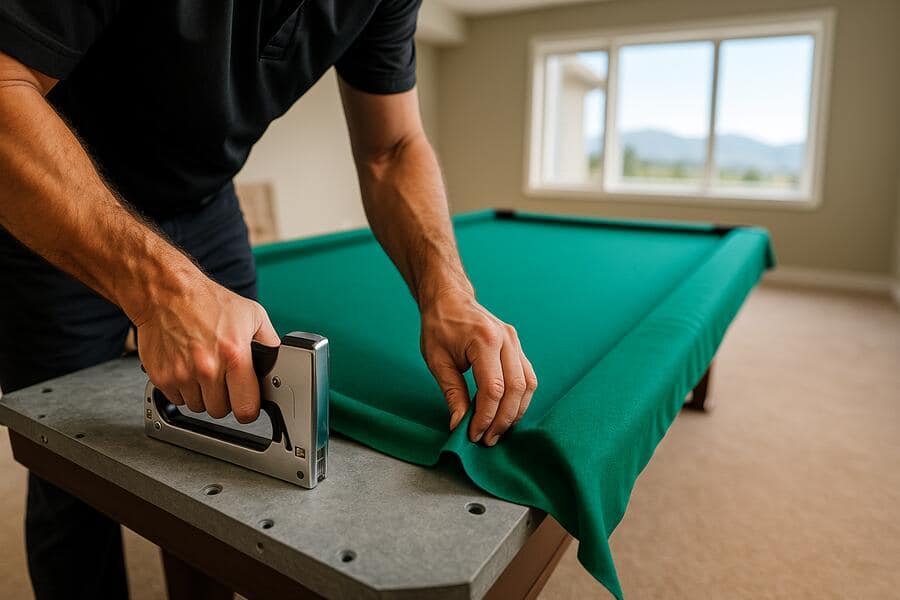
- It’s then stapled or glued to the underside or edge of the wooden slate backing frame. The process involves working symmetrically around the table to ensure uniform tension across the entire playing surface.
- Incorrect tension (too loose or too tight) will lead to uneven ball roll or premature wear.
- Rails and Pockets: The cloth is also meticulously applied to the rail cushions, wrapped tightly, and stapled or glued into place, with precise cuts made for the pocket openings.
- Final Leveling: After the felt is installed, the table is carefully re-leveled to ensure optimal play.
Signs Your Pool Table Felt Needs Replacement
| Sign | Impact on Play / Table |
|---|---|
| Fraying, Tears, Rips | Directly impedes ball roll, affects shot accuracy, makes pockets less functional. |
| Permanent Stains / Burns | Aesthetic degradation, can affect surface consistency and clean ball release. |
| Inconsistent Ball Roll | Caused by stretched, matted, or worn fibers, leading to unpredictable shots and frustrating gameplay. |
| Excessive Pilling | Slows down ball speed, creates friction, affects shot execution. |
| Felt’s Age (5+ years) | Natural fiber degradation over time reduces performance and appearance, even if visibly intact. |
💡 Key Takeaway: You should “refelt pool table” if you observe fraying, tears, permanent stains, or inconsistent ball roll. The “pool table felt replacement” process requires meticulous stapling and stretching of “new pool table cloth” to achieve consistent tension across the slate bed and rails, a task best left to professionals to ensure optimal play.
Conclusion
Deciding to “refelt pool table” during a move is a smart investment that capitalizes on an already necessary disassembly. It’s an ideal opportunity to not only address signs of wear like tears, stains, or inconsistent ball roll but also to upgrade to “new pool table cloth” that perfectly suits your new space and playing preferences. The precision involved in “pool table felt replacement,” particularly the critical stapling and stretching techniques, underscores the value of professional expertise. By combining these services, your pool table will arrive at its destination refreshed, revitalized, and ready to provide years of enjoyable, high-quality play.
Have questions about how to new pool table cloth? Reach out to our team today.
Frequently Asked Questions About Pool Table Re-Felting
How often should a pool table be refelted?
The frequency of “pool table felt replacement” depends on usage, maintenance, and the quality of the felt. For residential tables with moderate use, refelting every 5-10 years is generally sufficient. Heavily used commercial tables or those in homes with avid players might need it every 1-3 years. Regular brushing and vacuuming can help prolong felt life.
Can I reuse my old pool table felt after a move?
It’s generally not recommended to reuse old pool table felt after a move, especially if it’s been on the table for some time. The felt is stretched tightly during installation and can be easily torn or damaged during removal. Even if it survives removal, it’s difficult to get the same precise, even tension when reapplying it, which can lead to inconsistent ball roll. Most professionals advise installing “new pool table cloth” during a move.
What’s the difference between worsted and woolen felt?
Worsted felt (often called “speed cloth”) is a high-performance felt made from combed fibers, resulting in a smooth, non-napped surface that allows balls to roll faster and more consistently. It’s generally more expensive and durable. Woolen felt (traditional felt) has a slightly fuzzy nap, offering a slower, more controlled game. It’s typically less expensive but can “pill” over time.
How long does it take to refelt a pool table?
The actual process of “pool table felt replacement” by a professional, once the table is disassembled and ready, can take several hours (typically 2-4 hours for the bed and rails). If done in conjunction with a move, it adds to the overall time but is often integrated into the reassembly process at the new location.