Moving a bed can seem like a straightforward task, but it often involves more than just hauling a mattress. The bed frame itself, especially larger or more intricate models, usually needs to be disassembled to ensure safe and efficient transport. Trying to “move a bed” frame while fully assembled can lead to damaged walls, doorways, or worse, damage to the frame itself. Understanding “how to disassemble a bed frame for moving” is a crucial step in preparing for a successful relocation.
This guide will walk you through the process of “disassemble bed frame for moving,” covering everything from removing bedding and mattresses to carefully detaching headboards and side rails. We’ll emphasize the importance of properly bagging and labeling all hardware, and best practices for protecting delicate headboards and other components during transit. For heavier or more complex bed frames, enlisting experienced denver furniture movers can save you time and prevent potential damage or injury.
💡 Key Takeaway: Learning “how to disassemble a bed frame for moving” is essential for safe and efficient relocation. This guide covers the step-by-step process for “bed frame moving,” including hardware management and protection techniques, to prevent damage when “moving a bed.”
Step-by-Step Guide to Disassembly
1. Initial Preparation: Clearing the Bed and Gathering Tools
Before you begin to “disassemble bed frame for moving,” a few preparatory steps will make the process smoother and more organized.
- Remove Bedding: Strip the bed completely. Wash and pack all sheets, blankets, comforters, and pillows in labeled boxes or reusable moving bins. This ensures they are clean and ready for your new home.
- Remove Mattress and Box Spring: Carefully lift and remove the mattress from the bed frame. For cleanliness and protection, consider encasing your mattress in a specialized mattress bag. Next, remove the box spring (if applicable).
- Gather Tools: Have the necessary tools on hand. Most bed frames require an Allen wrench (hex key), a screwdriver (Phillips or flathead), or sometimes a small wrench for bolts. A drill with appropriate bits can speed up the process but use caution not to strip screws.
- Clear Workspace: Ensure you have enough space around the bed to work safely. Move nightstands, lamps, and other items out of the way.
2. The Disassembly Process: Slats, Side Rails, and Footboard
Work systematically from the top layers down when “moving a bed.”
- Remove Slats: If your bed frame uses wooden slats for mattress support, remove these first. They might be screwed in, rest in grooves, or snap into place. Stack them neatly.
- Disconnect Side Rails: This is often the trickiest part of “bed frame moving.”
- Bolt Connections: Most modern bed frames use bolts to connect the side rails to the headboard and footboard. Use your Allen wrench or appropriate tool to loosen and remove these bolts.
- Hook-in Mechanisms: Some frames have metal hooks that slide into slots. You’ll typically lift the side rail to disengage it from the headboard/footboard.
- Be Careful with Integrated Rails: Some platform beds have integrated side rails that are not easily detachable. Consult your manufacturer’s instructions if you’re unsure.
- Detach Footboard: Once the side rails are removed, the footboard can usually be detached from any remaining support structures or simply lifted away.
💡 Key Takeaway: To effectively “disassemble bed frame for moving,” start by clearing the bed of all bedding, mattress, and box spring. Systematically remove slats, then disconnect the side rails from the headboard and footboard, using appropriate tools. Always consult manufacturer instructions for complex “bed frame moving.”
Managing Hardware and Protecting Components
3. Crucial Step: Bagging and Labeling All Hardware
The smallest parts are often the easiest to lose, yet the most critical for reassembly. This is a vital “moving a bed” tip.
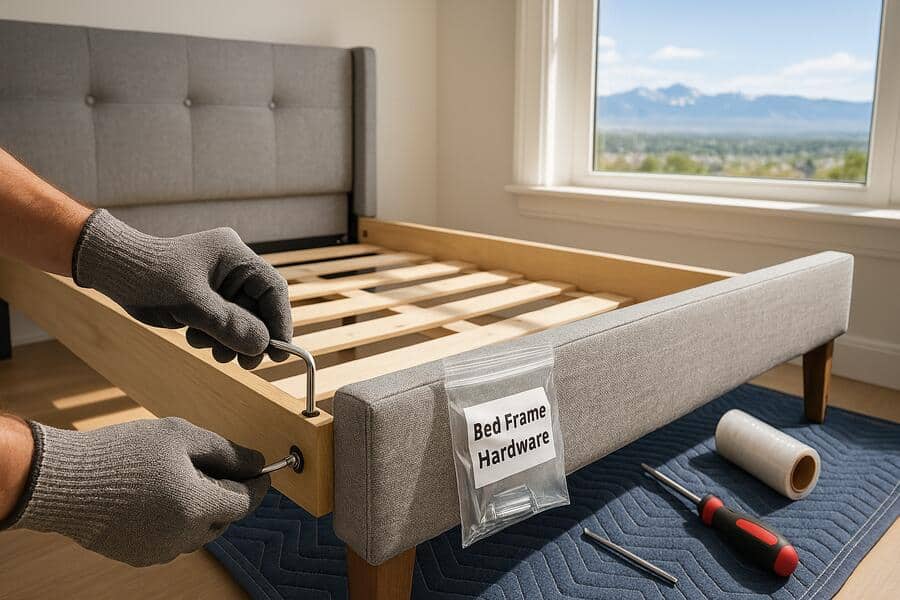
- Use Sealable Plastic Bags: As you remove screws, bolts, washers, and nuts, place them immediately into a sealable plastic bag (e.g., a Ziploc bag).
- Label Clearly: Label the bag with the bed frame’s name (e.g., “Master Bedroom Bed Frame Hardware”) and, if helpful, indicate which parts of the frame the hardware belongs to (e.g., “Headboard Bolts”).
- Secure the Hardware Bag: This is a non-negotiable step. Tape the sealed and labeled hardware bag directly to one of the largest, most visible components of the bed frame, such as a side rail or the headboard. Do not put it in a random box, as it can easily get lost. Some movers even recommend having a dedicated “essentials” box for all hardware from disassembled furniture.
- Take Photos: Before and during disassembly, take photos of the connections. These will be invaluable references during reassembly at your new home.
4. Protecting the Headboard and Other Components
Once disassembled, each component needs protection to prevent scratches, dents, or tears during transit.
- Wrap Headboard and Footboard: These are often the most decorative and vulnerable parts.
- Wood or Painted Finishes: Wrap wood or painted pieces in moving blankets or several layers of bubble wrap. Secure with stretch wrap. Avoid applying tape directly to finished surfaces, as it can lift paint or varnish.
- Upholstered Headboards: Cover upholstered headboards with a moving blanket, then secure with stretch wrap. Avoid pressing anything hard against the upholstery that could leave indentations.
- Mirrored or Glass Elements: For headboards with mirrors or glass, cover the surface with cardboard first, then bubble wrap, and finally a moving blanket.
- Bundle Side Rails and Slats: Gather the side rails and slats. Bundle them together securely with moving straps or strong packing tape (again, avoid tape directly on finished surfaces; use stretch wrap or blankets as an intermediary). This keeps them organized and prevents individual pieces from getting lost or damaged.
- Utilize Wardrobe Boxes: For very long or unusually shaped pieces, a wardrobe box (empty of clothes) can sometimes provide extra protection and easier handling.
Bed Frame Disassembly & Packing Checklist
| Stage | Key Action | Benefit/Reason |
|---|---|---|
| Preparation | Remove bedding/mattress, gather tools, clear space. | Allows full access, prevents loss, ensures safety. |
| Disassembly | Remove slats, then side rails, then footboard. | Systematic approach, prevents damage to connections. |
| Hardware Management | Bag, label, and tape hardware to a frame component. | Prevents lost parts, simplifies reassembly. |
| Protection | Wrap headboard/footboard; bundle rails/slats. | Prevents scratches, dents, and chips during transport. |
💡 Key Takeaway: When you “disassemble bed frame for moving,” carefully bag and label all hardware, then tape it directly to a major frame component to prevent loss. Protect delicate headboards and other pieces with moving blankets, bubble wrap, or stretch wrap, avoiding direct tape on finished surfaces to prevent damage during “bed frame moving.”
Conclusion
Knowing “how to disassemble a bed frame for moving” is a skill that contributes significantly to a smoother, less stressful relocation. By systematically taking apart your bed frame, carefully managing all the small hardware pieces with proper labeling, and diligently protecting each component, you can prevent damage to your furniture and ensure an easier reassembly process at your new home. While it requires a bit of time and patience, this preparation is a small investment that pays off immensely, making “moving a bed” much more manageable and protecting your valuable sleep sanctuary.
Have questions about how to disassemble bed frame for moving? Reach out to our team today.
Frequently Asked Questions About Disassembling a Bed Frame
Do all bed frames need to be disassembled for moving?
Most bed frames, especially queen and king sizes, or those with headboards, footboards, and side rails, should be disassembled for moving. This makes them easier to carry through doorways and hallways, prevents damage to the frame and property, and optimizes space in the moving truck. Small, simple twin frames or platform bases might sometimes be moved assembled, but disassembly is generally recommended for safety and protection.
What tools will I need to “disassemble bed frame for moving”?
The tools you’ll need typically include an Allen wrench (hex key), a Phillips head screwdriver, and sometimes a flathead screwdriver or a small crescent wrench. It’s always a good idea to check your bed frame’s manufacturer instructions, if available, for specific tools. A plastic bag for hardware and packing tape are also essential.
What’s the best way to keep track of all the screws and bolts?
The best way to keep track of all hardware (screws, bolts, washers, nuts) is to place them immediately into a sealable plastic bag as you remove them. Label the bag clearly with the bed frame’s name. Crucially, tape this labeled bag directly to one of the largest components of the bed frame (like a side rail or the headboard) so it doesn’t get lost in a box of miscellaneous items.
How do I protect my headboard, especially if it’s upholstered or decorative?
To protect your headboard, first, wrap any delicate or finished surfaces (wood, painted, mirrored) with moving blankets or several layers of bubble wrap. For upholstered headboards, a moving blanket followed by stretch wrap is ideal to prevent tears or dirt. Secure everything tightly with stretch wrap; avoid using adhesive tape directly on finished or upholstered surfaces, as it can leave residue or damage the material. If it has very fragile elements, consider custom crating.