
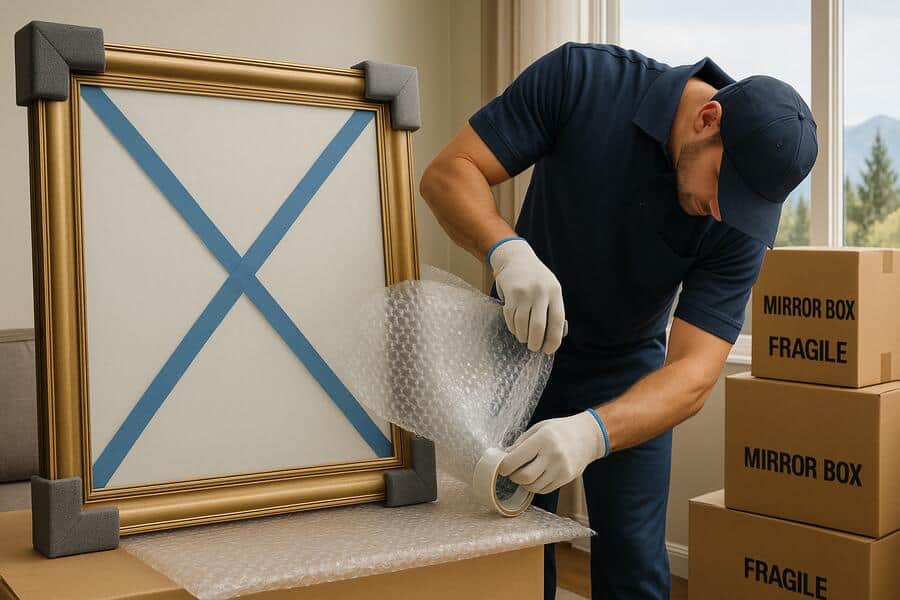
Moving day inevitably brings the challenge of packing fragile and often sentimental items, with artwork, mirrors, and framed prints topping the list of objects requiring special care. These pieces, whether family heirlooms or decorative accents, are vulnerable to scratches, cracks, and breaks if not properly prepared for transit. Knowing “how to pack mirrors and artwork” correctly is not just about keeping them safe; it’s about preserving memories and avoiding costly replacements.
This guide will walk you through essential techniques for “packing artwork for moving,” from simple steps like taping glass to using specialized “mirror boxes” and corner protectors. We’ll also discuss when it’s truly worth investing in custom crating for high-value or exceptionally fragile items. While some items can be handled with DIY methods, professional help for your full-service packing help can make a significant difference in protecting your most cherished possessions.
💡 Key Takeaway: When learning “how to pack mirrors and artwork,” meticulous preparation is key. Essential steps for “packing artwork for moving” include taping glass, using specialized “mirror boxes” and corner protectors, and considering custom crating for high-value items, all to prevent damage during transit.
Essential Steps for Protecting Fragile Flat Items
1. Preparing the Surface: Taping Glass and Initial Wraps
The first line of defense for framed items with glass or mirrors is to secure the surface itself.
- Tape the Glass: For any framed piece with a glass or acrylic front, apply painter’s tape in a large “X” or grid pattern across the entire surface. This crucial step helps to hold shards together if the glass cracks during the move, reducing scatter and making handling safer. Always use painter’s tape; never use strong packing tape directly on glass, as it can leave sticky residue.
- Dust and Clean: Before any wrapping, gently dust the surface of the artwork or mirror to prevent grit from scratching under pressure during transit.
- First Layer: Soft Protection: Place a sheet of soft packing paper, a foam sheet, or a clean, thin blanket directly over the taped glass or canvas. This acts as a buffer, protecting the surface from direct contact with bubble wrap, which can sometimes leave texture marks.
2. Adding Layers of Protection: Corner Guards and Cushioning
Beyond the surface, the edges and corners are highly vulnerable to impact.
- Corner Protectors: These are indispensable for “packing artwork for moving.” You can purchase foam corner guards specifically designed for frames, or create your own sturdy corner protectors from cut cardboard. Fit these snugly around all four corners of the frame. This absorbs impact and prevents dings and chips.
- Rigid Shield: For added protection, especially for larger or more valuable pieces, cut a flat sheet of cardboard or foam board to the exact size of the artwork/mirror and place it over the wrapped front (and back, if desired). This provides a rigid shield against punctures or bending.
- Bubble Wrap: Once the corners and rigid shields are in place, wrap the entire item securely with at least two to three layers of large-bubble wrap. Ensure the bubble wrap covers all edges and corners, then secure it snugly with packing tape. Avoid taping directly onto the artwork or decorative frame; apply tape only to the bubble wrap.
💡 Key Takeaway: “How to pack mirrors and artwork” begins with applying painter’s tape in an “X” pattern across glass surfaces to contain potential shards. Follow this with soft packing paper, foam corner protectors, and a rigid cardboard shield. Finally, wrap the entire item with multiple layers of bubble wrap, securing tape only to the bubble wrap itself, for effective “packing artwork for moving.”
Specialized Packing and Transport Considerations
3. Utilizing “Mirror Boxes” and Proper Loading
Once wrapped, the right container and loading technique are crucial.
- Mirror Boxes/Picture Boxes: These are specialized telescopic boxes designed specifically for flat, framed items. They often come in two pieces that slide together, allowing you to custom-fit the box to the size of your item.
- Fit Snugly: Ensure the mirror or artwork fits snugly within the box to prevent shifting during transit. If there’s excess space, fill it with crumpled packing paper or additional bubble wrap.
- Label Clearly: Write “FRAGILE,” “MIRROR,” or “ARTWORK” in large, clear letters on all sides of the box, along with “THIS SIDE UP” arrows.
- Loading Technique: Mirrors and framed glass should always be transported standing on edge, never flat. Placing them flat, especially under other items, dramatically increases the risk of cracking or breaking from pressure or flexing. Professional movers will always load these items vertically.
- Small vs. Large Items: Smaller framed prints can often be packed together in a regular moving box (standing on edge, well-cushioned between each piece). Larger mirrors or significant artwork require individual mirror boxes.
4. When Custom Crating is Worth the Investment
For certain items, standard packing methods may not provide sufficient protection.
- High-Value or Irreplaceable Artwork: For original paintings, sculptures, antique mirrors, or pieces with significant monetary or sentimental value, custom crating is highly recommended.
- Oversized or Unusually Shaped Items: Very large mirrors that exceed standard mirror box dimensions, or artwork with intricate, fragile elements (e.g., heavily embellished frames, delicate mixed media), benefit from the rigid protection of a custom-built crate.
- International or Long-Distance Moves: The longer the transit distance and the more handling involved, the greater the risk. Custom crates offer superior protection against the rigors of long-haul transportation.
- Insurance Requirements: Some insurance policies for high-value art may require professional packing or custom crating to be valid. Always check your policy.
Artwork & Mirror Packing Checklist
| Step | Material Used | Purpose |
|---|---|---|
| Tape Glass | Painter’s Tape | Contains shards if glass breaks. |
| Inner Wrap | Packing Paper/Foam Sheet | Protects surface from bubble wrap marks. |
| Corner Protection | Foam/Cardboard Corner Guards | Prevents frame dings and chips. |
| Rigid Shield | Flat Cardboard/Foam Board | Adds rigidity, protects against punctures. |
| Outer Cushioning | Bubble Wrap (2-3 layers) | Shock absorption for overall protection. |
| Boxing/Container | Mirror Box/Custom Crate | Secure containment, specialized protection. |
💡 Key Takeaway: After applying protective layers during “packing artwork for moving,” place items in specialized “mirror boxes” that fit snugly. Always transport mirrors and framed glass standing on their edge, never flat, to prevent damage from pressure. Consider custom crating for high-value, oversized, or unusually shaped artwork, especially for long-distance or international moves, for superior protection and insurance compliance.
Conclusion
Safely navigating the relocation of your cherished artwork, mirrors, and framed prints requires more than just a quick wrap. By following these detailed steps on “how to pack mirrors and artwork,” from taping glass and applying robust cushioning to utilizing “mirror boxes” and understanding when to opt for custom crating, you significantly increase the chances of your valuable items arriving in pristine condition. While it may seem like a time-consuming process, the peace of mind and protection it offers are invaluable, ensuring your visual treasures are preserved for your new home.
Have questions about how to pack mirrors and artwork? Reach out to our team today.
Frequently Asked Questions About Packing Artwork and Mirrors
Why should I tape an “X” on glass and mirrors when packing?
Taping an “X” or grid pattern on glass and mirrors with painter’s tape is a safety measure. If the glass breaks during transit, the tape helps to hold the shards together, preventing them from scattering and making it safer to handle the damaged piece. It does not prevent breakage, but it mitigates the risk of injury and further damage.
Are “mirror boxes” really necessary, or can I use a regular box?
“Mirror boxes” (or picture boxes) are highly recommended, especially for larger or more valuable framed items. They are specifically designed to provide rigid, custom-fit protection for flat items, preventing them from bending, puncturing, or shifting within the box. While smaller items might be carefully cushioned in a regular box, mirror boxes offer superior protection for “packing artwork for moving.”
When should I consider custom crating for artwork or mirrors?
Custom crating is a specialized service recommended for high-value, irreplaceable, oversized, unusually shaped, or extremely fragile artwork and mirrors. It’s particularly advisable for long-distance or international moves where items will undergo more handling and transit stress. If an item’s value (monetary or sentimental) warrants the highest level of protection, a custom crate is often the best choice.
Should I use bubble wrap or packing paper directly on the artwork/mirror?
It’s generally recommended to place a soft layer, such as clean packing paper, a foam sheet, or a thin moving blanket, directly over the artwork or mirror surface first. This layer acts as a buffer. Then, you can apply bubble wrap. Directly applying bubble wrap to some delicate surfaces, especially sensitive artwork, can sometimes leave impressions or residues due to prolonged pressure or temperature changes.

