Moving day is inherently stressful, but for our furry, scaled, or feathered family members, it can be a source of immense anxiety and even danger. The flurry of activity, strange faces, and unfamiliar environments can be overwhelming for pets, making “moving with pets” a unique challenge that requires careful planning and proactive measures. Ensuring their safety and comfort isn’t just a nicety; it’s a critical part of a successful move.
From the moment packing begins to the first night in a new home, pets need a structured approach to minimize stress and prevent accidental escapes. This guide will walk you through essential strategies, covering everything from containing “moving with dogs” and “moving with cats” during the chaos of loading, preparing a comprehensive travel kit, updating identification, to helping them calmly acclimate to their new surroundings. Many local residential movers understand the importance of a smooth transition for all family members, including the four-legged ones.
💡 Key Takeaway: “Moving with pets” requires strategic planning to minimize their stress and ensure safety on moving day. Critical steps include containing pets during chaos, preparing a dedicated travel kit, updating identification, and helping them acclimate smoothly to the new home, whether you’re “moving with dogs” or “moving with cats.”
Pre-Move Preparations and Moving Day Safety
1. Preparing Pets for the Transition
The journey to a new home doesn’t start on moving day; it begins with careful preparation to ease your pet’s anxiety.
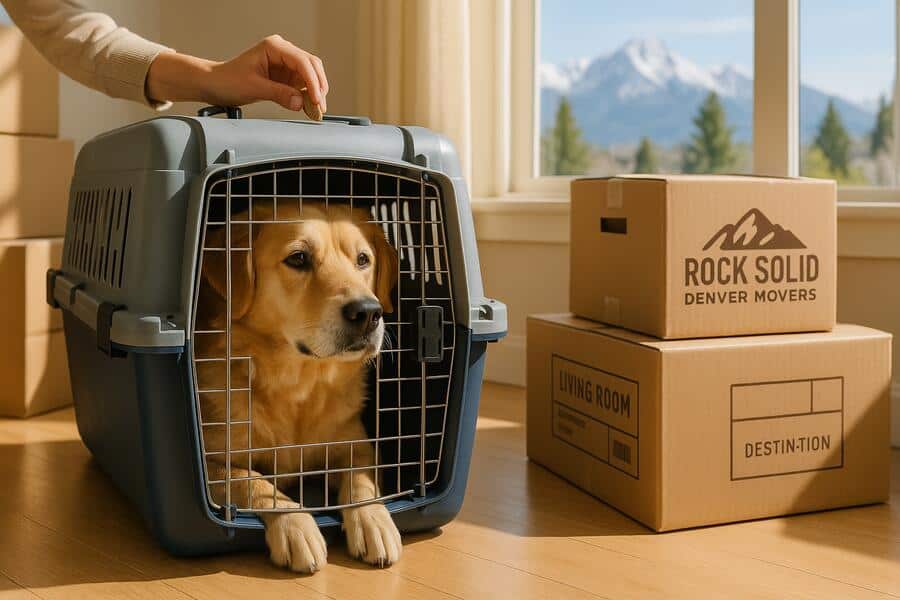
- Acclimation to Crates/Carriers: Weeks before the move, gradually introduce your pet to their carrier or crate. Make it a positive space with treats, toys, and comfortable bedding. This will make travel less stressful.
- Vet Visit and Health Records: Schedule a vet check-up to ensure your pet is healthy for travel. Obtain copies of all health records and vaccination certificates, as these may be needed, especially for long-distance or international moves.
- Maintain Routine: As much as possible, try to maintain your pet’s regular feeding, walking, and playtime schedule in the weeks leading up to the move. Consistency helps reduce stress.
- Update Identification: Ensure your pet’s collar has up-to-date tags with your current phone number. Most importantly, ensure their microchip information is current with your new address and contact details. This is crucial if they get lost during the transition.
2. Safety on Moving Day: Containment is Key
Moving day itself can be chaotic. The constant opening and closing of doors, unfamiliar faces, and moving furniture pose a significant escape risk for pets. Proactive containment is vital.
- Designated Safe Room: Before movers arrive, secure your pet in a quiet, closed-off room (like a bathroom or spare bedroom) away from all the activity. Place their food, water, toys, and litter box (for cats) or a familiar bed in this room. Put a “DO NOT OPEN” sign on the door.
- Alternative Care: For highly anxious pets, or simply to ensure their absolute safety, consider boarding them with a trusted friend, family member, or a professional kennel for moving day. This completely removes them from the stress and potential dangers of the move.
- Leashes and Carriers: Even for the briefest trips outside, always keep dogs on a leash. Cats should remain in secure carriers during transport to and from vehicles. Hard-sided carriers with good ventilation are generally the safest option for car travel.
- Vehicle Safety: Never let pets roam freely in a moving vehicle. Dogs should be secured with a car harness or in a crash-tested crate. Cats should always be in a carrier that is secured to prevent it from shifting.
💡 Key Takeaway: Successful “moving with pets” starts well before moving day by acclimating them to carriers, updating vet records, and ensuring microchip information is current. On moving day, absolute safety is achieved by securing pets in a designated “safe room” away from chaos, or by arranging alternative care, always using leashes and secured carriers for transport, whether “moving with dogs” or “moving with cats.”
During Travel and Settling into the New Home
3. The Essential Pet Travel Kit
Just like you pack essentials for yourself, your pet needs a dedicated travel kit with everything they might need for the journey and the first few days in the new home.
- Food and Water: Pack enough of their regular food for several days (to avoid digestive upset from a sudden change) and fresh water. Include collapsible bowls.
- Medications and First-Aid: All necessary medications, clearly labeled. A basic pet first-aid kit is also a good idea.
- Leash, Collar, and Tags: Keep these easily accessible.
- Comfort Items: Favorite toys, blankets, or a bed that smells like home can provide comfort and familiarity.
- Waste Bags/Litter Box: For dogs, plenty of waste bags for potty breaks. For cats, a small, disposable litter box and scoop.
- Copies of Records: Keep a physical and digital copy of vet records and microchip information.
- Emergency Contacts: Have the contact information for your new vet at your destination, as well as an emergency animal poison control center.
4. Helping Pets Settle into the New Home
The new environment can be disorienting. Helping your pet adjust calmly is key to preventing stress and behavioral issues.
- Initial Safe Zone: Upon arrival, set up a quiet “safe room” in the new home before any boxes are unloaded. This room should have their food, water, bed, toys, and litter box. Keep them in this room with the door closed while unpacking.
- Gradual Introduction: Once the major unpacking is done and the house is quieter, slowly introduce your pet to the rest of the home, one room at a time. Supervise them closely.
- Maintain Routine: As quickly as possible, re-establish their regular feeding, walking, and playtime schedule. Routine provides a sense of security.
- Explore the Neighborhood (for dogs): Once your dog is comfortable inside, take them for walks around the new neighborhood on a leash. This helps them learn the new smells and sights, but always be aware of surroundings.
- Patience and Affection: Your pet may show signs of anxiety (hiding, changes in appetite, house-soiling). Be patient, offer plenty of reassurance and affection, and don’t punish accidents. If severe anxiety persists, consult your vet.
Pet Moving Day Checklist
| Category | Key Actions | Why It’s Important |
|---|---|---|
| Pre-Move Prep | Vet check, update microchip/tags, crate training. | Ensures health, identification, and reduces travel stress. |
| Moving Day Safety | Secure in safe room, use alternative care, leash/carrier at all times. | Prevents escape, injury, and minimizes stress from chaos. |
| Travel Kit | Food, water, meds, comfort items, records, emergency contacts. | Ensures immediate needs met and quick access to critical info. |
| Settling In | New safe room, gradual introduction, re-establish routine. | Helps pet acclimate, reduces anxiety, prevents behavioral issues. |
💡 Key Takeaway: A dedicated pet travel kit with food, water, medications, comfort items, and emergency contacts is essential for “moving with pets.” Upon arrival, establish a new “safe room” for gradual introduction to the home. Re-establishing routines and offering patience and affection are crucial for helping both “moving with dogs” and “moving with cats” calmly adjust to their new environment.
Conclusion
“Moving with pets” requires thoughtful preparation and execution to ensure their safety and well-being. By taking proactive steps to prepare them for the move, securing them safely on moving day, assembling an essential travel kit, and patiently helping them acclimate to their new surroundings, you can significantly reduce their stress and yours. Remember, our pets rely on us to navigate these big life changes. A little extra planning for your furry, scaled, or feathered family members will ensure they transition smoothly into their new home alongside you.
Have questions about how to moving with pets? Reach out to our team today.
Frequently Asked Questions About Moving With Pets
How can I keep my cat or dog safe during the actual loading process on moving day?
On moving day, the best way to keep your “moving with dogs” or “moving with cats” safe is to secure them in a quiet, enclosed “safe room” (like a bathroom or spare bedroom) with their food, water, and bed. Place a clear “DO NOT OPEN” sign on the door. For highly anxious pets, or if no safe room is available, consider boarding them with a trusted friend or kennel for the day to completely remove them from the chaos.
What essential items should I pack in a pet travel kit for moving?
An essential pet travel kit should include several days’ worth of their regular food and water, collapsible bowls, any necessary medications (clearly labeled), a basic pet first-aid kit, a leash, collar with updated tags, favorite comfort toys or blankets, waste bags or a small litter box, and copies of their vet records and microchip information. Also, have emergency vet contact information for your new destination.
How important is it to update my pet’s microchip and tags before moving?
Updating your pet’s microchip and collar tags with your new contact information (especially your phone number and new address) is critically important. If your pet gets lost or escapes during the move, current identification is the fastest and most reliable way for them to be reunited with you. This simple step can prevent heartbreak and ensure their safe return.
What’s the best way to help my pet settle into the new home?
Upon arrival at your new home, immediately set up a quiet “safe room” for your pet with their familiar items. Keep them there while initial unpacking occurs. Once the house is quieter, gradually introduce them to the rest of the home, one room at a time. Most importantly, re-establish their regular routine for feeding, walks, and playtime as quickly as possible, offering plenty of patience and positive reinforcement.