
Selling a home involves countless decisions, and for homeowners with a backyard oasis, one question often bubbles to the surface: “Should you take your hot tub when you sell your house?” This isn’t just about personal preference; it delves into the intricacies of real estate law, contract agreements, and a critical cost-benefit analysis. A hot tub can be a prized possession, but its portability—or lack thereof—can significantly impact your selling and moving process.
The distinction between a “fixture” and “personal property” is paramount when considering a “hot tub and home sale.” What might seem obvious to you could be a point of contention in a sales contract. This article will explore the factors that determine if your hot tub is considered part of the property, the importance of explicit contract clauses, and the financial implications of “moving a hot tub to new home” versus leaving it behind. To fully understand your options and ensure a smooth transaction, it’s wise to clarify these points early in the selling process. You can learn more about our services for specialized moving needs.
💡 Key Takeaway: Deciding “should you take your hot tub when you sell your house” hinges on whether it’s legally considered a “fixture” or “personal property.” This distinction, crucial for a smooth “hot tub and home sale,” must be explicitly addressed in the sales contract, as “moving a hot tub to new home” carries significant cost and logistical considerations.
Hot Tub as a Fixture vs. Personal Property
1. The Legal Distinction: Fixture vs. Personal Property
In real estate, the difference between a fixture and personal property is fundamental to what stays and what goes with a house sale. This often dictates whether you “take hot tub when selling house.”
- Fixtures: These are items that are permanently attached to the property. Their removal would typically cause damage to the real estate. Fixtures are generally considered part of the home sale unless specifically excluded in the purchase agreement. Examples often include built-in appliances, light fixtures, and in-ground swimming pools.
- Personal Property (Chattels): These are movable items that are not permanently affixed to the property. They are generally taken by the seller unless specifically included in the purchase agreement. Examples include freestanding furniture, artwork, and portable barbecues.
- The “Intent” Test: The legal determination often revolves around the intent of the person who installed the item, the method of attachment, and whether its removal would cause significant damage.
2. How Hot Tubs Are Typically Classified
The classification of a hot tub can be ambiguous, which is why it’s a common point of contention during a “hot tub and home sale.”
- Freestanding Hot Tubs: Most modern, portable hot tubs that simply sit on a slab or deck and are plugged into an electrical outlet are generally considered personal property. They can be removed without damaging the structure. In this case, you can typically “take hot tub when selling house.”
- Built-In Hot Tubs: Hot tubs that are custom-built into a deck, patio, or landscaping, especially those with custom electrical and plumbing lines that are integrated into the home’s structure, are much more likely to be considered fixtures. Their removal would often cause significant damage to the surrounding property.
- Consideration of Utilities: How the hot tub is connected to power and water also plays a role. A simple plug-in unit is easier to classify as personal property than one hardwired into the home’s electrical system and plumbed directly to a water source.
💡 Key Takeaway: Whether you “take hot tub when selling house” largely depends on its classification as a “fixture” (permanently attached, typically stays with the home) or “personal property” (movable, typically goes with the seller). Most freestanding hot tubs are personal property, while built-in, integrated units are more often considered fixtures in a “hot tub and home sale.”
Contractual Clarity and Cost-Benefit Analysis
3. The Critical Role of the Purchase Agreement
Regardless of how a hot tub might be legally classified, the sales contract is the definitive document for a “hot tub and home sale.”
- Explicit Inclusion/Exclusion: To avoid any disputes, it is absolutely essential that the purchase agreement explicitly states whether the hot tub is included in the sale or excluded. Verbal agreements made during showings are not legally binding.
- Buyer Expectations: Often, buyers assume that items like hot tubs, especially if they are already set up and functional, will be included with the house. If you intend to “take hot tub when selling house,” make sure this is communicated clearly and in writing from the very beginning.
- Negotiation Point: A hot tub can be a valuable amenity. Buyers might be willing to pay more for the home if it’s included, or you might use it as a bargaining chip in negotiations. Conversely, if you want to keep it, you might need to adjust your asking price or make other concessions.
- Removal Costs: If you exclude the hot tub and decide to take it, you are responsible for its removal and any associated costs, including repairing any damage left behind (e.g., to a concrete pad or electrical connection).
4. Moving a Hot Tub to New Home: A Cost-Benefit Assessment
The decision to “moving a hot tub to new home” should be weighed against the costs and potential benefits. It’s not a simple item to relocate.
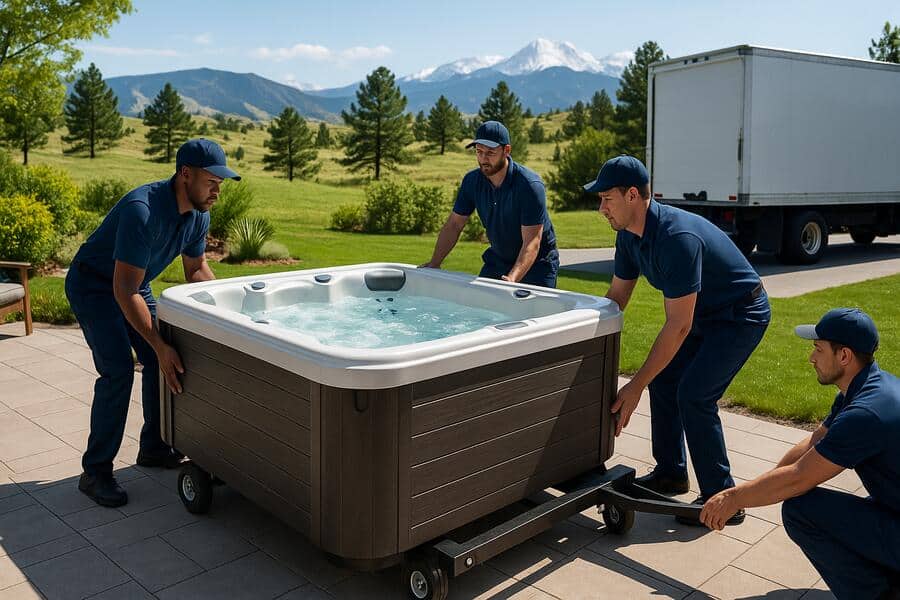
- Professional Moving Costs: Hot tubs are incredibly heavy and require specialized equipment (e.g., spa dollies, possibly cranes for difficult access) and a team of experienced movers. The cost of “moving a hot tub to new home” can be substantial, often ranging significantly depending on distance and complexity.
- Condition and Age of Hot Tub: Consider the hot tub’s current condition. Is it old, showing wear, or frequently needing repairs? The cost of moving a declining unit might outweigh its remaining value. Hot tubs depreciate over time, and a few years old unit might fetch a fraction of its original price.
- Resale Value vs. Moving Cost: Research the realistic resale value of your hot tub in its current condition. Compare this to the cost of moving it. If the moving cost is similar to or exceeds its resale value, selling it (or leaving it) and purchasing a new one at your new home might be more financially sound.
- Logistics at the New Home: Do you have a suitable space, proper electrical hookups, and a solid foundation at your new residence? Factor in any installation costs or site preparation needed.
Hot Tub Decision Checklist for Home Sales
| Consideration | Key Questions & Actions | Impact on “Hot Tub and Home Sale” |
|---|---|---|
| Fixture vs. Personal Property | Is it built-in? Hardwired? Removal cause damage? | Determines if it’s expected to stay by default. |
| Purchase Agreement | Is it explicitly included or excluded in writing? | The definitive legal document, prevents disputes. |
| Condition & Age | How old is it? Is it in good working order? Any repairs needed? | Impacts its value and the justification for moving costs. |
| Cost to Move | Get quotes from professional hot tub movers. | Can be substantial; compare against resale value. |
| Resale Value | Research what similar used hot tubs are selling for. | Helps determine if moving or selling is more economical. |
| New Home Logistics | Does new home have space, electrical, foundation? | Additional costs for site prep and installation. |
💡 Key Takeaway: The purchase agreement is the ultimate authority in a “hot tub and home sale”; explicitly state if you “take hot tub when selling house” to avoid disputes. Conduct a thorough cost-benefit analysis for “moving a hot tub to new home,” comparing professional moving costs against its depreciated resale value and considering the logistics and potential setup costs at your new property.
Conclusion
Deciding whether to “take hot tub when selling house” is a multifaceted decision that involves legal, financial, and logistical considerations. By understanding the distinction between a fixture and personal property, ensuring explicit clarity in your sales contract, and conducting a thorough cost-benefit analysis of “moving a hot tub to new home,” you can navigate this process with confidence. Often, the expense and effort of relocating a hot tub, especially an older one, may outweigh its value. Making an informed choice early on will ensure a smoother real estate transaction and prevent unnecessary stress during your move.
Have questions about how to take hot tub when selling house? Reach out to our team today.
Frequently Asked Questions About Hot Tubs and Home Sales
Is a hot tub considered a “fixture” or “personal property” in a home sale?
Generally, a freestanding, portable hot tub that simply plugs in is considered “personal property” and can be taken by the seller. However, if a hot tub is custom-built into a deck or patio, hardwired into the electrical system, or its removal would cause damage to the property, it is more likely to be considered a “fixture” and would typically stay with the house unless specifically excluded in the sales contract.
What role does the purchase agreement play in whether I “take hot tub when selling house”?
The purchase agreement is the most important document. To avoid disputes, it must explicitly state whether the hot tub is included in the sale or excluded. Even if you believe it’s personal property, clearly noting your intention in the contract prevents misunderstandings with the buyer. Verbal agreements are not legally binding, so get everything in writing.
What factors should I consider when deciding whether “moving a hot tub to new home” is worth it?
When considering “moving a hot tub to new home,” weigh the professional moving costs (which can be substantial due to weight and specialized handling) against the hot tub’s current condition and depreciated resale value. Also, assess if your new home has a suitable location, proper electrical hookups, and a solid foundation. If the moving cost is comparable to or exceeds its resale value, selling it might be a more economical option.
If I leave the hot tub, am I responsible for anything?
If the hot tub is included in the sale (either as a fixture or by agreement), you generally leave it as is, in working order. If you decide to take a hot tub that was part of the contract, you would be in breach. If you remove a hot tub that you’re entitled to take, you are responsible for any repairs needed to the property due to its removal, such as fixing a concrete pad or capping electrical lines.

