
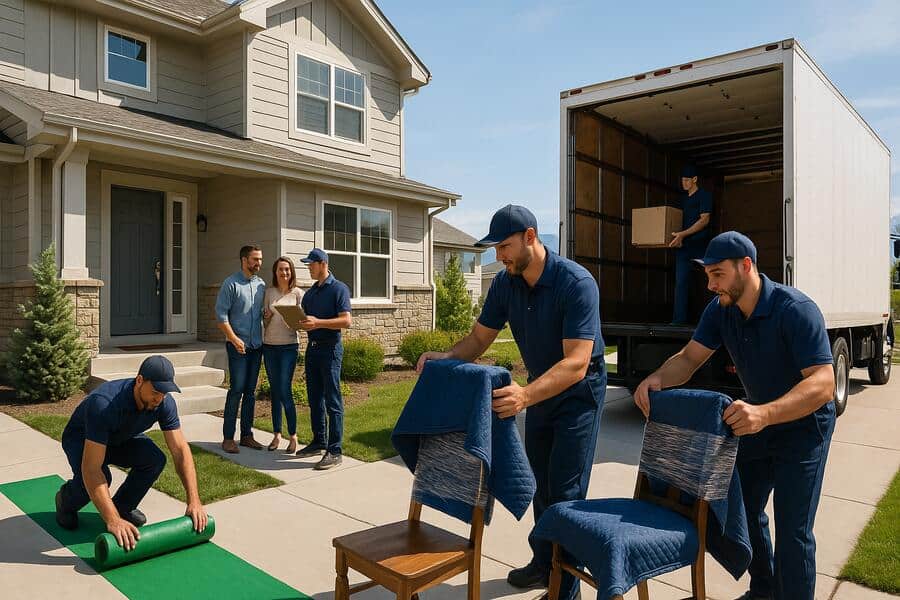
Moving day can often feel like a whirlwind of activity, leaving homeowners wondering “what to expect on moving day.” From the moment the moving truck pulls up, a carefully orchestrated process unfolds, designed to efficiently and safely transport your belongings from one location to another. Many people envision a simple load-and-go scenario, but the reality of “how movers work” involves far more strategy, protection, and expertise. Understanding the typical “moving day timeline” can help alleviate stress and ensure you’re prepared for each phase, transforming what could be a chaotic experience into a streamlined success.
This guide will demystify the professional moving process, breaking down “what to expect on moving day” into an hour-by-hour flow. We’ll detail the initial arrival and crucial walkthrough, the vital steps taken to protect your home’s floors and doorways, the meticulous disassembly and wrapping of furniture, the strategic loading order, the journey itself, and finally, the unloading, reassembly, and final walkthrough at your new residence. By providing this detailed insight into “how movers work,” you’ll gain a clearer picture of the expertise involved and feel more confident and prepared for your big day with your local movers denver.
💡 Key Takeaway: “What to expect on moving day” involves a structured process, not just brute force. Understanding the typical “moving day timeline,” from initial walkthroughs and home protection to strategic loading and reassembly, clarifies “how movers work” and helps ensure a smooth, stress-free relocation.
Morning: Arrival, Walkthrough, and Home Protection
1. Mover Arrival and Initial Walkthrough (First Hour)
The “moving day timeline” begins promptly with the arrival of your professional moving crew.
- Crew Introduction: The crew leader will introduce themselves and their team. This is your primary point of contact for the day.
- Pre-Move Walkthrough: This is a critical step, not just a formality. You’ll walk through your home together, room by room, including the basement, attic, garage, and any sheds. During this walkthrough, you should:
- Confirm which items are moving and which are staying.
- Point out any fragile items requiring special handling.
- Designate a “do not load” zone for items you’re transporting yourself.
- Highlight any access constraints, such as low doorways, tight stairwells, or specific flooring.
- Discuss any last-minute questions or concerns.
- Confirm Logistics: The crew leader will reconfirm the destination address, any specific delivery instructions, and the estimated timeline.
2. Home Protection and Furniture Preparation (Next 1-2 Hours)
Before a single box is moved, protecting your home is paramount—a key part of “how movers work.”
- Floor Runners and Door Protection: Movers will lay down floor runners over high-traffic areas, hardwoods, and carpets to prevent scratches, dirt, and scuff marks. They’ll also pad doorways, banisters, and corners with heavy-duty blankets or specialized protectors. This ensures the path your belongings travel is safeguarded.
- Furniture Disassembly: Any large furniture items that need to be disassembled (e.g., bed frames, dining tables, modular sofas) will be carefully taken apart. All hardware will be organized and secured, typically in labeled bags taped to the corresponding furniture piece.
- Protective Wrapping: Furniture will be wrapped in thick moving blankets and secured with industrial-grade stretch wrap. This protects against scratches, dents, and dirt during transit. Upholstered items may receive an extra layer of plastic wrap to keep them clean.
- Strategic Planning: The crew chief and team will assess the layout, identifying the most efficient routes and prioritizing items for loading.
💡 Key Takeaway: The “moving day timeline” starts with a crucial walkthrough where you clarify “what to expect on moving day” by confirming items, pointing out fragiles, and discussing access. Immediately after, professional “how movers work” involves extensive home protection, laying floor runners and padding doorways, followed by careful furniture disassembly and wrapping, all before a single item is loaded.
Mid-Day: Loading and Transport
3. Strategic Loading of the Truck (Ongoing)
Loading is not random; it’s a science of weight distribution and protection.
- Heaviest Items First: Large, heavy items like appliances, safes, and the heaviest furniture pieces are loaded first, strategically placed towards the front (cab side) of the truck and along the bottom to ensure stability.
- Disassembled Items and Boxes: Disassembled furniture pieces and packed boxes are then loaded. Boxes marked “fragile” or “top load” are handled with extra care and placed appropriately.
- Weight Distribution: The crew meticulously distributes weight evenly across the truck’s axles to ensure safe transport and prevent shifting.
- Securing the Load: Moving straps, ropes, and additional moving blankets are used throughout the loading process to secure items tightly, preventing movement, rubbing, and potential damage during the journey.
- Final Check: Before closing the truck doors, the crew leader will often do a final sweep of your home to ensure no items have been left behind. You should also do your own final check of all rooms, closets, and cabinets.
4. Transport to the New Home (Variable)
Once loaded, the journey to your new home begins.
- Direct Transit: For local moves, transport is typically direct to your new residence. For long-distance moves, the travel time will depend on the distance.
- Communication: Your movers will keep you informed of their estimated arrival time at the new location, allowing you to coordinate your travel and be present for the unloading.
💡 Key Takeaway: Central to “how movers work” is the strategic loading of the truck, prioritizing heavy items first and distributing weight evenly. Every item is secured with straps and blankets to prevent damage. After a final check of the old home, the truck proceeds directly to the new location, maintaining communication about arrival as part of the “moving day timeline.”
Afternoon/Evening: Unloading, Reassembly, and Finalization
5. Unloading and Home Protection at the New Residence (Ongoing)
The process reverses at your new home, with the same attention to detail.
- New Home Protection: Just as at the origin, movers will lay down floor protection and pad doorways and banisters to safeguard your new home’s interior.
- Strategic Unloading and Placement: Items are unloaded and placed in their designated rooms according to your instructions. If boxes are clearly labeled, this process is much faster and more efficient.
- Furniture Reassembly: Disassembled furniture items (beds, dining tables, etc.) will be reassembled by the moving crew in their new locations.
- Unwrapping: Protective blankets and stretch wrap are carefully removed from furniture, allowing you to inspect items for any transit damage.
6. Final Walkthrough and Paperwork (Last Hour)
The “moving day timeline” concludes with a thorough check and administrative tasks.
- Final Walkthrough: Once all items are unloaded and placed, you’ll conduct a final walkthrough with the crew leader. This is your opportunity to inspect all items and ensure everything is in its correct room and condition.
- Damage Reporting: If you notice any damage, report it immediately to the crew leader and note it on the inventory sheet or bill of lading. Take photos for documentation.
- Payment and Feedback: Final payment is typically made at this stage. You may also be asked for feedback on the service.
- Completion: With everything checked and confirmed, the movers will depart, leaving you to settle into your new, well-organized home.
Typical Moving Day Timeline Overview
| Phase | Approx. Time | Key Activities / “What to Expect on Moving Day” |
|---|---|---|
| Arrival & Walkthrough | First hour | Crew intro, home tour, item confirmation, special instructions. |
| Home & Furniture Prep | Next 1-2 hours | Floor/door protection, furniture disassembly, wrapping. |
| Loading the Truck | Ongoing (main part of day) | Strategic packing, heaviest items first, securing load. |
| Transport | Variable | Driving to new location, communication with client. |
| Unloading & Reassembly | Ongoing | New home protection, items in designated rooms, furniture reassembly. |
| Final Walkthrough & Admin | Last hour | Damage inspection, paperwork, payment, feedback. |
💡 Key Takeaway: The final phases of “what to expect on moving day” involve protecting the new home, then strategically unloading and placing items in designated rooms. Professional “how movers work” includes reassembling furniture and carefully unwrapping items. The “moving day timeline” concludes with a crucial final walkthrough to inspect for damage and complete necessary paperwork and payment.
Conclusion
Understanding “what to expect on moving day” transforms a potentially stressful event into a well-managed process. From the initial walkthrough and comprehensive home protection to the strategic loading, secure transport, and careful unloading and reassembly, every step in the “moving day timeline” is designed for efficiency and safety. Professional “how movers work” goes far beyond simply lifting boxes; it’s about meticulous planning, specialized techniques, and a commitment to protecting your belongings and properties. By knowing this process, you can actively participate, ask informed questions, and ensure your move unfolds smoothly, leaving you free to focus on settling into your new home.
Have questions about how to what to expect on moving day? Reach out to our team today.
Frequently Asked Questions About How Moving Day Actually Works, Hour By Hour
What happens first on the “moving day timeline”?
The “moving day timeline” typically begins with the arrival of the moving crew, followed by an essential initial walkthrough of your home with the crew leader. During this walkthrough, you’ll confirm items to be moved, point out fragile belongings, highlight any access challenges, and ensure all logistics are clear before any work begins.
How do movers protect my home during the moving process?
Professional “how movers work” includes extensive home protection. Before moving any items, they lay down floor runners over carpets and hard surfaces, and pad doorways, banisters, and corners with heavy-duty blankets or specialized protectors. This safeguards your home’s interior against scratches, scuffs, and dirt during the entire moving process.
What is the loading order for “what to expect on moving day”?
When loading the truck, “what to expect on moving day” involves a strategic order. Movers typically load the heaviest and largest items (like appliances and major furniture) first, placing them towards the front of the truck for stability. Lighter items and boxes are then loaded around and on top, with fragile boxes placed carefully. Everything is secured with straps and blankets to prevent shifting.
Do movers reassemble furniture at the new home?
Yes, as part of comprehensive “how movers work,” professional moving services typically include the reassembly of standard furniture items that they disassembled at your old home, such as bed frames, dining tables, and modular sofas. They will place these reassembled items in their designated rooms according to your instructions.

