Moving a dishwasher might seem straightforward, but it’s one of those household tasks that carries hidden complexities and potential hazards. Unlike simply unplugging a toaster, “how to move a dishwasher” involves disconnecting both electrical and plumbing lines, managing residual water, and safely handling a heavy, awkward appliance. Many homeowners underestimate the risks involved, from electrical shock and water damage to personal injury from improper lifting. Without the right knowledge and tools, attempting “dishwasher removal” can turn a simple moving task into a costly and dangerous ordeal.
This guide will walk you through the essential steps for “moving a dishwasher,” emphasizing safety and best practices. We’ll explain the critical importance of proper draining, why disconnecting water and power should ideally be handled by a qualified professional, and how to secure the door and racks for transit. Our aim is to equip you with the knowledge to approach “moving a dishwasher” safely, whether you’re performing the task yourself or preparing for professional appliance movers. Understanding these steps can prevent damage to your home, your appliance, and ensure your personal safety.
💡 Key Takeaway: “How to move a dishwasher” is a complex task involving electrical and plumbing disconnections, not just unplugging. Prioritizing safety, especially with draining and disconnections, is crucial to prevent electrical shock, water damage, or personal injury. Proper “dishwasher removal” ensures the appliance and your home remain protected.
Initial Preparation and Safety First
1. Essential Preparations for “Dishwasher Removal”
Before you even think about touching a wrench, some key preparatory steps are vital for safe “dishwasher removal.”
- Clear the Area: Remove all dishes, cutlery, and any accessories from inside the dishwasher. Clear out the cabinet directly next to the dishwasher to create space for access to the connections.
- Gather Supplies: You’ll need towels or old rags to catch residual water, a bucket or shallow pan, a screwdriver (Phillips and flathead), pliers, a wrench, and possibly a headlamp for better visibility under the sink.
- Read the Manual: Always consult your dishwasher’s owner’s manual. It may contain model-specific instructions for disconnection and maintenance that are crucial for “how to move a dishwasher” safely.
- Protect Your Floors: Lay down cardboard or a moving blanket in front of the dishwasher to protect your kitchen floor from scratches as you slide the appliance out.
2. The Critical Step: Draining Residual Water
Dishwashers always contain some water, even after a cycle. Draining this water is essential before “moving a dishwasher.”
- Run a Drain Cycle: If your dishwasher has been recently used, run a short drain cycle to remove as much water as possible from the wash tub.
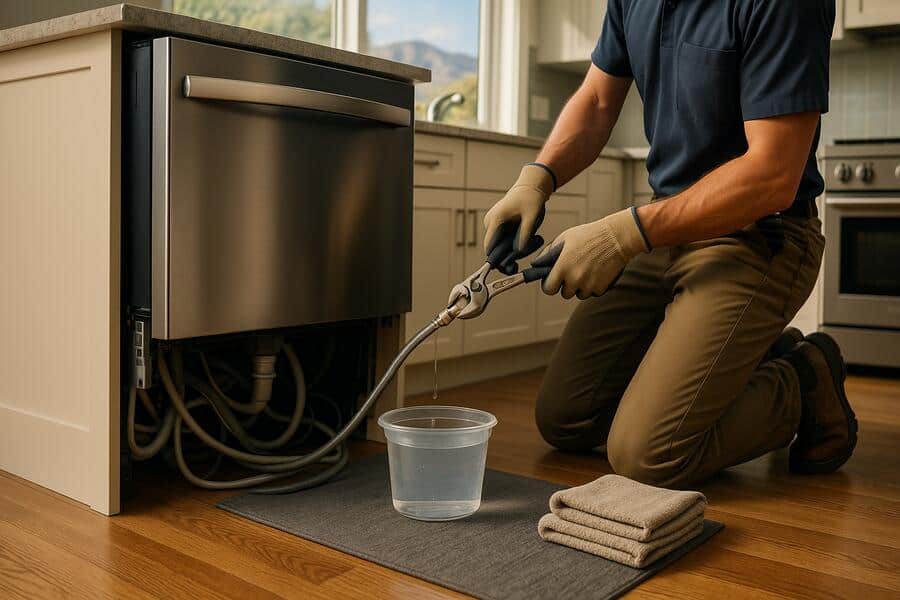
- Disconnect Drain Hose: The drain hose usually connects to the garbage disposal or a dedicated drain under the sink. Place a shallow pan or bucket directly underneath the connection point before detaching the hose. Be prepared for a small amount of water to spill out.
- Elevate and Drain: Once disconnected from the drain, carefully lower the end of the drain hose into your bucket to allow any remaining water from within the hose itself to empty out. Some might also gently tip the dishwasher slightly (after disconnecting power and water, of course) to encourage more water to come out of the main drain hose.
- Towels Are Your Friend: Keep plenty of towels on hand to soak up any spills during this process. Residual water in the pump mechanism will be present, so expect some drips even after the main drain is clear.
💡 Key Takeaway: Before “dishwasher removal,” ensure you clear the area, gather tools, and review your appliance’s manual. Critically, properly drain all residual water by running a drain cycle and then carefully disconnecting the drain hose into a bucket, as even a small amount of leftover water can cause significant issues when “moving a dishwasher.”
Disconnecting Utilities and Preparing for Transit
3. Disconnecting Water and Power: A Job for Professionals
This is where professional guidance for “how to move a dishwasher” is strongly advised due to safety risks.
- Turn Off Water Supply: Locate the hot water shut-off valve, typically under the kitchen sink. Turn it off completely. Even after shutting off the valve, place a towel and a small bucket under the water supply line connection point before detaching it from the dishwasher.
- Disconnect Electrical Power: This is the most dangerous step if not handled correctly.
- Locate Circuit Breaker: Go to your home’s main electrical panel (fuse box or circuit breaker box) and turn off the circuit breaker that supplies power to the kitchen, or specifically to the dishwasher if labeled.
- Verify Power Off: Use a non-contact voltage tester to confirm that the power to the dishwasher’s electrical connection is completely off before touching any wires.
- Disconnect Wiring: The dishwasher’s electrical connection is usually in a junction box at the front bottom of the appliance. Remove the junction box cover, then carefully disconnect the wires (black, white, green/ground).
- Why Professional Help is Key: Improper handling of electrical wiring can lead to severe electrical shock, fire, or damage to your home’s electrical system. For this reason, many appliance movers strongly recommend that a qualified plumber or electrician handle these disconnections, especially if you’re uncomfortable or inexperienced.
- Remove Mounting Brackets: Dishwashers are usually secured to the underside of the countertop with mounting brackets. Locate and unscrew these brackets to free the dishwasher from its cabinet space.
4. Securing and Transporting the Dishwasher
Once disconnected, the “moving a dishwasher” process shifts to securing it for safe transit.
- Secure the Door: The dishwasher door should be securely fastened for the move. You can use strong moving tape (painter’s tape is not strong enough) or a strap to keep the door from swinging open. Avoid taping directly over control panels or labels that could be damaged.
- Remove and Secure Racks: For extra protection against internal damage and rattling, consider removing the racks and packing them separately. If you leave them in, secure them with soft packing material (e.g., bubble wrap or old towels) to prevent them from shifting or scratching the interior.
- Slide Out Carefully: Gently pull the dishwasher out from its cabinet space. Be mindful of the electrical cord and water hoses, ensuring they don’t snag or get crushed.
- Use an Appliance Dolly: Due to its weight and awkward shape, “how to move a dishwasher” safely often involves an appliance dolly. Tilt the dishwasher back onto the dolly and secure it with straps. This protects both the appliance and your back.
- Protect for Transport: Wrap the entire dishwasher in moving blankets and stretch wrap to protect its exterior from scratches and dents during loading onto the truck and transit.
Dishwasher Moving Checklist
| Step | Action Item | Why it’s Crucial for “How to Move a Dishwasher” |
|---|---|---|
| Preparation | Clear, gather tools, read manual, protect floors. | Ensures readiness, prevents damage, aids safety. |
| Draining | Run cycle, disconnect drain hose into bucket, towel up spills. | Prevents water damage during transit. |
| Disconnection | Turn off water, shut off circuit breaker, disconnect wiring (pro help advised). | Eliminates electrical shock and water leak hazards. |
| Securing | Tape door, remove/secure racks, slide out carefully, use dolly. | Protects dishwasher from internal and external damage, prevents injury. |
💡 Key Takeaway: For safe “dishwasher removal,” always turn off the water supply and, critically, shut off the correct circuit breaker for the appliance—professional help for electrical disconnection is strongly recommended to avoid shock or damage. Once utilities are secure, tape the door closed, remove or secure internal racks, and use an appliance dolly for safe “moving a dishwasher” before wrapping it thoroughly for transit.
Conclusion
Successfully “moving a dishwasher” is a process that demands careful attention to detail, especially when it comes to safely disconnecting utilities. From thoroughly draining residual water to the critical steps of shutting off the water supply and, most importantly, safely disconnecting electrical power—ideally with professional assistance—each phase of “dishwasher removal” is vital for preventing damage and ensuring safety. By securing the door and internal components, and utilizing proper moving equipment like an appliance dolly, you can protect your appliance and yourself. While seemingly simple, respecting the complexities of “how to move a dishwasher” ensures a smooth, safe, and incident-free relocation for this essential kitchen appliance.
Have questions about how to how to move a dishwasher? Reach out to our team today.
Frequently Asked Questions About How To Move A Dishwasher
What is the most important safety step when learning “how to move a dishwasher”?
The most important safety step when learning “how to move a dishwasher” is to disconnect the electrical power supply. This means going to your home’s main circuit breaker panel and turning off the breaker for the kitchen or the dishwasher specifically. Using a voltage tester to confirm the power is off before touching any wires is crucial to prevent electrical shock. Professional assistance for this step is highly recommended.
Why is it important to drain all water before “dishwasher removal”?
It’s important to drain all water before “dishwasher removal” to prevent water leaks and potential damage during the move. Even after a cycle, dishwashers retain some residual water in the pump and hoses. This water can spill out during transit, soaking boxes, damaging other belongings, or even causing mold if left unattended in the appliance.
Should I disconnect the water and power lines myself when “moving a dishwasher”?
While some homeowners with DIY experience might attempt it, it’s strongly recommended that a qualified plumber or electrician handle the disconnection of water and power lines when “moving a dishwasher.” Improper disconnection can lead to leaks, electrical shock, or damage to your home’s systems. Safety should always be the top priority.
How do I secure the dishwasher for transit after it’s disconnected?
After disconnection, secure the dishwasher for transit by first taping the door closed with strong moving tape to prevent it from swinging open. If possible, remove the internal racks and pack them separately, or secure them with bubble wrap or towels to prevent rattling. Finally, wrap the entire appliance in moving blankets and stretch wrap to protect its exterior during loading and transport, and use an appliance dolly for safe movement.