
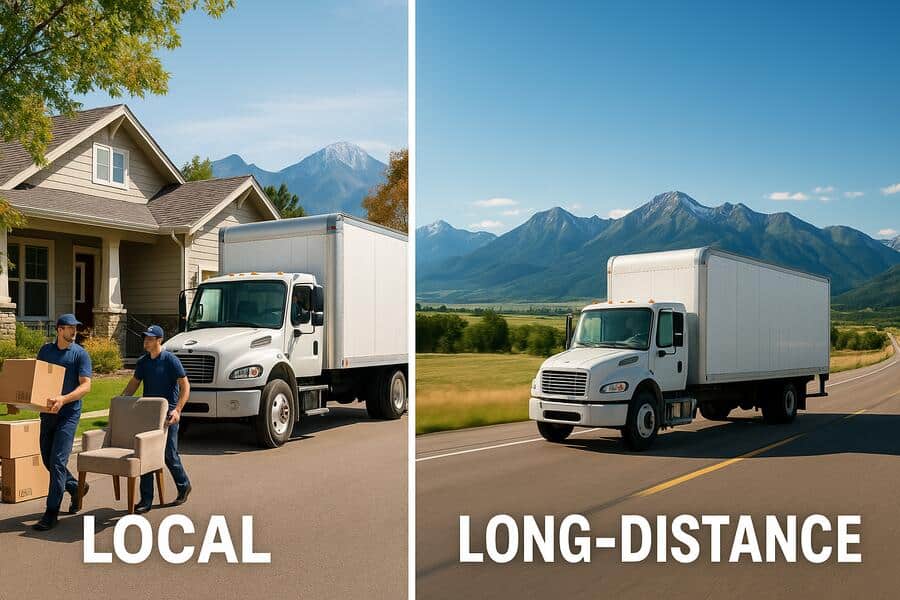
When planning a home relocation, one of the first questions on every homeowner’s mind is, “How much will this cost?” The answer largely depends on whether you’re undertaking a “local vs long distance move.” While both involve transporting your belongings from one point to another, the underlying pricing structures, logistical complexities, and scheduling considerations differ significantly. Many assume a move is just a move, but understanding these fundamental differences is crucial for accurate budgeting and avoiding unexpected expenses. What applies to “local residential movers near me” often doesn’t hold true for “long distance residential movers.”
This article will clarify how the “local vs long distance move cost” is determined by professional movers. We’ll explain why local moves are typically priced by time and crew size, while longer journeys factor in the weight or volume of your shipment and the distance traveled. Beyond just the immediate cost, we’ll also touch upon how scheduling and delivery windows are managed for each type of move, impacting your overall relocation experience. By understanding these distinctions, you’ll be better equipped to get accurate estimates and plan for your specific residential moving services, ensuring a smoother transition to your new home.
💡 Key Takeaway: The “local vs long distance move cost” varies significantly. Local moves are generally time-based, while long-distance moves are priced by weight/volume and distance. Understanding these pricing models is crucial for accurate budgeting and managing expectations for scheduling and delivery, whether using “local residential movers near me” or “long distance residential movers.”
Decoding “Local vs Long Distance Move Cost”
1. Pricing Models: Hourly for Local, Weight/Distance for Long-Distance
The fundamental difference in “local vs long distance move cost” lies in how professional movers calculate their fees.
- Local Moves (Typically Under 50-100 Miles):
- Hourly Rate: “Local residential movers near me” almost exclusively charge by the hour. This rate is typically determined by the size of the crew (e.g., 2 movers, 3 movers) and the truck used.
- Crew Size: A larger crew might have a higher hourly rate but can often complete the move faster, potentially reducing the overall labor hours.
- Travel Fees: Many local movers also include a separate travel fee, which might be a flat rate, an hourly charge for travel to and from the job, or a “double-drive time” calculation for the time it takes to get from their facility to your old home, then to your new home, and finally back to their facility.
- Minimum Charges: Most local movers have a minimum charge, often equivalent to 2-4 hours of labor, even if the actual moving time is less.
- Long-Distance Moves (Typically Over 50-100 Miles, especially Interstate):
- Weight and Distance: “Long distance residential movers” primarily base their charges on the total weight of your shipment and the distance it travels. The heavier your belongings and the farther they go, the higher the cost.
- Volume: For some long-distance movers or specific types of moves (e.g., small shipments), the price might be based on the cubic feet (volume) your items occupy in the truck.
- Binding vs. Non-Binding Estimates: For interstate moves, federal regulations require movers to provide written estimates. A binding estimate guarantees the price unless services change, while a non-binding estimate is an approximation that can fluctuate. It’s crucial to understand which type you’re receiving to avoid “moving scams” where a low estimate “balloons dramatically.”
2. Additional Services and Factors Influencing Cost
Beyond the core pricing model, several other factors contribute to the “local vs long distance move cost.”
- Packing Services and Materials:
- Local: If you opt for professional packing, “local residential movers near me” will typically charge an hourly rate for packing labor, plus the cost of materials (boxes, tape, bubble wrap).
- Long-Distance: Packing services and materials are often itemized separately or as part of a more comprehensive service package, sometimes influencing the total weight/volume.
- Accessorial Charges: These are fees for services beyond basic transportation.
- Both: Charges can include disassembling/reassembling furniture, appliance servicing, long carries (if the truck can’t park close), stair fees, shuttle services (if a smaller truck is needed for access), or hoisting.
- These should be clearly detailed in your estimate, regardless of move type.
- Valuation Coverage: The cost to insure your belongings is a separate line item. Basic “released value” coverage is often free but offers minimal protection. Full-value protection costs extra but provides more comprehensive coverage.
- Seasonality: Peak moving seasons (summer months, end of the month) generally see higher prices for both local and long-distance moves due to increased demand.
💡 Key Takeaway: The core “local vs long distance move cost” is determined by distinct pricing models: local moves typically charge an hourly rate based on crew size plus travel fees and minimums, while long-distance moves are primarily priced by the weight or volume of your shipment and the distance. Beyond these, additional factors like packing services, “accessorial charges” (e.g., for stairs or long carries), the level of valuation coverage, and seasonality significantly influence the total cost for both “local residential movers near me” and “long distance residential movers.”
Logistics and Scheduling Differences
3. Scheduling and Delivery Windows: What to Expect
The timeline for a “local vs long distance move” is a significant differentiator.
- Local Moves:
- Faster Turnaround: Typically completed within a single day or, for very large homes, over two days.
- Specific Scheduling: You can usually schedule a precise date and time for pickup and delivery, often with a narrow arrival window.
- Direct Delivery: Your belongings go directly from your old home to your new home without intermediate stops.
- Long-Distance Moves:
- Extended Timelines: These moves involve longer transit times, often spanning several days or even weeks, depending on the distance and the mover’s logistics.
- Delivery Windows: “Long distance residential movers” often provide a delivery window (e.g., 2-14 days) rather than a precise date and time. This is because trucks may carry multiple shipments for different customers along a route.
- Potential for Storage-in-Transit: If your new home isn’t ready when the movers arrive at your destination city, you might incur charges for “storage-in-transit,” where your belongings are held temporarily in the mover’s warehouse.
- Interstate Regulations: Moves across state lines are federally regulated (by the FMCSA), with specific rules regarding estimates, delivery, and claims, which adds a layer of formal process.
4. Preparing for Your Specific Move Type
Understanding these differences helps you better prepare, whether you need “local residential movers near me” or “long distance residential movers.”
- For Local Moves:
- Focus on efficiency to minimize hourly costs: have everything packed and ready, clear pathways, and communicate clearly with the crew on moving day.
- Confirm all hourly rates, minimums, and travel fees upfront.
- For Long-Distance Moves:
- Get multiple written, binding estimates. Ensure the mover conducts an in-person or virtual survey of your belongings to prevent “hostage load” scams where the price dramatically increases at delivery.
- Be flexible with your delivery date and have a contingency plan (e.g., essentials box, temporary housing) for potential delays.
- Understand your valuation coverage thoroughly, as long-distance transit poses different risks.
- Verify the mover’s USDOT number for interstate moves.
Local vs. Long-Distance Move Overview
| Feature | Local Move (e.g., within 50-100 miles) | Long-Distance Move (e.g., interstate) |
|---|---|---|
| Primary Pricing Basis | Hourly Rate (Crew Size + Time) + Travel Fee/Minimum | Weight/Volume of Shipment + Distance |
| Estimate Type | Often non-binding, but binding options available. | Binding or Non-Binding (federally regulated). |
| Delivery Timeline | Same day or next day; specific dates/times. | Delivery window (days to weeks), less precise. |
| Regulation | State/local regulations vary. | Federal (FMCSA) regulations apply. |
| Potential for Storage | Less common, typically only if specifically requested. | Storage-in-transit (SIT) more common if new home not ready. |
💡 Key Takeaway: Scheduling and delivery are key differentiators for “local vs long distance move cost.” Local moves offer faster, precise scheduling and direct delivery, often completed within a day. Conversely, “long distance residential movers” typically provide extended delivery windows (days to weeks) due to logistical complexities, and you should plan for potential storage-in-transit and understand federal regulations. Proper preparation, including understanding estimates and having contingency plans, is vital for both types of moves.
Conclusion
Understanding the distinctions between “local vs long distance move cost” is fundamental for anyone planning a residential relocation. While “local residential movers near me” typically base their pricing on an hourly rate, emphasizing efficiency and crew size, “long distance residential movers” primarily factor in the weight or volume of your belongings and the distance traveled. These differences extend beyond pricing to encompass crucial aspects like scheduling flexibility, delivery windows, and the applicable regulatory frameworks. By thoroughly researching and clarifying these elements with potential movers, you can secure accurate estimates, budget effectively, and approach your moving day with confidence, no matter how far your journey takes you.
Have questions about how to local vs long distance move cost? Reach out to our team today.
Frequently Asked Questions About Local vs Long-Distance Home Moves: How Pricing Changes
How does the “local vs long distance move cost” primarily differ?
The “local vs long distance move cost” primarily differs in the pricing model. “Local residential movers near me” typically charge an hourly rate based on the crew size and the time taken, often with additional travel fees and minimums. “Long distance residential movers,” especially for interstate moves, usually base their prices on the total weight or volume of your shipment and the distance it will travel.
Are “long distance residential movers” regulated differently than local ones?
Yes, “long distance residential movers” that cross state lines are regulated by the Federal Motor Carrier Safety Administration (FMCSA), which sets specific rules for written estimates (binding vs. non-binding), liability, and consumer protection. Local movers, operating within a state, are typically subject to state or local regulations, which can vary.
What factors, besides distance, influence the “local vs long distance move cost”?
Beyond distance, several factors influence the “local vs long distance move cost.” These include the volume/weight of your belongings, the need for packing services and materials, any accessorial charges (e.g., for stairs, long carries, furniture disassembly), the level of valuation coverage you choose, and the seasonality of your move (prices are often higher during peak summer months).
How do delivery timelines compare between a “local vs long distance move”?
Delivery timelines differ significantly. A “local vs long distance move” often means a local move is completed within a day or two, with a specific pickup and delivery schedule. A long-distance move, however, typically involves an extended delivery window, spanning several days or even weeks, as the moving truck may consolidate multiple shipments along its route. “Long distance residential movers” provide a delivery window rather than a precise date.

