
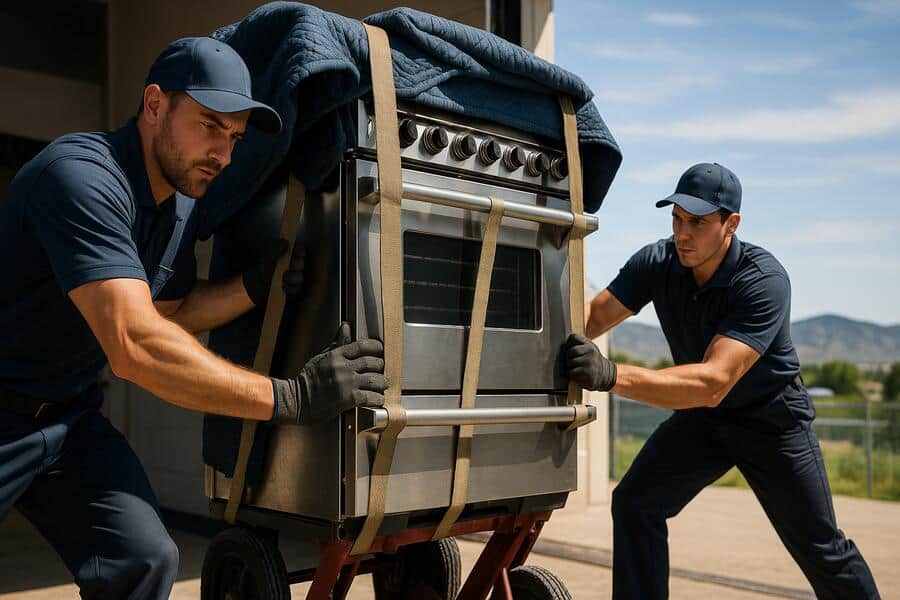
“Moving commercial kitchen equipment” is an entirely different beast than relocating residential appliances. These are not just heavy; they are complex, often hardwired into utilities, and essential to a business’s operation. Attempting a DIY move of this specialized machinery can lead to significant damage to the equipment, the facility, or even severe injury. More importantly, improper disconnection or reconnection by unlicensed personnel can result in gas leaks, electrical fires, or serious code violations, halting your business and incurring hefty fines. From industrial ovens and walk-in refrigerators to specialized fryers and ventilation systems, each piece of “restaurant equipment moving” requires a tailored approach and expert handling.
This guide will walk you through the critical considerations for “moving commercial kitchen equipment.” We’ll cover the importance of precise scheduling to minimize business downtime, the non-negotiable involvement of licensed trades for utility disconnections and reconnections, and the specialized techniques required for handling truly heavy commercial appliances. Whether you’re upgrading, expanding, or relocating an entire restaurant, understanding these complexities is key to a smooth transition. For more information on general appliance moving, you can read the full breakdown on our blog.
💡 Key Takeaway: “Moving commercial kitchen equipment” is complex and requires professional expertise due to the weight, utility connections, and operational importance of each piece. DIY attempts risk damage, injury, and severe code violations. Proper scheduling, licensed trade involvement for utility disconnections, and specialized heavy equipment handling are crucial for successful “restaurant equipment moving.”
Key Considerations for “Moving Commercial Kitchen Equipment”
1. Strategic Scheduling and Minimizing Downtime
Time is money in the commercial kitchen world, making strategic scheduling paramount when “moving commercial kitchen equipment.”
- Off-Hours or Closure Coordination: The move should be planned during non-operational hours, such as overnight, early mornings, or during a scheduled closure, to minimize disruption to service and revenue.
- Phased Moves: For larger kitchens, a phased approach might be necessary, moving critical equipment first or in stages to allow partial operation to continue.
- Utility Turnaround: Coordinate closely with utility providers for exact disconnection and reconnection times. Delays in power, gas, or water can significantly impact your reopening schedule.
- New Location Readiness: Ensure the new kitchen space is fully prepared for equipment installation, including all necessary utility hookups, floor reinforcement, and clear access paths.
2. Licensed Trades for Utility Disconnections and Reconnections
The most critical aspect of “moving commercial kitchen equipment” is the safe and compliant handling of utilities. This is strictly a job for licensed professionals.
- Electrical Disconnections: Commercial kitchen equipment often requires dedicated 240-volt or higher circuits, frequently hardwired. Only a licensed electrician can safely:
- Turn off the main power at the breaker or main switch.
- Disconnect hardwired units from the electrical supply.
- Properly cap and secure exposed wiring according to OSHA (e.g., OSHA 29 CFR Part 1910 for lockout/tagout procedures) and local codes.
- Reconnect and test equipment at the new location, ensuring proper voltage, phase, and current draw.
- Gas Line Disconnections: Gas ovens, ranges, and fryers must be disconnected by a licensed plumber or gas technician.
- They will shut off the gas supply, disconnect the lines, and safely cap them to prevent leaks (following standards like NFPA 54 for gas work).
- Reconnection at the new site involves proper installation, leak testing, and ensuring ventilation systems (which may fall under NFPA 96) are functional.
- Plumbing Disconnections: Dishwashers, sinks, ice makers, and combi ovens require water and drainage lines. A licensed plumber will:
- Shut off water supply and drain lines.
- Disconnect and cap plumbing fixtures.
- Reinstall and test all connections at the new location to prevent leaks.
- Ventilation and Fire Suppression: For equipment under hoods, these systems are interconnected. Disconnection may require specialists to ensure proper reinstallation and re-evaluation for safety codes.
💡 Key Takeaway: “Moving commercial kitchen equipment” demands strategic scheduling during off-hours to minimize business downtime, alongside precise coordination of utility turnaround and ensuring the new facility is fully ready. Most critically, all utility disconnections (electrical, gas, plumbing, ventilation) and reconnections must be handled exclusively by licensed trades to prevent safety hazards, comply with codes like OSHA and NFPA, and avoid costly damage.
Specialized Handling and Protection
3. Heavy Equipment Handling and Rigging Expertise
“Commercial appliance moving,” especially for large kitchen units, often requires specialized rigging and equipment.
- Specialized Tools and Equipment: Professional movers specializing in “restaurant equipment moving” utilize:
- Heavy-duty furniture dollies, appliance dollies, and floor protection to prevent damage to floors.
- Forklifts, pallet jacks, and duct lifts for extremely heavy items like commercial refrigerators, ovens, or walk-in coolers (as recommended by OSHA for heavy lifting).
- Hydraulic lifts and stair climbers for navigating stairs and tight spaces.
- Rigging straps, hoists, and cranes for moving items too large or heavy for standard methods.
- Proper Lifting Techniques and PPE: Movers are trained in safe lifting techniques to prevent injury. They also use appropriate Personal Protective Equipment (PPE) to ensure safety during the move.
- Disassembly and Reassembly: Some large pieces of “commercial kitchen equipment” may need partial disassembly (e.g., removing doors, shelves) for safe transport. Professionals have the knowledge and tools for this and proper reassembly.
4. Comprehensive Protection During Transit
Protecting valuable “commercial kitchen equipment” during transit is crucial to prevent costly damage.
- Padding and Wrapping: Each piece of equipment should be thoroughly wrapped in heavy-duty moving blankets, industrial-strength shrink wrap, or custom crating to protect against scratches, dents, and impacts.
- Securing Components: All removable parts (shelves, grates, trays) should be secured or packed separately. Doors of ovens and refrigerators should be taped shut or secured to prevent opening during transit.
- Fluid Draining: For items like ice machines or dishwashers, all water and fluids must be completely drained to prevent spills, mold, and damage.
- Proper Loading and Securing in Truck: Equipment is strategically loaded into the moving truck, ensuring even weight distribution. Items are then securely strapped down using heavy-duty straps and load bars to prevent shifting, tipping, or collision during transport.
- Contamination Control: For food-grade equipment, professionals use clean tools and protective coverings to minimize contamination risks, an essential practice in “restaurant equipment moving.”
Commercial Kitchen Equipment Moving Checklist
| Task | Key Considerations | Who Performs |
|---|---|---|
| Scheduling & Planning | Minimize downtime, phased approach, new site readiness. | Owner/Manager & Project Manager |
| Utility Disconnections | Electrical, gas, water, ventilation – ensure safety & code. | Licensed Electrician, Plumber/Gas Tech, HVAC Tech |
| Equipment Preparation | Drain fluids, secure loose parts, partial disassembly if needed. | Moving Crew & Restaurant Staff |
| Heavy Lifting & Rigging | Use specialized dollies, forklifts, proper lifting techniques, PPE. | Professional Moving Crew (Riggers) |
| Protection & Loading | Blankets, shrink wrap, crating, secure strapping in truck. | Professional Moving Crew |
| Utility Reconnections | Re-install & test all utilities safely & to code at new site. | Licensed Electrician, Plumber/Gas Tech, HVAC Tech |
💡 Key Takeaway: Safe “commercial appliance moving” requires specialized heavy equipment handling, often involving industrial dollies, forklifts, or even cranes for extremely heavy items, all performed with proper lifting techniques and PPE. Crucially, each piece of “restaurant equipment moving” must receive comprehensive protection, including thorough padding, securing of loose components, draining of fluids, and strategic, secure loading in the truck to prevent costly damage and ensure food-grade cleanliness.
Conclusion
“Moving commercial kitchen equipment” is a complex, multi-faceted process that demands precision, specialized equipment, and expert coordination. From meticulously scheduling to minimize business interruption to the non-negotiable involvement of licensed electricians, plumbers, and gas technicians for utility disconnections and reconnections, every step must be handled with utmost care. The sheer weight and delicate nature of “commercial appliance moving” necessitate professional rigging expertise and comprehensive protection during transit to safeguard these valuable assets. Attempting to manage such a move without specialized knowledge and resources risks not only damage and injury but also significant regulatory non-compliance. Entrusting your “restaurant equipment moving” to experienced professionals ensures a smooth, safe, and efficient transition, allowing you to get your kitchen operational quickly and without costly setbacks.
Have questions about how to moving commercial kitchen equipment? Reach out to our team today.
Frequently Asked Questions About Moving Commercial Kitchen Equipment
Why is “moving commercial kitchen equipment” so different from residential moves?
“Moving commercial kitchen equipment” is vastly different from residential moves because commercial appliances are often significantly heavier, larger, and frequently hardwired into specialized electrical, gas, and plumbing utility lines. This requires not only heavy-duty moving equipment and techniques but also the involvement of licensed trades for safe disconnection and reconnection, which isn’t typically needed for residential appliances.
Who should handle the utility disconnections when “restaurant equipment moving”?
Utility disconnections and reconnections for “restaurant equipment moving” must always be handled by licensed professionals. This includes licensed electricians for electrical work, licensed plumbers or gas technicians for gas and water lines, and potentially HVAC specialists for ventilation systems. Attempting these disconnections yourself is extremely dangerous, can damage equipment, and will likely violate local codes.
What kind of specialized equipment is needed for “commercial appliance moving”?
“Commercial appliance moving” often requires specialized equipment beyond standard moving dollies. This can include heavy-duty appliance dollies, pallet jacks, forklifts, hydraulic lifts, stair climbers, and even cranes for extremely heavy or oversized items like commercial ovens or walk-in refrigerators. Professional movers specializing in commercial equipment will have access to and expertise with these tools.
How can I minimize business downtime when “moving commercial kitchen equipment”?
To minimize business downtime when “moving commercial kitchen equipment,” strategic planning is crucial. This involves scheduling the move during non-operational hours or a planned closure, coordinating utility disconnections and reconnections with licensed trades precisely, and ensuring your new kitchen space is fully prepared for installation before the equipment arrives. A phased moving approach might also be considered for larger operations.

