
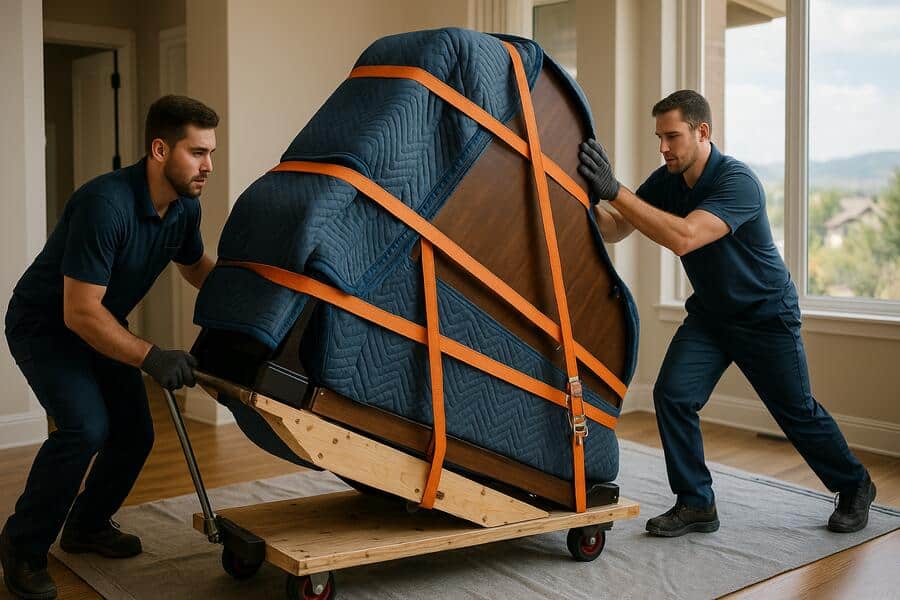
Moving a piano is a task that should never be attempted lightly or without the right tools. These instruments are not only incredibly heavy, often weighing hundreds or even over a thousand pounds, but they are also delicate, finely tuned, and immensely valuable. A single misstep can result in severe injury, irreparable damage to the piano, or costly harm to your home’s floors and walls. This is why specialized “piano moving equipment” is not merely helpful, but absolutely essential for a safe and successful relocation. From uprights to grand pianos, each type presents its own unique challenges that standard moving gear simply cannot handle.
This article will delve into the core “piano moving equipment” that professional movers rely on, explaining the specific purpose of items like the “piano board,” various straps, and specialized dollies. We’ll detail how each tool works in conjunction with skilled movers to protect the instrument’s delicate internal mechanisms and polished exterior, safeguard your property from scratches and dents, and ensure the moving crew’s safety. Understanding the dedication and specialized gear involved in piano relocation highlights why it’s a job best left to experts, like our team of denver piano movers.
💡 Key Takeaway: “Piano moving equipment” is essential due to the instrument’s weight, delicacy, and value, as well as the risks of injury and property damage. Specialized tools like the “piano board,” various straps, and unique dollies are crucial for protecting the instrument, home, and crew, underscoring why professional piano movers are necessary for a safe relocation.
Core “Piano Moving Equipment”
1. The Indispensable “Piano Board” (Skid Board)
For grand pianos and sometimes uprights in challenging situations, the “piano board,” also known as a piano skid board, is arguably the most critical piece of “piano moving equipment.”
- Purpose: A “piano board” is a heavy-duty, padded wooden platform designed to distribute the immense weight of a piano evenly during transport. Grand pianos, in particular, are often moved on their side on a skid board after their legs and lyre are removed. This protects the delicate legs and ensures stability.
- Protection for the Instrument:
- Even Weight Distribution: Prevents pressure points that could damage the piano’s frame or internal components.
- Padding: Built-in or added moving blankets protect the piano’s finish from scratches and scuffs while it’s secured to the board.
- Stability: Provides a stable base, preventing tipping or rocking during movement, especially over uneven surfaces or when transitioning from a dolly to a ramp.
- Protection for the Home: By elevating the piano and providing a smooth underside, the “piano board” helps prevent scratches or gouges on floors as the piano is slid or maneuvered.
- Protection for the Crew: Facilitates safer movement by allowing the piano to be slid or securely strapped to a dolly, reducing the need for direct heavy lifting. The board often features a reinforced, bolted lip or “end shoe” for added security.
2. Straps: Securing, Lifting, and Stabilizing
A variety of straps are vital “piano moving equipment,” serving distinct purposes for securing, lifting, and stabilizing the instrument.
- Securing Straps (Ratchet or E-Track Straps):
- Purpose: These heavy-duty straps are used to firmly secure the piano to the “piano board” or directly to a moving dolly or truck wall. They prevent any shifting or movement during transit.
- Protection for the Instrument: By keeping the piano tightly fastened, these straps prevent impacts and vibrations that could damage the soundboard, strings, or outer casing.
- Protection for the Home/Crew: Prevents the piano from becoming a runaway hazard, which could injure movers or damage property.
- Lifting Straps (Shoulder/Forearm Straps):
- Purpose: While pianos are rarely lifted directly by hand, lifting straps are sometimes used for minor adjustments or specific maneuvers. These ergonomic straps loop under the load, allowing movers to lift with their legs and shoulders, distributing the weight more effectively.
- Protection for the Crew: Significantly reduces strain on the back and arms, preventing common moving injuries.
- Specialized Piano Straps: Some “piano moving equipment” includes dedicated straps for securing the lid, keyboard, or pedals, ensuring these delicate parts don’t open or get damaged during the move.
💡 Key Takeaway: The “piano board” (skid board) is crucial “piano moving equipment,” especially for grand pianos, as it evenly distributes weight, protects the instrument’s finish, provides stability, and safeguards floors. Various straps are also indispensable: heavy-duty securing straps (ratchet/E-track) prevent movement and damage during transit, while ergonomic lifting straps protect the crew’s backs, and specialized straps secure delicate piano parts like lids and pedals.
Maneuvering Aids and Protective Gear
3. Specialized Dollies for Different Piano Types
Standard furniture dollies are no match for a piano; specialized dollies are purpose-built “piano moving equipment” for safe transit.
- Upright Piano Dollies (Four-Wheel Dollies):
- Purpose: These are robust, low-profile dollies with four swivel wheels, designed specifically for upright and spinet pianos. The piano is typically tilted onto its side and secured to the dolly, or carefully rolled onto the dolly from the front.
- Protection for the Instrument: Allows smooth movement across flat surfaces, reducing jarring and vibration.
- Protection for the Home: Prevents floor damage by spreading the weight across wide, often non-marking wheels.
- Protection for the Crew: Enables movers to roll the piano with relative ease rather than attempting to carry its full weight.
- Stair-Climbing Dollies: For homes with stairs, a regular dolly is insufficient. Professionals use specialized stair-climbing dollies with unique wheel configurations that allow them to “walk” up and down stairs, carefully controlling the descent or ascent. These often incorporate hydraulic lifts for added safety.
- Grand Piano Dolly: Once a grand piano is on its “piano board,” a heavy-duty dolly can be used underneath the board to roll it across flat surfaces.
4. Comprehensive Protection: Padding, Ramps, and Gloves
Beyond the primary moving aids, a range of protective “piano moving equipment” is used to ensure all-around safety.
- Moving Blankets/Furniture Pads: Thick, padded blankets are used extensively to wrap the entire piano, securing them with stretch wrap or tape.
- Protection for the Instrument: Shields the piano’s delicate finish from scratches, scuffs, and minor impacts during handling and transit.
- Protection for the Home: Protects doorframes, walls, and banisters from accidental bumps or scrapes as the piano is maneuvered through tight spaces.
- Floor Protection: Additional floor runners (like Ram Board or plywood sheets) are often laid down to create a continuous, smooth, and protected path, especially on delicate flooring like hardwood or tile.
- Ramps: Heavy-duty, non-slip ramps are essential for safely loading pianos into moving trucks or vans. They provide a gradual incline, eliminating the dangerous task of lifting the entire weight into the vehicle.
- Gloves: Professional movers wear specialized grip gloves to ensure a secure hold on the piano and moving equipment, preventing slips and protecting their hands.
Essential Piano Moving Equipment
| Equipment Item | Primary Purpose | Benefits for Piano, Home, & Crew |
|---|---|---|
| Piano Board (Skid Board) | Supports and protects grand pianos (or uprights for stairs). | Distributes weight, prevents damage to frame, protects floors, stabilizes. |
| Securing Straps (Ratchet/E-Track) | Fastens piano to board/dolly/truck. | Prevents movement, impacts, and vibrations; ensures crew/property safety. |
| Upright Piano Dolly | Rolls upright pianos on flat surfaces. | Smooth transit, prevents floor damage, reduces manual lifting. |
| Stair-Climbing Dolly | Maneuvers pianos up/down stairs. | Controlled movement, reduces injury risk, prevents stair/wall damage. |
| Moving Blankets/Pads | Wraps piano for protection. | Shields finish from scratches/dents; protects walls/doorways. |
| Ramps (Non-Slip) | Facilitates loading into trucks. | Safe, gradual incline; eliminates dangerous lifting into vehicle. |
💡 Key Takeaway: Specialized dollies are crucial “piano moving equipment,” with upright piano dollies for flat surfaces and stair-climbing dollies (often hydraulic) for safely navigating multiple levels, protecting the instrument, home, and crew from damage and injury. Comprehensive protection also includes ample moving blankets, floor runners, non-slip ramps for truck loading, and grip gloves, all working together to shield the piano’s finish, prevent property damage, and ensure mover safety during the complex process of piano relocation.
Conclusion
The successful and safe relocation of a piano hinges entirely on the proper utilization of specialized “piano moving equipment.” From the foundational “piano board” that cradles grand pianos to the robust “piano dolly” that glides uprights, and the array of straps that secure and stabilize, each tool plays a critical role. This sophisticated gear, combined with the expertise of professional piano movers, safeguards the instrument’s delicate structure, protects your home from costly damage, and ensures the moving crew’s well-being. Attempting to move a piano without this essential equipment and specialized knowledge is an unnecessary risk that can lead to significant regrets. Trusting the professionals, who come equipped with every necessary tool and skill, is the only way to guarantee your cherished piano arrives at its new destination safely and ready to play.
Have questions about how to piano moving equipment? Reach out to our team today.
Frequently Asked Questions About Equipment Piano Movers Use: Skid Boards, Straps, And Dollies
What is a “piano board” and why is it important for “piano moving equipment”?
A “piano board,” also known as a piano skid board, is a heavy-duty, padded wooden platform. It’s crucial “piano moving equipment” because it evenly distributes the piano’s immense weight, especially for grand pianos (which are often moved on their side on the board). This protects the instrument’s delicate frame, prevents damage to its finish, stabilizes it during transit, and helps safeguard your floors.
What types of straps are considered essential “piano moving equipment”?
Essential “piano moving equipment” includes two main types of straps. Securing straps, such as ratchet or E-track straps, are used to firmly fasten the piano to the “piano board,” dolly, or truck walls to prevent any movement or impact damage during transit. Additionally, ergonomic lifting straps (shoulder or forearm straps) can be used for controlled maneuvers, distributing the piano’s weight more safely across movers’ bodies to prevent injury.
How do “piano dolly” types differ for “piano moving equipment”?
For “piano moving equipment,” there are specialized dollies for different piano types. Upright piano dollies are sturdy, low-profile four-wheel dollies designed to roll upright pianos safely across flat surfaces. For stairs, professional movers utilize specialized stair-climbing dollies with unique wheel systems, often featuring hydraulic lifts, to safely maneuver the piano up and down multiple levels with controlled precision, which a standard “piano dolly” cannot do.
How does “piano moving equipment” protect my home during the move?
“Piano moving equipment” protects your home in several ways. The “piano board” and dollies with non-marking wheels help prevent scratches, dents, or gouges on floors. Moving blankets and furniture pads shield doorframes, walls, and banisters from accidental impacts. Ramps facilitate smooth transitions into trucks, avoiding jarring movements that could compromise structural integrity. This comprehensive approach minimizes the risk of costly property damage.

