Moving furniture is more than just heavy lifting; it’s an art of protection. One of the most common concerns for homeowners during a move is the potential for scratches, dents, and dings to their beloved pieces. From delicate antique tables to modern upholstered sofas, every item requires specific care. Understanding “how movers wrap furniture” is key to appreciating the value of professional services and ensuring your belongings arrive at their new destination in pristine condition. Simply tossing a blanket over a dresser might seem sufficient, but without proper techniques and materials, even a short move can result in irreversible damage. The right “furniture wrapping” goes beyond mere aesthetics; it’s about safeguarding your investment and memories.
This guide will detail the professional-grade techniques and materials experts use to protect your furniture. We’ll explore the critical role of thick “furniture pads,” the strategic application of stretch wrap, and the importance of corner guards. Furthermore, we’ll address a common DIY mistake: the potential problems of direct plastic on wood finishes, especially in fluctuating temperatures. By learning “how movers wrap furniture,” you’ll be better equipped to prepare your own items or, more importantly, understand the superior protection offered by experienced furniture movers denver, ensuring a scratch-free relocation.
💡 Key Takeaway: Preventing scratches and damage during a move is critical. Understanding “how movers wrap furniture” highlights the expertise required for proper “furniture wrapping.” Professionals employ specialized “furniture pads,” stretch wrap, and corner guards to safeguard belongings, ensuring items like wood furniture are protected from direct plastic contact, which can cause issues in heat.
Professional Furniture Protection Techniques
1. The Foundation: Thick Moving Blankets (Furniture Pads)
The first line of defense in “how movers wrap furniture” is the generous use of heavy-duty moving blankets, often called “furniture pads.”
- Absorption of Impact: These aren’t just any blankets. Professional moving blankets are thick, quilted pads designed specifically to absorb impact from bumps, scrapes, and vibrations during transit. They act as a crucial cushion.
- Preventing Scratches: The soft, durable fabric provides a protective barrier between your furniture’s delicate surfaces and any abrasive contact points, whether from other items in the truck or the truck’s interior itself.
- Full Coverage: Pros ensure every solid wood, leather, or upholstered piece is individually wrapped fully in these blankets. This isn’t just about covering the top; it’s about encasing the entire item before it even leaves the room.
- Quality Matters: Reputable movers use dozens of high-density blankets, often weighing 80 pounds per dozen, providing superior protection compared to household blankets.
2. Securing with Stretch Wrap
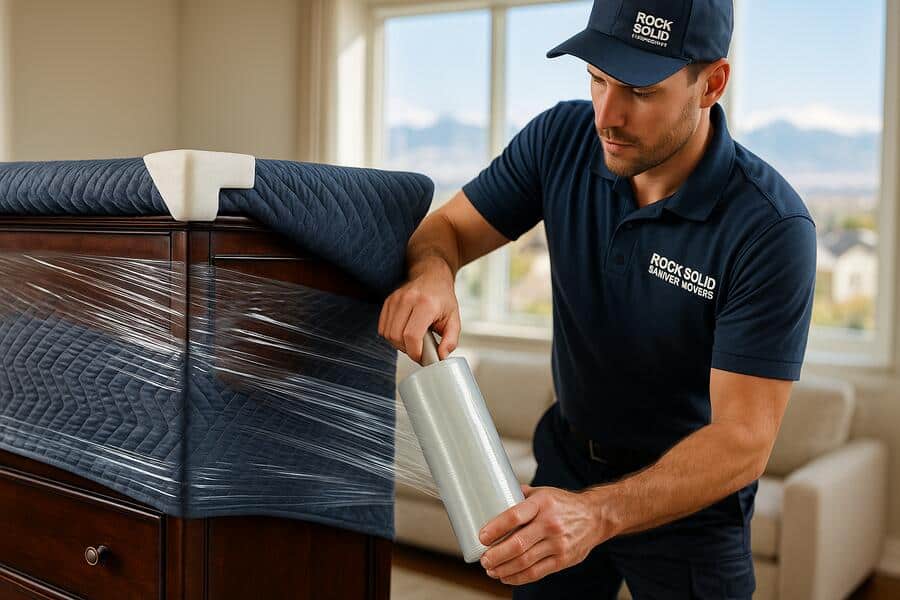
Once “furniture pads” are in place, industrial-grade stretch wrap (also known as mover’s stretch film or shrink wrap) takes over a crucial role.
- Holding Blankets in Place: The primary function of stretch wrap in this context is to securely bind the moving blankets to the furniture. It keeps the pads tight and sealed around the item, preventing them from shifting or falling off during lifting and transport.
- Keeping Upholstery Clean: For upholstered items like sofas and armchairs, stretch wrap provides an additional layer of protection against dirt, dust, and moisture, ensuring they arrive at your new home looking as clean as they left.
- Securing Loose Components: For dressers, cabinets, or desks with drawers, stretch wrap is used directly around the unit to keep drawers, doors, and loose components securely in place, preventing them from opening or getting damaged during the move. It sticks to itself without leaving residue.
- Never Direct on Wood (With Caution): While stretch wrap is excellent for securing blankets and protecting upholstery, professional movers exercise caution with direct “furniture wrapping” on fine wood finishes, especially if the furniture will be stored or exposed to heat for extended periods.
💡 Key Takeaway: “How movers wrap furniture” begins with thick, quilted “furniture pads” to absorb impact and prevent scratches, ensuring full coverage of every item. This foundational layer is then securely bound with industrial-grade stretch wrap, which holds the pads in place, keeps upholstery clean, and secures loose components like drawers, providing robust “furniture wrapping” that safeguards your belongings during transit.
Addressing Specific Protection Needs
3. Corner Guards and Specialized Protection
Corners and edges are particularly vulnerable points that require extra attention.
- Corner Guards: For items like dining tables, glass tabletops, picture frames, and cabinet edges, foam or cardboard corner guards are often used in conjunction with blankets and stretch wrap. These specialized protectors prevent crushing and chipping where items are most susceptible to damage.
- Cardboard Protection: Large, flat surfaces like tabletops or delicate fronts of appliances might receive an additional layer of cardboard over the moving blanket before being stretch-wrapped. This provides a rigid barrier against punctures or pressure marks.
- Disassembly: For complex or large furniture pieces, professional movers often disassemble them (e.g., bed frames, dining tables) into smaller components. Each component is then wrapped individually, making them easier and safer to transport.
- Padding Gaps: In the moving truck, movers strategically place additional “furniture pads” or soft items to fill any gaps between furniture pieces, preventing shifting and rubbing during transit.
4. The Problem with Direct Plastic on Wood Finishes (Especially in Heat)
While stretch wrap is a versatile tool, it’s not always appropriate for direct contact with certain materials, particularly wood.
- Trapped Moisture: If wood furniture is even slightly damp when wrapped directly in plastic, the stretch wrap can trap moisture, leading to mold, mildew, or damage to the wood finish, especially if the item remains wrapped for several days.
- Heat and Condensation: In warm environments or during long-distance moves where temperatures inside the truck can fluctuate, direct plastic contact on wood can create a “sweat” effect. This condensation can cause the finish to become cloudy, sticky, or even peel, potentially adhering the plastic to the wood surface.
- Finish Adhesion: Some furniture finishes can react negatively with plastic, particularly over time or in heat, causing the plastic to stick or even lift the finish upon removal.
- The Blanket Barrier: This is why professional “furniture movers denver” prioritize a layer of breathable moving blankets between the wood and the stretch wrap. The blanket provides the cushioning, while the stretch wrap secures the blanket, preventing direct contact that could harm the finish.
Furniture Wrapping Techniques Comparison
| Material/Technique | Primary Use | Protection Against |
|---|---|---|
| Moving Blankets (Pads) | All furniture (wood, upholstery, leather) | Impact, scratches, abrasions |
| Stretch Wrap | Securing blankets, protecting upholstery, holding drawers | Shifting pads, dirt, dust, loose components |
| Corner Guards | Table edges, cabinet corners, glass panels | Crushing, chipping, denting |
| Cardboard | Large flat surfaces (tabletops), delicate appliance fronts | Punctures, pressure marks |
💡 Key Takeaway: Beyond basic “furniture wrapping,” professional movers use corner guards and cardboard for vulnerable edges and flat surfaces, respectively. Critically, direct plastic “furniture wrapping” on wood finishes can cause damage (mold, stickiness, finish adhesion) by trapping moisture or reacting in heat. Therefore, always use breathable “furniture pads” as a protective barrier between wood and stretch wrap.
Conclusion
Understanding “how movers wrap furniture” reveals the meticulous process required to safeguard your belongings during a move. The combination of thick “furniture pads,” strategically applied stretch wrap, and specialized corner guards creates a multi-layered defense against the rigors of relocation. Crucially, recognizing the potential pitfalls of direct plastic “furniture wrapping” on wood finishes, especially in fluctuating temperatures, underscores the importance of proper technique. By entrusting your move to professionals who understand these nuances, you ensure that your furniture arrives in its new home just as it left its old one: free from scratches, dents, and damage, ready to be enjoyed for years to come.
Have questions about how to how movers wrap furniture? Reach out to our team today.
Frequently Asked Questions About How Movers Wrap Furniture To Prevent Scratches
What are “furniture pads,” and how do movers use them?
“Furniture pads” are thick, quilted moving blankets specifically designed to absorb impact and prevent scratches or abrasions. Professional movers use them to fully wrap every piece of furniture—including wood, upholstered, and leather items—before they are moved. This creates a crucial protective barrier against damage during lifting, carrying, and transit.
Why do movers use stretch wrap when “furniture wrapping,” and what does it protect against?
Movers use stretch wrap (also called mover’s stretch film or shrink wrap) primarily to secure the “furniture pads” firmly in place around an item. It also keeps upholstered furniture clean from dirt and dust and secures loose components like dresser drawers or cabinet doors from opening during the move. It protects against shifting pads, dirt, and keeps items contained.
Do movers use corner guards, and what kind of furniture benefits most from them?
Yes, professional movers frequently use corner guards (made of foam or cardboard) to provide extra protection to the most vulnerable parts of your furniture. Items like dining tables, glass tabletops, cabinet corners, and picture frames benefit most from corner guards, as they prevent crushing, chipping, and denting at these impact-prone areas.
Why is it generally not recommended to put plastic wrap directly on wood furniture finishes?
It is generally not recommended to put plastic wrap directly on wood furniture finishes, especially for extended periods or in warm conditions. Direct plastic can trap moisture, potentially leading to mold, mildew, or damage to the wood finish. In heat, it can also create condensation or cause the finish to become sticky or even peel when the plastic is removed, due to negative reactions between the plastic and certain wood finishes.