When you look at a pool table, you see a centerpiece for entertainment, a finely crafted piece of furniture, and a source of countless hours of enjoyment. What you might not immediately consider is its immense weight. The question, “how much does a pool table weigh?” is fundamental, especially if you’re planning a move. Far from being a simple piece of furniture, a pool table is a precision instrument built around incredibly heavy components, primarily the slate playing surface.
Understanding “how much does a pool table weigh” is crucial because it dictates everything from the necessary manpower to the specialized equipment and techniques required for a safe relocation. This guide will provide general weight ranges, explain how factors like slate thickness and table size influence the overall “slate pool table weight,” and detail why this information is vital for shaping your moving plan. For a seamless and secure move, consider consulting professional pool table movers denver.
💡 Key Takeaway: Understanding “how much does a pool table weigh,” especially the substantial “slate pool table weight,” is critical for safe relocation. It dictates the required crew, specialized equipment, and detailed planning to move this precision instrument without damage.
Understanding Pool Table Weight Ranges
1. General Weight Approximations by Table Size and Type
The “pool table weight” can vary significantly, primarily based on its size and whether it features a slate playing surface.
- Non-Slate (MDF/Wood) Tables: These are typically recreational tables and the lightest option. They can range from 180 to 500 pounds, making them somewhat more manageable for a DIY move, though still heavy.
- 7-Foot (Bar Size) Slate Pool Tables: A common choice for home use, these tables generally weigh between 450 to 700 pounds. The slate itself, often a single piece, contributes significantly to this weight.
- 8-Foot (Standard Home) Slate Pool Tables: These tables are a step up in size and weight, typically ranging from 700 to 1,000 pounds. The slate is often composed of three pieces, making it slightly easier to move in sections but still incredibly heavy overall.
- 9-Foot (Regulation Size) Slate Pool Tables: Found in larger homes or billiard halls, these are the heaviest. Their weight can easily exceed 1,000 pounds, often reaching 1,200 to 1,500 pounds, due to their larger frame and heavier three-piece slate.
- Antique/Custom Tables: Older or custom-built tables can be exceptionally heavy, sometimes weighing over 2,000 pounds, depending on their ornate wood construction and very thick slate.
2. The Role of Slate Thickness in “Slate Pool Table Weight”
The slate, a smooth, heavy rock typically cut from a single piece or multiple pieces, is the heart of a quality pool table and the primary contributor to its weight.
- Slate Material: High-quality pool tables use natural slate, known for its density and ability to provide a perfectly level playing surface. This material is inherently heavy.
- Slate Thickness: The standard thickness for residential slate is usually 3/4 inch to 1 inch. Regulation tables often feature 1-inch thick slate. Even a slight increase in thickness adds substantial “slate pool table weight.”
- A typical 1-inch thick, three-piece slate set for an 8-foot table can weigh 450-750 pounds alone, with each individual piece weighing between 150-250 pounds.
- Single-piece slate tops, while providing an ideal playing surface, are exceptionally heavy and more challenging to maneuver due to their unbroken mass and fragility. A single-piece 7-foot slate can weigh 400-600 pounds.
- Number of Slate Pieces: Most residential and all professional tables use 3 pieces of slate, allowing for easier (though still challenging) transport once disassembled. Tables with a single piece of slate are more rare but exponentially more difficult to move due to the sheer weight and rigidity of the slab.
💡 Key Takeaway: “How much does a pool table weigh” is largely determined by its size and, crucially, the “slate pool table weight.” A 7-foot slate table is 450-700 lbs, an 8-foot is 700-1000 lbs, and larger tables exceed 1000 lbs. Slate thickness (typically 3/4″ to 1″) is a primary factor, with a three-piece slate set alone weighing 450-750 lbs.
Planning the Move: Crew and Equipment
3. How Weight Shapes the Crew Plan
Given the immense “pool table weight,” a DIY move is almost always ill-advised and potentially dangerous. Professional movers meticulously plan based on weight.
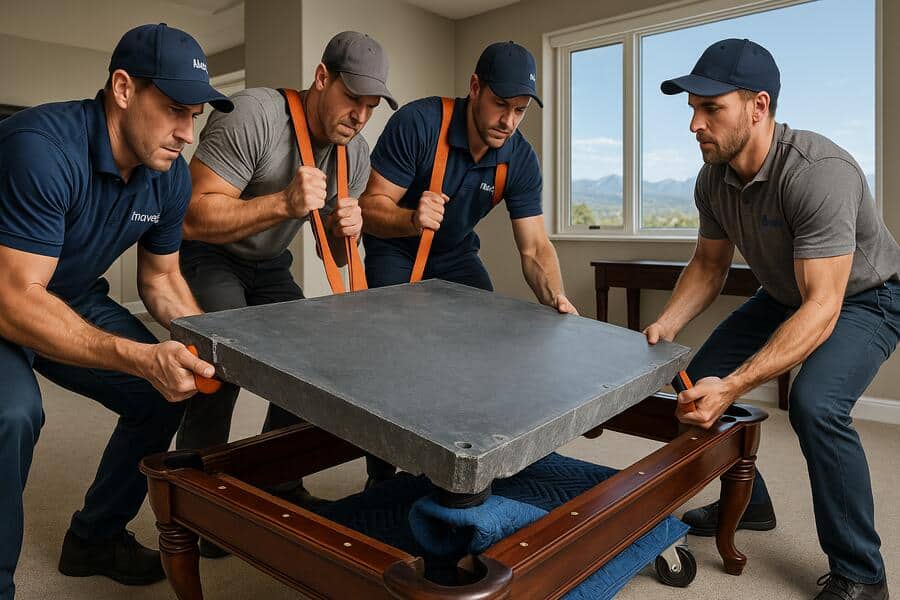
- Required Manpower: Moving a slate pool table, even when disassembled, requires a minimum of 3-4 experienced and strong individuals, and often more for larger tables or challenging access points (stairs, tight turns). The individual slate pieces alone demand multiple people.
- Expertise in Disassembly: The process involves more than just lifting. It requires careful disassembly of rails, pockets, felt, and the slate itself, often involving specialized tools to avoid damage. Reassembly must be done with precision to ensure the table is perfectly level.
- Safety Considerations: The risk of injury (back strains, crushed limbs) and damage to the table (cracked slate) or your property (floors, walls) is extremely high without proper training and equipment.
4. Essential Equipment for Moving a Heavy Pool Table
The significant “slate pool table weight” necessitates specialized equipment to ensure a safe and efficient move.
- Specialized Dollies and Skids: Heavy-duty dollies and padded skids are used to safely transport the frame and individual slate pieces. These are designed to handle immense weight and protect delicate surfaces.
- Moving Straps and Blankets: Industrial-strength moving straps secure components during transport, while thick moving blankets protect wood finishes, felt, and delicate edges.
- Tools for Disassembly/Reassembly: This includes specific wrenches, screwdrivers, staple removers (for felt), and precision leveling tools.
- Proper Transport Vehicle: A sturdy, air-ride moving truck or a trailer with a low-angle ramp or lift gate is essential. The vehicle must be able to support the concentrated weight and ensure a smooth ride to prevent slate damage.
- Floor Protection: Plywood sheets or heavy-duty floor runners are often used to protect floors from scratches or indentations caused by the concentrated weight during transit.
Typical Pool Table Weight & Moving Needs
| Table Size (Slate) | Estimated Total Weight | Key Moving Considerations |
|---|---|---|
| 7-foot (Bar Size) | 450 – 700 lbs | Usually 1-piece slate, requires 3-4 movers, careful handling. |
| 8-foot (Standard Home) | 700 – 1,000 lbs | Typically 3-piece slate, requires 4+ movers, full disassembly/reassembly. |
| 9-foot (Regulation) | 1,000 – 1,500+ lbs | Heavy 3-piece slate, 5+ movers or specialized machinery, expert leveling. |
| Non-Slate (MDF) | 180 – 500 lbs | Can sometimes be moved assembled (carefully), lighter equipment. |
💡 Key Takeaway: The substantial “pool table weight,” especially the “slate pool table weight,” demands a crew of 3-5+ experienced movers and specialized equipment like heavy-duty dollies, padded skids, and appropriate tools for careful disassembly and reassembly. An air-ride truck and floor protection are also crucial to prevent damage.
Conclusion
The question of “how much does a pool table weigh” reveals a critical aspect of owning and moving these magnificent pieces. From the standard 7-foot table weighing 450-700 pounds to a 9-foot regulation table exceeding 1,000 pounds, the “slate pool table weight” is the defining factor. This immense weight, combined with the precision required for disassembly, transport, and reassembly, makes professional assistance not just a convenience, but a necessity. By understanding the challenges posed by its weight and delicate construction, you can ensure your cherished pool table is moved safely and accurately, ready for many more games in its new location.
Have questions about how to pool table weight? Reach out to our team today.
Frequently Asked Questions About Pool Table Weight
Can I move a pool table myself?
Attempting to move a slate pool table yourself is highly discouraged. The slate is incredibly heavy and fragile, prone to cracking if handled improperly. The entire process requires specialized tools for disassembly, multiple strong individuals, and expertise in reassembly and leveling to ensure the table plays correctly afterward. DIY attempts often lead to injury, damage to the table, or damage to your home.
How many pieces of slate are in a standard pool table?
Most quality slate pool tables, especially those 8 feet and larger, use three pieces of slate. These pieces are carefully laid and leveled to form the playing surface. While some smaller or older tables might have a single piece of slate, these are exceptionally heavy and even more challenging to move without professional equipment.
Does the type of wood affect the pool table’s weight?
Yes, while the slate is the primary weight contributor, the type of wood used for the frame and rails does add to the overall “pool table weight.” Tables made from solid hardwoods like oak, maple, or mahogany will be heavier and more durable than those constructed from particle board or engineered wood products. The thickness and density of the wood also play a role.
Is the felt removed when moving a pool table?
Yes, in almost all cases involving a slate pool table, the felt (or cloth) needs to be carefully removed during disassembly. The felt is typically glued or stapled to the slate and frame. Removing it allows access to the slate for safe separation and transport. After the table is reassembled at the new location, new felt is often installed, or the old felt is carefully re-stretched if it’s in good condition and the owner desires.