Moving a couch can often feel like a puzzle, especially when confronted with narrow doorways, tight hallways, or a tricky staircase. While a seemingly straightforward task, knowing “how to move a couch” through these challenging spaces effectively can save you from damaged furniture, scratched walls, and strained backs. It’s a common dilemma for homeowners and renters alike.
The good news is that with the right technique and preparation, most sofas can be navigated through tight spots. This guide will walk you through the essential steps, from careful measurements to strategic angling, to help you with “moving a sofa” successfully. We’ll also touch on when it’s wiser to call in professional “couch movers” to handle the heavy lifting and intricate maneuvers, especially for delicate or oversized pieces, or when you need a full furniture moving service.
💡 Key Takeaway: Moving a couch through tight spaces requires careful planning and technique to prevent damage and injury. Always measure before you move.
Preparation is Key: Measure and Clear the Path
1. Measure Everything: Couch and Obstacles
Before you even think about lifting, get out your tape measure. This is the single most critical step to figuring out “how to move a couch.”
- Measure the Couch:
- Length: From armrest to armrest.
- Height: From the floor to the highest point of the back.
- Depth: From the front of the seat to the back of the sofa.
- Diagonal Depth: This is often the magic number. Measure from the top corner of the back to the opposite bottom corner of the armrest or leg. This represents the shortest “effective depth” when the couch is on its side.
- Measure the Obstacles:
- Doorway Width and Height: Measure the actual clear opening, not just the frame, with the door open as wide as possible (90 degrees or more). If necessary, temporarily remove the door from its hinges.
- Hallway Width and Height: Note any narrow points, light fixtures, or low ceilings.
- Staircase Width and Clearance: If applicable, measure the width of the stairs, any landings, and the overhead clearance.
Compare these measurements. Your goal is to find the smallest dimension of the couch that is still larger than the tightest opening. This will dictate your strategy.
2. Prep the Couch and Clear the Path
Once you have your measurements, prepare the couch and the route.
- Remove Detachable Parts:
- Cushions: Always remove all seat and back cushions.
- Legs: Unscrew and remove any removable legs. This can gain you valuable inches.
- Armrests: Some sofas have removable armrests (though less common). If so, take them off.
- Wrap and Protect: Cover the couch in moving blankets or stretch wrap to protect the upholstery and prevent scratches to your walls.
- Clear the Path: Remove any obstacles from the entire route—rugs, lamps, wall art, side tables, small furniture. Anything that can be moved should be. Open all doors fully and wedge them open if needed.
💡 Key Takeaway: Meticulously measure your couch (especially diagonal depth) and all doorways/hallways. Then, remove all detachable couch parts and clear the entire path to prevent damage and ensure smooth passage.
Executing the Move: Standing, Pivoting, and Hooking
3. The Vertical and Diagonal Approach
For most tight doorways, the “vertical and diagonal” technique is your best bet for “moving a sofa.”
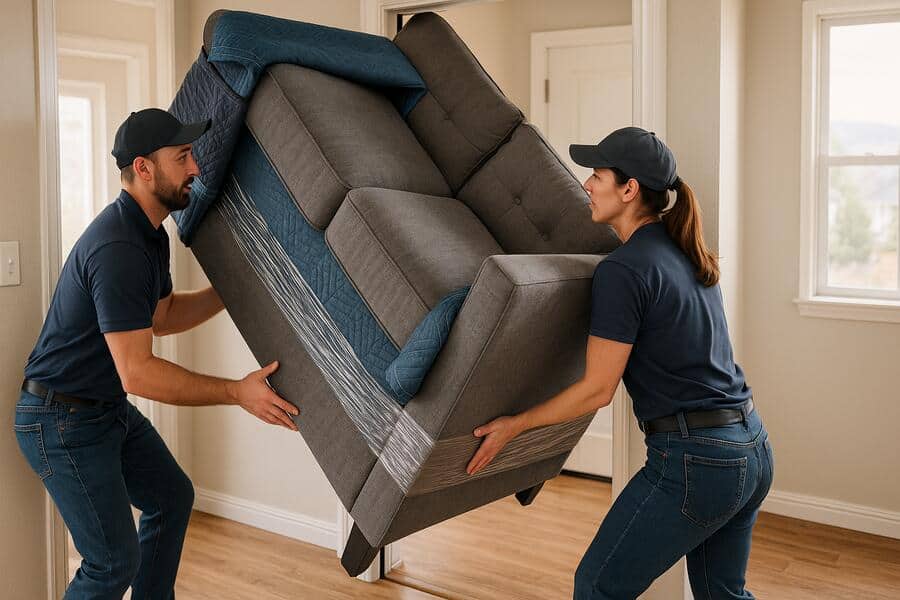
- Stand the Couch Vertically: With at least two people, carefully tip the couch onto one of its ends so it stands vertically (tall). Place a moving blanket or cardboard underneath to protect the floor and the couch fabric.
- Lead with a Corner: Angle the couch so one of its top corners (from the back) goes through the doorway first. It’s like trying to thread a needle with a large object.
- Pivot Around the Door Frame: Once the top corner and part of the back are through, slowly and gently pivot the couch around the door frame. The idea is to “snake” the couch through the opening. The diagonal depth you measured earlier will come into play here, as it represents the slimmest profile of the couch when angled.
- Lower Half Follows: As the top section clears, continue to rotate and slide the lower half of the couch into the room. Keep communicating with your partner throughout the process.
For very narrow hallways, you may need to keep the couch on its side and slide it along, using the same corner-first angling technique at each turn.
4. When to Call the Professionals
There are times when even the best DIY efforts aren’t enough, and “couch movers” are the safest and most efficient solution.
- Oversized or Very Heavy Couches: If your couch is exceptionally large, long, or heavy (e.g., a massive sectional, a sleeper sofa with a heavy mattress), the risk of injury or damage is too high for a DIY attempt.
- Extremely Tight Spaces: If your measurements show that even the diagonal depth barely fits (or doesn’t fit at all), professionals have specialized tools and techniques (like disassembling door frames or even windows) that are beyond the scope of a typical DIY move.
- Fragile or Antique Furniture: Delicate or valuable sofas require expert handling to prevent damage to intricate carvings, upholstery, or structural integrity.
- Staircases, Especially Spiral: Moving a couch up or down a flight of stairs, particularly a narrow or spiral one, is incredibly difficult and dangerous. Professionals have specialized dollies, straps, and team coordination to handle this safely.
- Lack of Assistance: Don’t attempt to move a heavy couch alone. If you don’t have enough strong, reliable helpers, call in the pros.
Couch Moving Strategies for Tight Spaces
| Scenario | Recommended Approach | Consider Professional Help If… |
|---|---|---|
| Narrow Doorway | Stand couch vertically, lead with a top corner, pivot slowly. Remove door if needed. | Diagonal depth is too large, couch is very heavy. |
| Tight Hallway Turns | Keep couch on its side, slide and angle around corners, using the “snaking” motion. | Hallway is too narrow for comfortable maneuvering, multiple tight turns. |
| Staircase (Straight) | Stand couch vertically, one person leading from above, others guiding from below, slow and coordinated. | Stairs are narrow, couch is heavy, or insufficient helpers. |
| Staircase (Spiral/Landings) | Always call professionals. Requires specialized equipment & technique. | Any staircase that isn’t a simple, straight run. |
💡 Key Takeaway: For tight doorways, stand the couch vertically and pivot it through corner-first. For overly heavy, delicate, or large sofas, or complex staircases, professional movers are always the safest and most reliable option.
Conclusion
Successfully navigating “how to move a couch” through tight spaces is a matter of careful preparation, precise measurements, and strategic execution. By taking the time to measure thoroughly, preparing your couch by removing detachable parts, and employing the vertical and diagonal angling techniques, you can often accomplish the task yourself. However, always know your limits. For extremely heavy, delicate, or oversized sofas, or when facing challenging architectural elements like spiral staircases, entrusting the job to professional “couch movers” is a wise decision that ensures the safety of your furniture, your home, and yourself.
Have questions about how to moving a sofa? Reach out to our team today.
Frequently Asked Questions About Moving a Couch
What is the “diagonal depth” and why is it important for moving a couch?
The diagonal depth is the measurement from the highest back corner of the sofa to the opposite bottom corner of the armrest or leg. It’s crucial because it often represents the shortest possible “effective depth” when the couch is tilted or stood on its end, allowing it to fit through openings narrower than its traditional depth or height.
Can I move a heavy sofa by myself?
It is strongly advised not to move a heavy sofa by yourself. Couches are bulky, heavy, and can be unwieldy, leading to significant risk of personal injury (especially back strain) and damage to the furniture or your home. Always have at least one, preferably two, strong helpers.
What should I do if my couch is still too big after removing the legs and cushions?
If your couch still won’t fit after removing all detachable parts and attempting the vertical/diagonal methods, you have a few options:
- Professional Movers: They may have specialized equipment or techniques, or can partially disassemble the couch if it’s designed to come apart.
- Disassemble Door Frames: In some cases, removing the door frame trim or even the door frame itself can provide enough extra space (a job for a carpenter).
- Move Through a Window: As a last resort, if a suitable window is available and safe, the couch might be moved through it (often requiring professional rigging).
Should I use a dolly to move my couch?
A furniture dolly can be very helpful for moving a couch across flat surfaces, especially for heavier models, as it reduces the need for heavy lifting and dragging. However, dollies are not suitable for stairs or for maneuvering through very tight doorways where precise angling is required. Always use appropriate straps to secure the couch to the dolly.