Moving a stove or range is one of those tasks that seems straightforward until you realize the significant risks involved. These appliances are incredibly heavy, often bulky, and can be connected to gas or high-voltage electrical lines. Attempting to “move a stove” without proper knowledge or equipment can lead to serious injury, property damage, or dangerous gas leaks. It’s not just about lifting; it’s about disconnecting, securing, protecting, and reconnecting safely.
This guide will walk you through the critical steps for “moving a gas range” or “moving an electric range” safely. We’ll emphasize why gas lines must be handled by a qualified professional, the importance of securing burners and racks, and best practices for protecting the cooktop and appliance during transit. For peace of mind and to ensure the job is done right, enlisting professional appliance movers is always the wisest choice.
💡 Key Takeaway: Learning “how to move a stove” safely is crucial due to potential risks of injury, damage, or gas leaks. This guide covers essential steps like professional gas line disconnection, securing internal components, and protecting surfaces for both “moving a gas range” and “moving an electric range.”
Pre-Move Preparations for Stoves and Ranges
1. Critical First Step: Disconnecting Utilities Safely
This is arguably the most important stage when learning “how to move a stove.” Safety is paramount, and the process differs between gas and electric units.
- For “Moving a Gas Range”:
- Turn Off Gas Supply: Locate the main gas shut-off valve for your home or, at minimum, the valve specifically for the range. Turn it to the “off” position.
- Professional Disconnection is MANDATORY: Gas lines should ONLY be disconnected by a licensed and qualified professional (plumber or gas technician). Attempting this yourself risks dangerous gas leaks, explosions, or carbon monoxide poisoning. They will safely disconnect the flexible gas line and cap it.
- For “Moving an Electric Range”:
- Turn Off Power: Go to your home’s main electrical panel and switch off the circuit breaker that controls the range. Confirm the power is off by attempting to turn the range on.
- Unplug or Disconnect Wiring: Once power is confirmed off, you can carefully slide the range forward. Most modern electric ranges simply plug into a 240V outlet. If yours is hardwired, a qualified electrician should disconnect the wiring.
- Anti-Tip Bracket: Stoves are often secured to the wall with an anti-tip bracket. Safely disengage this bracket once utilities are disconnected. A child or adult can tip a range over if not properly secured.
2. Securing Internal Components and Loose Parts
Once disconnected, the next step in “how to move a stove” is to prepare the appliance itself for transit.
- Remove and Secure Burners/Grates: For gas ranges, remove all burner grates, caps, and any other loose components from the cooktop. Wrap these items individually in packing paper and pack them securely in a box labeled “Stove Parts.”
- Remove Oven Racks and Trays: Take out all oven racks, broiler pans, and any other accessories from inside the oven. These can shift and cause damage during the move. Clean them thoroughly and pack them separately in a sturdy box.
- Tape Oven Door Shut: Use strong packing tape (not duct tape, which can leave residue) to secure the oven door shut. Place tape over the top, sides, and bottom of the door, ensuring it won’t swing open during movement.
- Control Knobs: Depending on the stove model, you might be able to remove the control knobs. If so, remove them and pack them with the burner components. If not, consider taping them gently to prevent accidental turning.
💡 Key Takeaway: When learning “how to move a stove,” professional disconnection of gas lines is mandatory for “moving a gas range.” For “moving an electric range,” always turn off the circuit breaker before unplugging or having an electrician disconnect it. Secure all loose parts like burners, grates, and oven racks, and tape the oven door shut to prevent damage.
Protecting and Transporting Your Range
3. Protecting the Cooktop and Exterior
Preventing scratches, dents, and cracks is crucial during a move. This is especially true for delicate cooktops and finished exteriors.
- Cooktop Protection:
- Glass/Ceramic Cooktops: Place a layer of heavy cardboard or plywood over the entire cooktop surface. Secure it with tape (avoiding direct contact with the glass/ceramic if possible). Then, add a thick moving blanket or bubble wrap.
- Metal Cooktops: Cover with a moving blanket or thick cardboard to prevent scratches from shifting items.
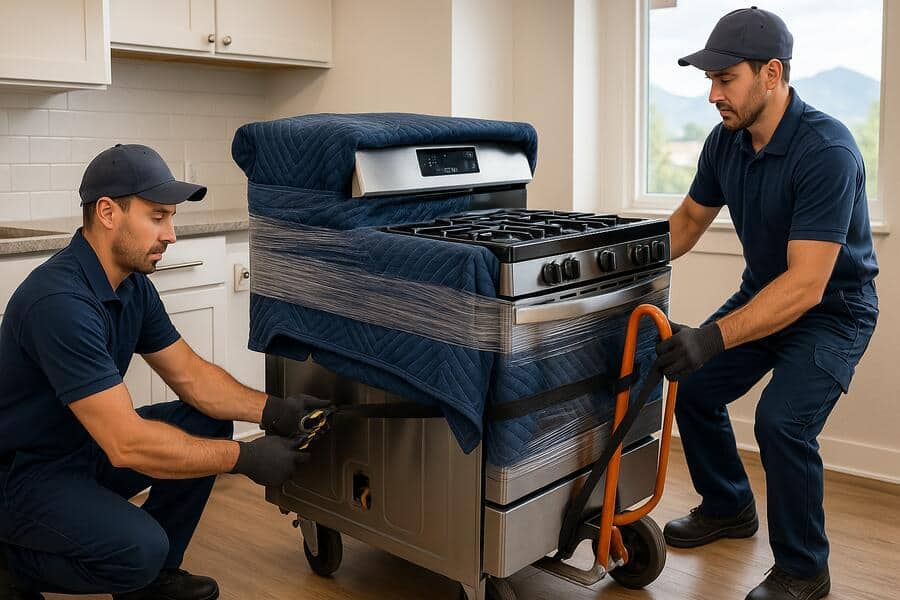
- Exterior Wrapping: Wrap the entire stove with multiple layers of moving blankets, securing them tightly with heavy-duty stretch wrap or moving tape. Pay extra attention to corners and edges, as these are vulnerable to impact damage.
- Side Panels: Some stoves have thin, protective film on side panels from manufacturing. If present, it can be left on until the final installation to prevent scratches.
4. Safe Transportation and Reconnection
Moving a heavy appliance like a stove requires the right tools and technique to prevent injury and damage.
- Use Proper Equipment: A heavy-duty appliance dolly with straps is essential. Never try to lift or carry a stove without appropriate equipment. Some professionals use air sleds or pallet jacks for very heavy commercial ranges.
- Team Lift: Always use at least two people, preferably more, to maneuver and load a stove. Lifting with your legs, not your back, is critical. Do not use door handles or knobs for leverage.
- Clear Path: Ensure the path from the kitchen to the moving truck is clear of obstacles, including rugs, furniture, and door thresholds. Measure doorways and hallways to confirm clearance.
- Secure in Truck: Once on the moving truck, position the stove upright and secure it firmly against a wall using moving straps. Ensure it cannot tip or shift during transit.
- Professional Reconnection: At the new location, a licensed professional must reconnect the gas line for “moving a gas range.” For “moving an electric range,” ensure the correct 240V outlet is present and properly functioning, and then reconnect the power. Re-engage the anti-tip bracket.
Stove Moving Safety Checklist
| Stage | Key Action | Risk Mitigated |
|---|---|---|
| Disconnection | Professional gas shut-off/disconnection; circuit breaker off for electric. | Gas leaks, electrical shock, fire hazards. |
| Internal Prep | Remove/secure burners, grates, racks; tape oven door. | Internal damage, flying parts, door swinging open. |
| Exterior Protection | Cover cooktop with cardboard/blanket; wrap entire unit. | Scratches, dents, cracks, especially on cooktop. |
| Transportation | Use appliance dolly, 2+ people, clear path, secure in truck. | Personal injury (back), dropped appliance, property damage. |
| Reconnection | Professional gas reconnection; correct electrical hookup. | Gas leaks, electrical malfunction, anti-tip bracket failure. |
💡 Key Takeaway: Protecting the cooktop with cardboard/blankets and wrapping the entire “stove” with moving blankets and stretch wrap prevents damage during transit. Always use an appliance dolly with at least two people for safe movement. Reconnection of gas lines by a professional at the new location is crucial for safety.
Conclusion
Knowing “how to move a stove” safely is a complex undertaking that requires meticulous planning and adherence to safety protocols. From the absolute necessity of professional disconnection for “moving a gas range” to carefully securing all components and protecting delicate surfaces, each step minimizes the risk of injury and damage. Using the right equipment and employing proper lifting techniques during transportation are equally vital. By following this comprehensive guide and recognizing when to enlist professional assistance, you can ensure your “electric range” or gas stove arrives at its new destination intact and ready for safe reconnection, saving you from potential hazards and costly repairs.
Have questions about how to how to move a stove? Reach out to our team today.
Frequently Asked Questions About Moving a Stove
Do I need a professional to disconnect my gas stove?
Absolutely, yes. You MUST have a licensed and qualified plumber or gas technician disconnect your gas stove. Attempting to disconnect a gas line yourself is extremely dangerous and can lead to gas leaks, fire, explosion, or carbon monoxide poisoning, putting lives at risk.
What should I do with my stove’s anti-tip bracket when moving?
The anti-tip bracket is a safety device designed to prevent the stove from tipping over, especially if weight is placed on an open oven door. When moving your stove, you will need to carefully disengage it from the wall once the utilities are disconnected. Ensure the bracket is re-engaged after installation at your new home to prevent serious injury.
Can I move an electric stove by myself?
Moving an electric stove by yourself is highly discouraged. Even though it doesn’t involve gas lines, electric ranges are very heavy (often 150-250 lbs or more) and bulky. Attempting a solo move can lead to severe back injuries, dropping the appliance, or damaging the stove, floors, or walls. Always use at least two people and a heavy-duty appliance dolly.
How do I protect a glass or ceramic cooktop during a move?
To protect a glass or ceramic cooktop, first remove all grates and burners. Then, place a layer of heavy cardboard or a thin piece of plywood directly over the cooktop surface. Secure this with painter’s tape (avoiding direct contact with the glass if possible) or stretch wrap. Follow this with a thick moving blanket or several layers of bubble wrap, ensuring the entire surface is well-padded before wrapping the rest of the stove.