The humble dresser is a staple in most homes, offering essential storage for clothing and personal items. However, when it comes to “moving a dresser,” this seemingly straightforward piece of furniture often presents a unique challenge: should the drawers stay in or come out? The answer isn’t always cut and dry, and making the wrong choice can lead to scratched floors, damaged furniture, or even personal injury. It’s a question every homeowner or renter faces during a relocation.
This guide will delve into the nuances of “moving a dresser,” providing practical “dresser moving tips” for ensuring a safe and efficient relocation. We’ll explore the factors that determine whether to remove drawers, how to properly secure them if they stay in, and critical techniques for preventing the dresser frame from racking during transit. Understanding these details is crucial for protecting your belongings and making the move easier, whether you’re handling it yourself or preparing for furniture movers. By the end, you’ll have a clear strategy for “moving furniture with drawers.”
💡 Key Takeaway: When “moving a dresser,” the primary decision is whether to remove the drawers. Factors like weight, distance of the move, and the dresser’s construction dictate the best approach. Proper preparation, including securing drawers or packing them separately, is crucial for preventing damage and ensuring safety during transit.
Preparing Your Dresser for Moving
1. When to Remove Dresser Drawers
The decision to remove drawers largely depends on the dresser’s weight, construction, and the type of move.
- Heavy or Solid Wood Dressers: For substantial, solid wood dressers, removing the drawers is almost always recommended. Even empty, these pieces can be incredibly heavy, and taking out the drawers significantly reduces the overall weight, making the dresser safer and easier to lift and maneuver.
- Long-Distance Moves: If you’re undertaking a long-distance move, removing the drawers is often preferable. This allows for individual packing and protection of the drawers, preventing them from shifting, opening, or becoming damaged during prolonged transit. It also reduces the bulk of the main frame for wrapping.
- Tight Spaces and Stairs: Navigating narrow hallways, doorways, or multiple flights of stairs with a heavy dresser is precarious. Removing the drawers lightens the load and often reduces the dresser’s depth, making it easier to pivot and carry without damaging walls or the dresser itself.
- Fragile Dresser Construction: If your dresser is an antique or has delicate construction, removing the drawers can prevent stress on the frame during movement.
2. When to Keep Drawers In (With Caution)
In certain specific scenarios, “moving a dresser” with drawers in can be an option, but it requires careful preparation.
- Lightweight Items Only: You can only consider leaving drawers in if they contain very lightweight, non-fragile items like linens, towels, or soft clothing. Heavy items, books, or breakables must always be removed to prevent shifting, damage, or making the dresser too heavy.
- Short, Flat Moves: For very short distances, such as sliding a dresser a few feet within the same room or a quick transfer across a flat hallway, leaving drawers in might be acceptable, provided they are securely taped.
- Securing the Contents: If leaving items in, fill any empty spaces in the drawers with soft padding (towels, blankets) to prevent items from shifting around during transport.
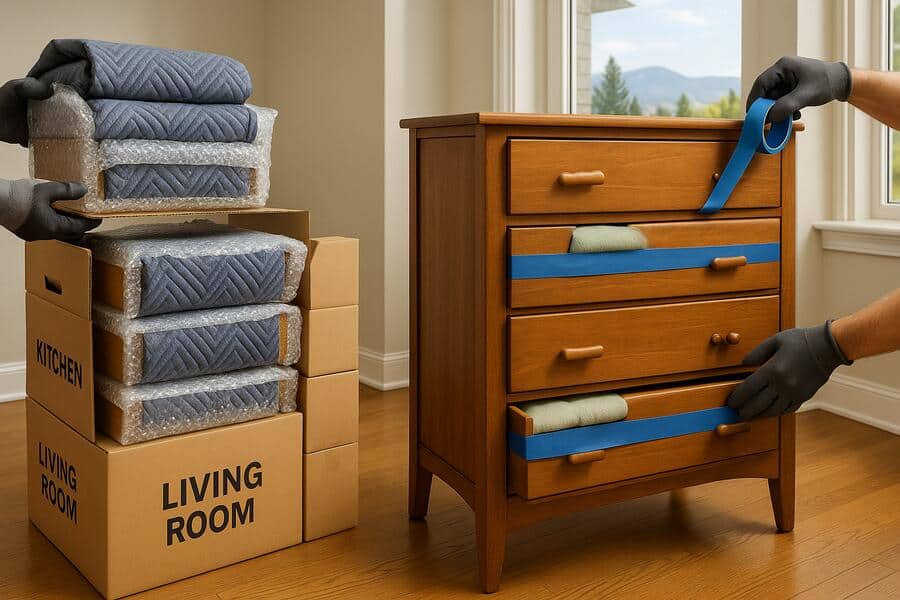
- Taping Drawers Shut: Use painter’s tape or professional moving tape (designed for furniture) to secure drawers shut. Never use strong packing tape directly on finished wood, as it can strip the finish upon removal. Run tape horizontally across the drawers, and vertically over the sides, ensuring it doesn’t leave residue.
💡 Key Takeaway: For “moving a dresser,” remove drawers for heavy dressers, long-distance moves, or when navigating tight spaces and stairs to reduce weight and prevent damage. Only consider keeping drawers in for short, flat moves with very lightweight, non-fragile contents, ensuring items are padded and drawers are securely taped shut with appropriate furniture tape to prevent shifting or damage.
Protecting the Dresser Frame and Drawers
3. Preventing Dresser Frame Racking
One of the biggest risks when “moving furniture with drawers” is “racking,” where the dresser frame twists and becomes misaligned or damaged.
- Keep it Level: Always try to keep the dresser as level as possible during lifts. Tilting it too much can put uneven stress on the frame joints.
- Two-Person Lift: For any significant movement, a dresser should be carried by at least two people, lifting from opposite ends and ensuring a balanced load.
- Use Moving Straps: Moving straps that go under the dresser and over the movers’ shoulders can significantly reduce strain and help maintain control and levelness, minimizing the chance of racking.
- Furniture Dolly: For longer flat distances, use a sturdy furniture dolly. Lift the dresser onto the dolly, secure it with straps, and push it carefully.
- Protect Corners and Edges: Wrap the dresser with moving blankets or thick padding, securing them with stretch wrap. Pay extra attention to corners and edges, which are most vulnerable to dings and scratches.
4. Packing and Protecting Removed Drawers
If you remove the drawers, they become separate items that need careful packing and protection.
- Empty Contents: Completely empty all contents from the drawers. Even if you left lightweight items in for a short move, for removed drawers, they must be empty.
- Wrap Individually: Wrap each drawer individually with packing paper, moving blankets, or bubble wrap, especially if they have delicate handles or ornate fronts.
- Box Them Up: Place the wrapped drawers into moving boxes. Choose boxes that are appropriately sized to prevent the drawers from shifting inside. Fill any empty space with additional packing material (like crumpled paper or peanuts).
- Label Clearly: Label each box with “Dresser Drawers” and the room they belong to. You might even label them “Drawer 1,” “Drawer 2,” etc., if you want to ensure they go back in the original order.
- Protect Hardware: If you remove any handles or knobs from the drawers (e.g., to prevent breakage or facilitate wrapping), place them in a small, labeled bag and tape it securely inside one of the drawer boxes or the main dresser frame.
Dresser Moving Checklist
| Action Step | Details | Why It’s Important |
|---|---|---|
| Empty Drawers | Remove all heavy/fragile items. | Reduces weight, prevents damage from shifting. |
| Decide Drawers In/Out | Based on weight, distance, and obstacles. | Optimizes safety and ease of movement. |
| Secure Drawers (if kept in) | Pad contents, tape drawers shut with furniture-safe tape. | Prevents drawers from opening, items from shifting. |
| Protect Dresser Frame | Wrap with moving blankets/stretch wrap, especially corners. | Prevents scratches, dings, and surface damage. |
| Safe Lifting/Moving | Two people, moving straps, furniture dolly, keep level. | Prevents injury, avoids frame racking. |
| Pack Removed Drawers | Wrap individually, box, label clearly. | Protects drawers, keeps organized. |
💡 Key Takeaway: To prevent “racking” when “moving a dresser,” always use at least two people, consider moving straps, and keep the dresser as level as possible on a dolly. If drawers are removed, protect them individually with wrapping, box them securely, and label them clearly to ensure they arrive safely and are easily reunited with the dresser frame at your new home.
Conclusion
Successfully “moving a dresser” comes down to strategic preparation and careful execution. By thoughtfully deciding whether to keep drawers in or out based on the dresser’s characteristics and the demands of your move, you can significantly reduce the risk of damage and injury. Remember to secure any drawers left in, protect the dresser frame from racking and scratches, and meticulously pack any removed drawers. Following these “dresser moving tips” will ensure your valuable storage pieces arrive at your new home intact and ready for use, making your “moving furniture with drawers” experience as smooth as possible.
Have questions about how to moving a dresser? Reach out to our team today.
Frequently Asked Questions About Moving a Dresser
Should I always remove the drawers when “moving a dresser”?
Not always, but often. You should definitely remove drawers for heavy or solid wood dressers, long-distance moves, or when navigating tight spaces and stairs. This significantly reduces weight and bulk. However, for very short, flat moves within the same room, you might be able to keep lightweight items in and tape the drawers shut, but this should be done with caution.
What’s the best way to secure drawers if I leave them in when “moving furniture with drawers”?
If you opt to leave drawers in, first remove all heavy, fragile, or loose items. Fill any remaining empty space with soft padding like towels or blankets to prevent contents from shifting. Then, use painter’s tape or professional furniture tape (never strong packing tape directly on wood) to secure the drawers shut. Run tape horizontally across the drawers and vertically over the sides to keep them firmly closed during transit.
How can I prevent the dresser frame from twisting or “racking” during the move?
To prevent “racking” when “moving a dresser,” always use at least two people to lift and carry it, maintaining balance. Employ moving straps to distribute weight and control. Keep the dresser as level as possible during lifts and transitions, and use a furniture dolly for long, flat distances. Properly wrapping the dresser with moving blankets and stretch wrap also provides structural support and protection.
If I remove the drawers, how should I pack and protect them?
If you remove the drawers, empty them completely. Wrap each drawer individually with packing paper, bubble wrap, or moving blankets, especially if they have delicate handles. Place the wrapped drawers into appropriately sized moving boxes, filling any empty space with packing material to prevent shifting. Label these boxes clearly as “Dresser Drawers” and the room they belong to for easy reassembly at your new home.