
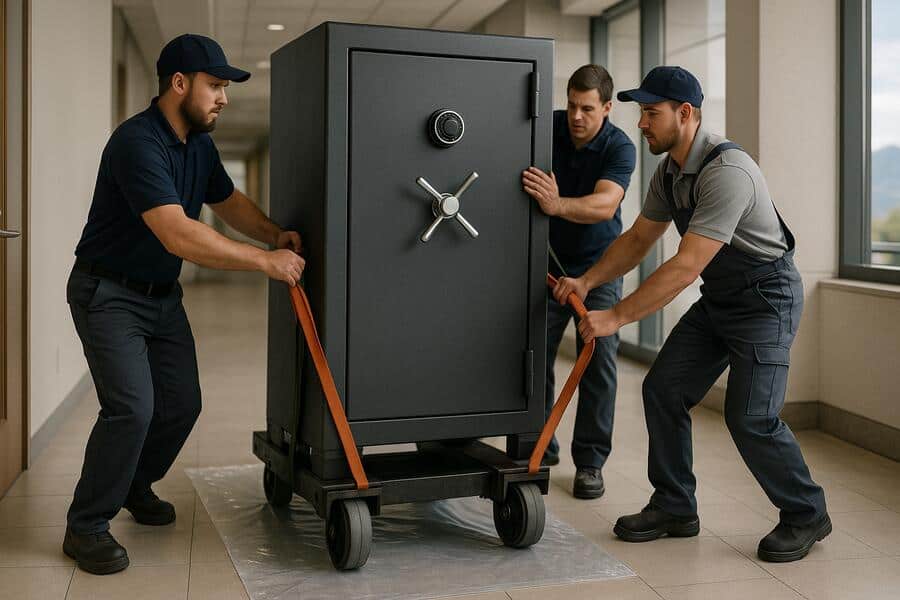
Relocating an office or commercial safe is far more complex than simply shifting a heavy piece of furniture. These robust, often immensely heavy, security devices are designed to stay put, making “moving an office safe” a specialized task that demands careful planning, the right equipment, and experienced personnel. Attempting to move a commercial safe without professional help can lead to serious injuries, damage to the safe itself, or significant structural damage to your property. Beyond the sheer weight, considerations like navigating tight spaces, protecting sensitive flooring, and maintaining business continuity add layers of complexity. It’s a task where shortcuts are ill-advised, and expertise is paramount.
This guide delves into the intricate process of “moving an office safe” or undertaking a “commercial safe moving” operation. We’ll cover the essential planning steps, including scheduling around business hours, ensuring proper building access, navigating elevators, and adhering to strict security protocols. By understanding these nuances, you’ll gain insight into why professional “business safe relocation” services are indispensable, safeguarding both your assets and your peace of mind throughout the move. When it comes to such specialized moves, we invite you to learn more about our process and see how it works.
💡 Key Takeaway: “Moving an office safe” or “commercial safe moving” is a highly specialized task due to extreme weight and security needs. Proper planning, including scheduling, building access, and expert handling, is crucial to prevent injury, damage, and maintain business continuity. Professional “business safe relocation” is essential for a safe and efficient move.
Strategic Planning for “Business Safe Relocation”
1. Scheduling Around Business Hours and Minimizing Disruption
For any “commercial safe moving” operation, minimizing disruption to your business is often a top priority.
- Off-Hours Coordination: The most effective strategy for “moving an office safe” is to schedule the relocation during off-peak hours, such as evenings, weekends, or even holidays. This allows the moving team to work unimpeded, reducing noise, foot traffic, and potential safety hazards for your employees and customers.
- Communicate with Stakeholders: Inform building management, security personnel, and any relevant staff well in advance. Provide clear timelines and potential impact on operations. This ensures smooth coordination and necessary permissions.
- Access Considerations: Discuss with your movers whether specific times offer better access to loading docks, service elevators, or parking areas, especially in busy urban environments.
- Temporary Security Measures: If the safe’s contents must be temporarily stored elsewhere, plan for secure transit and storage of those items during the move, maintaining a clear chain of custody.
2. Navigating Building Access and Complex Pathways
The path a safe will take is rarely straightforward and requires meticulous assessment.
- Thorough Walk-Through: Professional “business safe relocation” begins with a comprehensive walk-through of both the old and new locations. This involves measuring all doorways, hallways, elevator dimensions, and potential turns. The goal is to identify any obstacles, tight corners, or structural limitations.
- Elevator Use: If elevators are involved, confirm their weight capacity, internal dimensions, and operating hours. Arrange for exclusive use if possible to prevent delays and ensure safety. A safe might require a freight elevator, not a passenger one.
- Stairs and Ramps: Moving a heavy safe up or down stairs is extremely hazardous and requires specialized equipment, such as stair-climbing dollies or cranes. Assess the structural integrity of stairs and landings in older buildings. Portable ramps might be needed for thresholds or truck loading.
- Floor Protection: Heavy-duty floor protection (e.g., plywood sheets, ram board) is essential to prevent damage to carpets, hardwood, tile, and concrete surfaces during the move. The safe’s weight can easily cause cracks, gouges, or impressions.
💡 Key Takeaway: “Moving an office safe” requires meticulous scheduling, ideally during off-peak hours, to minimize business disruption and ensure optimal access. A thorough walk-through is essential to assess all building access points, elevator capacities, and potential obstacles. Crucially, heavy-duty floor protection is indispensable during “commercial safe moving” to prevent damage from the safe’s immense weight.
Security Handling and Specialized Equipment
3. Maintaining Security and Confidentiality
The very nature of a safe implies sensitive contents, requiring heightened security during relocation.
- Emptying the Safe: Before the move, completely empty the safe of all contents. These valuable or sensitive items should be transported personally by a trusted individual or via a specialized secure courier service, completely separate from the safe itself. This significantly reduces risk.
- Key and Combination Management: Ensure keys and combinations are securely managed and communicated only to authorized personnel. Never leave the safe unlocked or unattended during the relocation process.
- Discreet Operations: Professional “business safe relocation” teams often prioritize discretion, especially for high-profile safes. This might involve using unmarked vehicles or performing moves during times when fewer people are present.
- Post-Move Security Check: Once the safe is in its new location, conduct a thorough security check. Ensure it is properly bolted down (if applicable) and fully functional before returning any contents.
4. Specialized Equipment and Expertise for “Commercial Safe Moving”
Standard moving equipment is rarely sufficient for the extreme weight of commercial safes.
- Heavy-Duty Dollies and Carts: Industrial-strength, low-profile dollies with high weight capacities are essential. Some feature hydraulic lifts or specialized tracks for stair climbing.
- Pry Bars and Lifting Jacks: These tools are used to carefully lift and maneuver the safe into position on dollies or skids, preventing damage to the safe or floors.
- Straps and Winches: Heavy-duty straps and potentially winches are used to secure the safe during transport and to aid in controlled movement, particularly on ramps or inclines.
- Forklifts and Pallet Jacks: For extremely large safes, forklifts or industrial pallet jacks might be required for loading onto trucks or positioning within a warehouse.
- Experienced Crew: Most importantly, “moving an office safe” demands a team of highly trained and experienced movers who understand the unique dynamics of heavy object relocation, proper lifting techniques, and safety protocols. This isn’t a DIY job.
Commercial Safe Moving Checklist
| Phase | Key Action | Why It Matters for “Moving an Office Safe” |
|---|---|---|
| Pre-Move Planning | Schedule off-hours, assess access, measure paths, empty safe. | Minimizes disruption, ensures clear path, protects contents. |
| On-Site Execution | Use specialized equipment, protect floors, secure safe. | Prevents injury & property damage, ensures safe transit. |
| Security & Logistics | Personal transport of contents, discreet handling, secure keys. | Maintains confidentiality, reduces risk of theft/loss. |
| Post-Move | Re-secure safe, verify functionality, return contents. | Ensures safe is functional & protected in new location. |
💡 Key Takeaway: For “moving an office safe,” it’s critical to empty the safe and transport valuable contents separately, managing keys/combinations securely and maintaining discretion. The operation demands specialized equipment—heavy-duty dollies, pry bars, straps, and potentially forklifts—along with a highly experienced crew to safely execute the “commercial safe moving” and prevent injuries or damage.
Conclusion
Relocating an office or “commercial safe moving” is a task that should never be underestimated or attempted without professional assistance. The intricate planning involved, from scheduling around your business hours and meticulously assessing building access to ensuring the highest level of security and deploying specialized heavy-lifting equipment, underscores the complexity of “moving an office safe.” Entrusting this critical task to experienced professionals not only mitigates the significant risks of injury and property damage but also guarantees the secure and efficient “business safe relocation” of your valuable assets. By prioritizing expertise and thorough preparation, you ensure a smooth, worry-free transition for even your heaviest and most sensitive office equipment.
Have questions about how to moving an office safe? Reach out to our team today.
Frequently Asked Questions About Moving An Office Or Commercial Safe
What are the biggest challenges when “moving an office safe”?
The biggest challenges when “moving an office safe” typically include its extreme weight, which demands specialized equipment and multiple experienced movers, navigating tight building access points (doorways, hallways, elevators), protecting sensitive flooring from damage, and ensuring the security and confidentiality of the safe’s contents throughout the “commercial safe moving” process.
Should I try to move a commercial safe myself to save costs?
No, attempting to move a “commercial safe moving” yourself is strongly discouraged. The significant weight and awkward dimensions pose a high risk of serious personal injury, severe damage to the safe, and substantial damage to your property (floors, walls, stairs). The specialized equipment and expertise required make it a job best left to professional “business safe relocation” specialists.
How do movers ensure security during a “business safe relocation”?
During a “business safe relocation,” movers ensure security by requiring the safe to be completely emptied of its contents before arrival; these valuables should be transported personally. They also maintain strict control over keys and combinations, use discreet methods, and ensure the safe is never left unsecured during transit. Upon arrival, they ensure it’s properly positioned and re-secured.
What kind of specialized equipment is needed for “commercial safe moving”?
“Commercial safe moving” requires specialized equipment far beyond standard moving gear. This includes industrial-strength, low-profile dollies designed for heavy loads, stair-climbing dollies, hydraulic jacks, heavy-duty straps and winches, and often forklifts or pallet jacks for very large safes. Crucially, it also requires a team with extensive experience in operating this equipment safely and effectively.

