Moving an apartment presents a unique set of logistical challenges, and one of the most critical, yet often overlooked, aspects is “moving truck parking apartment.” Unlike a house with a private driveway, apartment buildings often have limited parking, strict rules, and complex layouts that can turn moving day into a frustrating ordeal if not properly planned. The location of your moving truck directly impacts the efficiency, cost, and safety of your move. A truck parked far away can significantly increase labor time and fatigue, while an improperly parked truck can lead to fines or delays. Understanding the nuances of “loading zone moving” and securing proper access is paramount for a smooth transition.
This guide will illuminate why careful truck placement matters, how to navigate the process of reserving curb or loading dock space, and the hidden costs associated with long carries. We’ll provide actionable advice to help you manage “moving truck parking apartment” effectively, ensuring your movers have optimal access and your relocation stays on schedule. For a truly seamless experience, especially in multi-unit buildings, working with professional apartment movers who understand these challenges can alleviate much of the stress.
💡 Key Takeaway: Proper “moving truck parking apartment” is crucial for an efficient and cost-effective move. In apartment settings, securing a close “loading zone moving” spot directly impacts labor time, safety, and potential fines. Planning ahead to understand building rules and secure necessary permits is essential to avoid costly delays and streamline the relocation process.
Strategic Planning for Optimal Truck Placement
1. Why Truck Placement Matters: Time, Cost, and Safety
The distance between the moving truck and your apartment door might seem minor, but it has a ripple effect on your entire move.
- Increased Labor Time: Every extra foot movers have to carry boxes and furniture adds up quickly. What seems like a short walk can translate into hours of additional labor over dozens or hundreds of trips. This directly impacts your moving costs, as most movers charge by the hour.
- Physical Strain and Fatigue: Long carries are physically demanding. Movers become fatigued faster, increasing the risk of accidents, injuries, and damage to your belongings or the property. Their efficiency naturally decreases over time.
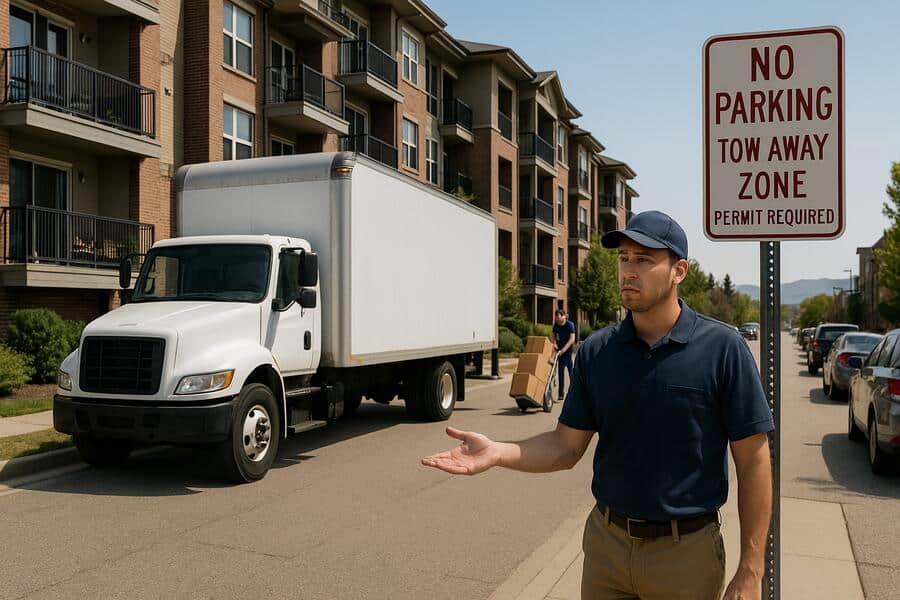
- Blocked Access and Fines: Parking in an unauthorized spot, blocking a fire lane, or infringing on another resident’s space can lead to hefty parking tickets, towing, or even legal repercussions. In densely populated areas, these risks are high.
- Security Concerns: A truck parked far from the building entrance can increase the vulnerability of your belongings to theft, especially during loading and unloading when doors might be left open.
2. Reserving Curb or Loading Dock Space
Proactive communication and planning are key to securing a prime spot for your “loading zone moving.”
- Contact Building Management Early: Two to three weeks before your move day, contact your apartment building’s management or HOA. Inquire about:
- Designated “loading zone moving” areas for movers.
- Specific move-in/move-out hours or days.
- Requirements for reserving a freight elevator (if applicable) and whether it’s reserved separately from the loading dock.
- Any truck size or height restrictions for parking areas or garages.
- Required Certificates of Insurance (COI) for your moving company.
- Gate codes or security instructions for entry.
Get all confirmations in writing.
- Investigate “Moving Truck Permit” Requirements: In many municipalities, especially in urban areas, you may need a “moving truck permit” to reserve curb space or a specific street parking area for your moving truck.
- Check with your city’s parking authority or Department of Transportation well in advance (often 1-2 weeks prior).
- Understand the application process, fees, and required posting times for signs.
- A permit ensures you have a legal, reserved space, preventing parking conflicts and fines.
- Communicate with Movers: Share all information about parking restrictions, permits, loading zones, and access codes with your moving company well before moving day. Provide them with a copy of any “moving truck permit” or building instructions.
💡 Key Takeaway: Optimal “moving truck parking apartment” directly impacts moving costs, efficiency, and safety. A long carry from an inconvenient “loading zone moving” increases labor time, mover fatigue, and the risk of damage or injury. Proactive planning involves contacting building management weeks in advance for rules and securing a “moving truck permit” from the city to reserve legal curb space, ensuring a smooth and fine-free operation.
Practical Considerations and Preventing Delays
3. Understanding Long Carries and Their Impact
A “long carry” is a term movers use when the distance from the truck to the door is unusually far, and it’s a significant factor in apartment moves.
- What Qualifies as a Long Carry: While definitions vary, typically a carry exceeding 75 feet from the truck to the entrance is considered a long carry. This can happen due to large apartment building setbacks, no nearby street parking, or complex internal pathways.
- Time and Cost Implications:
- Added Time: A long carry can add 15-30 minutes per load or significantly more over the course of a full move. For a 1-bedroom apartment, this could increase total moving time by 1-2 hours or more.
- Surcharges: Many moving companies apply a long carry surcharge if the distance exceeds a certain threshold. This is to compensate for the extra time and effort required. Be sure to discuss this with your moving company beforehand.
- Mitigation Strategies:
- Clear Pathways: Ensure the path from the loading zone to your unit is completely clear of obstacles.
- Use Carts/Dollies: If available, reserve moving carts or dollies from your building management. These can significantly speed up the transfer of boxes.
- Optimize Packing: Ensure boxes are well-packed and clearly labeled to minimize unnecessary trips.
4. Additional Access and Communication Tips
Beyond parking, other access points and clear communication streamline “moving truck parking apartment.”
- Elevator Reservations: If your building has a freight elevator, reserve it for your moving day. Most buildings require 24-48 hours’ notice, and some block out specific time slots. Confirm padding requirements for the elevator walls.
- Stairwell Access: For buildings without freight elevators or for smaller items, ensure stairwells are clear and well-lit. Discuss with your movers how they plan to navigate stairs, especially for large furniture.
- Security and Gate Codes: Provide all necessary gate codes, key fob access, or security instructions to your movers in advance. This prevents delays at entry points.
- Final Walk-Through: On moving day, do a walk-through with your moving foreman to point out the designated “loading zone moving” area, elevator access, and any specific instructions. Maintain open communication throughout the day.
Moving Truck Parking & Loading Zone Checklist
| Task Area | Action Item | Important Notes |
|---|---|---|
| Building Rules | Contact management 2-3 weeks out for loading zones, hours, truck size limits, COI. | Get confirmations in writing. |
| Parking Permits | Check city/local regulations for “moving truck permit” for curb space. | Apply 1-2 weeks in advance; display signs. |
| Loading Zone Prep | Clear path from truck to door. Reserve freight elevator, secure carts/dollies. | Provide gate codes. Be aware of long carry surcharges. |
| Mover Communication | Share all access info, permits, and rules with movers beforehand. | Walk through with foreman on move day. |
💡 Key Takeaway: Be prepared for “long carry” surcharges if the “moving truck parking apartment” is far from your door, as this significantly adds to labor time. To prevent delays, reserve freight elevators in advance, provide all security and gate codes to your movers, and conduct a walk-through with them on moving day, maintaining open communication about the “loading zone moving” and access points.
Conclusion
Navigating “moving truck parking apartment” and “loading zone moving” is a critical, often underestimated, component of a successful apartment relocation. By planning ahead, communicating effectively with building management and your movers, and securing any necessary “moving truck permit” well in advance, you can mitigate potential delays, avoid fines, and ensure an efficient process. Recognizing the impact of long carries and preparing all access points smooths the entire operation, saving you time, money, and stress on a day that is already demanding. A well-organized parking and loading strategy lays the foundation for a seamless transition to your new home.
Have questions about how to moving truck parking apartment? Reach out to our team today.
Frequently Asked Questions About Parking And Loading Zones For Apartment Moves
Why is “moving truck parking apartment” so important for an apartment move?
“Moving truck parking apartment” is crucial because the proximity of the truck to your door directly impacts the time, cost, and safety of your move. A faraway parking spot (a “long carry”) increases labor time, mover fatigue, and the risk of damage or injury. Improper parking can also lead to fines or towing, causing significant delays and added stress on moving day.
How do I reserve a “loading zone moving” space for my apartment move?
To reserve a “loading zone moving” space, start by contacting your apartment building’s management or HOA 2-3 weeks before your move. Inquire about designated loading areas, move-in/move-out hours, elevator reservations, and any truck size restrictions. Additionally, check with your city’s parking authority for any “moving truck permit” requirements needed to reserve curb space on the street.
Do I need a “moving truck permit” for an apartment move?
Whether you need a “moving truck permit” depends on your specific city or municipality. In many urban or densely populated areas, a permit is required to reserve curb space for a moving truck. It’s essential to check with your local parking authority or Department of Transportation well in advance, as applying for and receiving a permit can take time and often involves fees.
What is a “long carry” and how does it affect my move?
A “long carry” occurs when the distance from the moving truck’s parking spot to your apartment’s entrance is unusually far (typically over 75 feet). This adds significant time to the move, as movers have to travel greater distances with each item. Many moving companies may apply a surcharge for long carries, so it’s important to discuss this possibility with your movers beforehand to avoid unexpected costs.