
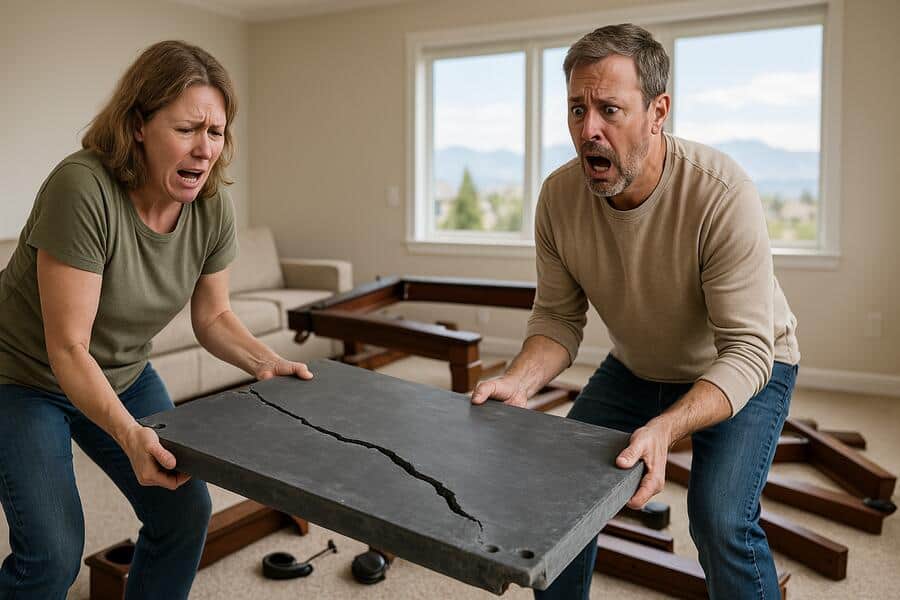
Moving a pool table is an undertaking that many homeowners underestimate, often leading to costly and disheartening “pool table moving mistakes.” Unlike other heavy furniture, a pool table is a finely tuned instrument, with its most critical component—the slate—being incredibly heavy and fragile. Attempting to move it without proper knowledge, tools, and experience can easily result in cracks, chips, or irreversible damage to the slate, felt, or frame. These “pool table damage” issues aren’t just cosmetic; they can ruin the playability and value of your table, turning a perceived DIY saving into an expensive repair or replacement bill.
This article will delve into the most common “pool table moving mistakes” made during DIY attempts, focusing on errors such as lifting by the rails, attempting to move the table assembled, and improper support for the slate. We’ll highlight why these actions lead to “moving slate mistakes” and explain how professional movers systematically avoid them. Understanding these pitfalls and the specialized techniques required for safe pool table relocation is crucial for anyone considering a move. By recognizing the complexities, you’ll gain a clearer perspective on when to trust the job to a professional pool table moving service.
💡 Key Takeaway: Many “pool table moving mistakes” stem from underestimating the fragility and weight of the slate, leading to expensive “pool table damage.” Common errors like lifting by rails or moving assembled can cause cracks, making professional expertise essential for safe relocation.
Common DIY “Pool Table Moving Mistakes”
1. Attempting to Move the Table Assembled or by the Rails
One of the most frequent and severe “pool table moving mistakes” is attempting to relocate the entire table without proper disassembly or, worse, by grabbing parts not designed for lifting.
- Moving Assembled: A standard slate pool table weighs between 600-1000+ pounds. Trying to move it as a single unit places immense, uneven stress on the frame, legs, and especially the slate. This can:
- Warp the frame, compromising its stability.
- Shear off legs, leading to collapse.
- Cause the heavy slate to flex and crack.
Professionals always disassemble slate tables.
- Lifting by the Rails or Pockets: The rails and pockets are designed to be part of the playing surface, not structural lifting points.
- The rails are often bolted to the slate and frame, but these bolts are not meant to bear the table’s full weight. Lifting by them can strip the bolts, separate the rails from the slate, or even crack the slate as the rails pull away.
- Pockets are even weaker and will easily tear or break if used for lifting.
- Lack of Proper Tools: Disassembling a pool table requires specific tools, including socket wrenches, screwdrivers, and putty knives (to chip out beeswax or plaster covering slate screws). Without these, parts can be stripped or damaged.
2. Improper Slate Removal and Support: The Biggest “Moving Slate Mistakes”
The slate is the heart of a pool table, and improper handling during removal is a leading cause of “pool table damage.”
- Not Disassembling the Slate: Most quality pool tables use multiple pieces of slate (usually 3). Attempting to move the slate as a single unit or still attached to the table frame is a critical error. Each slab can weigh 150-255 lbs, and trying to lift them together is incredibly dangerous and highly likely to cause cracking.
- Incorrect Lifting Technique: Each slate slab requires at least two to three strong people to lift. “Moving slate mistakes” include:
- Lifting alone or with too few people.
- Lifting by the edges or corners, which are the most vulnerable points.
- Lifting with the back instead of the legs, leading to severe personal injury.
- Not having a firm grip or clear communication among lifters.
- Poor Support During Transport: Once removed, slate pieces must be transported correctly.
- Laying Flat: Never lay slate flat on the truck floor. This position makes it highly susceptible to flexing and cracking, especially over bumps or during sudden stops.
- Lack of Padding: Slate edges and corners are prone to chipping. Failure to wrap each slab in moving blankets and secure with shrink wrap leaves them exposed to impact damage.
- Inadequate Securing: If slate pieces are not tightly strapped down on their sides during transit, they can shift, rub against each other, or fall, resulting in severe “pool table damage.”
💡 Key Takeaway: Two major “pool table moving mistakes” are attempting to move the table fully assembled, which can warp the frame or crack the slate, and lifting by non-structural parts like rails or pockets. Improper slate removal, such as not disassembling the multi-piece slate or using incorrect lifting techniques, causes critical “pool table damage.” Additionally, poor slate support during transport, like laying slabs flat instead of upright and unpadded, leads to significant “moving slate mistakes” and irreparable harm.
How Professionals Avoid “Pool Table Damage”
3. The Professional Disassembly Process
Professional movers follow a meticulous, step-by-step disassembly process to prevent “pool table damage.”
- Pockets First: Pockets are carefully detached from the rails.
- Rails Systematically Removed: All rail bolts are loosened partway before any single rail is fully removed. This prevents undue stress on the frame. Each rail is supported as its final bolt comes out, then wrapped in blankets.
- Felt Removal: The felt is carefully lifted, often reusing it if it’s in good condition and being moved to the same table. This exposes the slate beneath.
- Slate Unbolting and Labeling: Screws securing the slate to the frame are meticulously located (often under beeswax or plaster, which is chipped away with a putty knife). Each slab is then carefully unscrewed. Professionals often number each slab and mark its orientation to ensure correct reassembly.
- Leg and Frame Disassembly: Once the slate is removed, the legs and main frame are detached and wrapped for transport.
4. Safe Slate Handling and Transport
This is where professional expertise truly shines in preventing “moving slate mistakes.”
- Multi-Person Lifting Teams: For each slate slab, 2-3 strong, trained movers are assigned. They coordinate their lifts, use proper leg-lifting techniques, and maintain constant communication. They never lift by pockets or corners alone.
- Vertical Transport: Slate pieces are always carried and transported upright (on their side), similar to a large pane of glass. This distributes weight evenly and minimizes flexing stress.
- A specialized, vertical padded dolly is often used for moving slate.
- Thorough Protection: Each slate slab is individually wrapped in heavy-duty moving blankets, then secured tightly with shrink wrap to prevent slipping and protect against impacts, especially on edges and corners.
- Secure Truck Loading: In the moving truck, slate pieces are carefully strapped down on their sides against a firm surface, ensuring they cannot shift, fall, or experience side loading that could cause cracks. They are never laid flat.
- Reassembly Expertise: Professionals possess the skills to reassemble the table, level the slate, and re-felt it (if needed) at the new location, ensuring it’s ready for play.
DIY vs. Professional Pool Table Moving Risks
| Mistake / Risk Factor | DIY Moving Consequence | Professional Moving Avoidance |
|---|---|---|
| Moving Assembled | Cracked slate, warped frame, broken legs. | Full disassembly (rails, felt, slate, frame, legs). |
| Lifting by Rails/Pockets | Stripped bolts, detached rails, slate cracks, broken pockets. | Careful, systematic rail removal; slate lifted by main body. |
| Improper Slate Lifting | Slate cracks, personal injury (back strains), drops. | 2-3 trained movers per slab, proper leg lifting, clear communication. |
| Transporting Slate Flat | Flexing, severe cracking due to vibrations and impacts. | Transported upright (on side), secured tightly, fully padded. |
| Lack of Padding | Chipped slate edges/corners, scratched felt/frame. | Each component (especially slate) fully blanket-wrapped & shrink-wrapped. |
💡 Key Takeaway: Professional movers meticulously disassemble pool tables by removing pockets, systematically detaching rails, carefully lifting felt, and then unbolting and labeling each slate slab. For handling the heavy slate, they employ multi-person lifting teams, always transport the slabs vertically (on their side) with thorough padding and shrink wrap, and secure them tightly in the truck to prevent “moving slate mistakes” and ensure your table arrives without “pool table damage.”
Conclusion
Avoiding “pool table moving mistakes” is paramount to protecting a significant investment and preventing frustrating “pool table damage.” As we’ve seen, common DIY errors—such as trying to move the table assembled, lifting by the rails, or improperly handling the slate—can lead to irreversible cracks and costly repairs. The delicate nature and immense weight of the slate demand specialized knowledge, proper tools, and skilled manpower. Understanding these critical “moving slate mistakes” highlights why professional movers, with their systematic disassembly, careful handling, and secure vertical transport techniques, are invaluable. Entrusting your pool table to experts ensures it arrives at its new destination intact, level, and ready for countless games, safeguarding both your investment and your peace of mind.
Have questions about how to pool table moving mistakes? Reach out to our team today.
Frequently Asked Questions About Pool Table Moving Mistakes That Crack Slate
What are the most common “pool table moving mistakes” people make?
The most common “pool table moving mistakes” include attempting to move the table without fully disassembling it, lifting the table by its rails or pockets, and improperly handling the heavy and fragile slate. These errors often lead to “pool table damage” like cracked slate, warped frames, or broken components.
Why is it so bad to move a pool table while it’s still assembled?
Moving a pool table while it’s still assembled is detrimental because its immense weight (600-1000+ lbs) places uneven stress on the frame, legs, and delicate slate. This can cause the frame to warp, legs to break, or, most critically, the slate to flex and crack, leading to significant “pool table damage” and compromising its playability.
What are the biggest “moving slate mistakes” and how can they be avoided?
The biggest “moving slate mistakes” are attempting to move the slate as a single piece, lifting it without adequate support (especially by edges or corners), or transporting it laid flat. These can cause the slate, which can weigh over 150 lbs per slab, to crack or chip. Professionals avoid this by fully disassembling the slate into individual slabs, using 2-3 movers per slab, lifting with proper technique, and always transporting it upright (on its side) with thorough padding and secure strapping.
Do I really need a “pool table moving service” for a local move?
For a local move, especially if your pool table has a slate playing surface, hiring a “pool table moving service” is highly recommended. The specialized tools, expertise in disassembly and reassembly, proper lifting techniques, and secure transportation methods used by professionals minimize the risk of costly “pool table damage” and personal injury, ensuring your table arrives safely and is set up correctly.

