
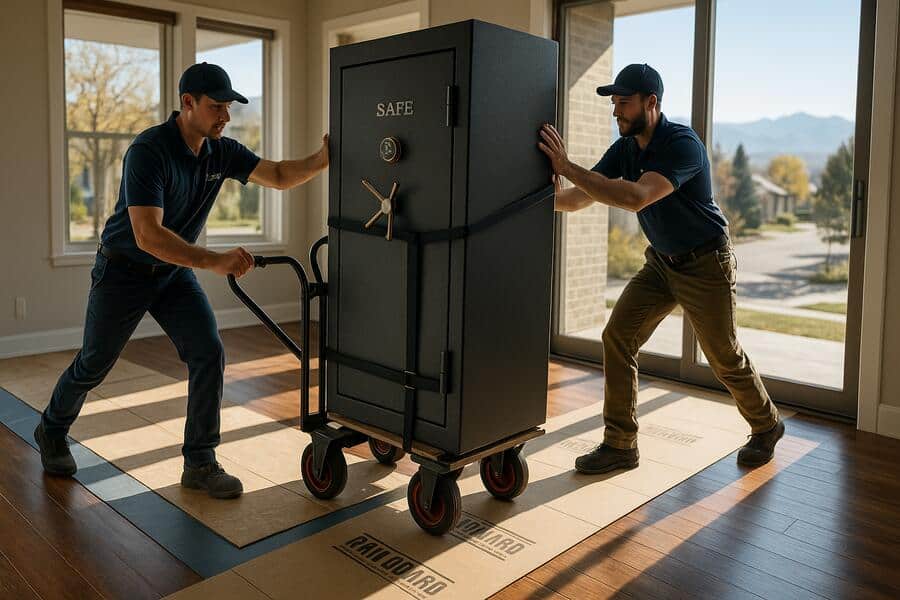
Moving a heavy safe, whether it’s a home safe, a gun safe, or a commercial vault, presents a unique challenge: protecting your floors from severe damage. These items can weigh hundreds, even thousands of pounds, and attempting to move them without proper precautions is an open invitation for dents, gouges, cracks, and costly repairs. The common “safe moving floor damage” scenarios range from scratched hardwood to shattered tiles and even structural stress on subflooring. It’s not just about getting the safe from point A to point B; it’s about doing so without leaving a trail of destruction in its wake. Understanding how to “protect floor moving safe” is as critical as the lifting itself.
This article will delve into the essential strategies and equipment used to ensure “floor protection heavy items” during a safe move. We’ll explore the power of plywood runners, specialized load-spreading boards, and meticulous route planning to prevent those dreaded dents and cracks. For those in need of assistance, professional services specializing in moving these items, such as gun safe movers denver, are equipped with the tools and expertise to execute such a move flawlessly. By applying these techniques, you can safeguard your home’s integrity and avoid significant repair bills, ensuring your safe arrives safely without compromising your floors.
💡 Key Takeaway: Moving a heavy safe risks severe “safe moving floor damage,” from dents to cracks. To “protect floor moving safe,” specialized techniques and equipment are crucial for “floor protection heavy items.” Plywood runners, load-spreading boards, and meticulous route planning are essential strategies to prevent costly repairs.
Essential Strategies to “Protect Floor Moving Safe”
1. The Power of Plywood Runners and Load-Spreading Boards
The core principle of “floor protection heavy items” is to distribute the safe’s immense weight over a larger area and create a smooth, rigid path for movement.
- Plywood Runners: Laying down sheets of at least quarter-inch thick plywood (or even half-inch for extremely heavy safes) along the entire route is arguably the most effective method.
- Weight Distribution: The plywood spreads the concentrated weight of the safe (and any moving equipment like dollies) over a much wider surface, significantly reducing pressure on any single point of the floor. This prevents dents in hardwood, cracks in tile, and punctures in linoleum or vinyl.
- Smooth Path: Plywood creates a consistently smooth and even surface, eliminating bumps, grout lines, and transitions that could snag dolly wheels or cause uneven pressure.
- Overlapping: Sheets should overlap slightly or be taped together to prevent gaps where dolly wheels could get stuck or where the safe’s weight could cause a “pinch point” at a seam.
- Specialized Floor Protection Boards: Beyond standard plywood, there are products like Ram Board, Masonite, or X-Board specifically designed for “floor protection heavy items” during construction or moving. These offer similar benefits with added features like non-slip surfaces or ease of handling.
- Utilizing Floor Runners: For lighter areas or areas that need grip, flexible floor runners or moving blankets can provide supplementary protection, especially for walls and doorways, but are generally insufficient alone for a heavy safe.
2. Meticulous Route Planning and Preparation
A well-planned route is just as crucial as the protective materials in preventing “safe moving floor damage.”
- Clear and Declutter: Before anything moves, completely clear the path of all obstacles, rugs, furniture, and anything that could impede movement or cause a trip hazard. A clear path allows for continuous, controlled movement.
- Measure Doorways and Hallways: Ensure the safe can actually fit through all openings without needing to be forced. Measure width, height, and any diagonal clearances. Removing doors or door frames may be necessary.
- Corner and Wall Protection: As the safe navigates turns, its edges can scrape walls and doorframes. Use corner guards, moving blankets, or cardboard sheets secured to vulnerable areas.
- Stair Negotiation: Stairs are incredibly risky for “moving heavy safe.” If stairs are unavoidable:
- They need to be structurally sound enough to support the safe’s weight.
- Each step’s edge should be protected with thick cardboard or plywood strips to prevent chipping.
- This is a job almost exclusively for professionals with specialized stair-climbing dollies or rigging equipment.
- Outdoor Path: Don’t forget the exterior route. If moving over concrete, uneven pavement, or landscaping, consider using similar plywood runners to maintain stability and protect moving equipment.
💡 Key Takeaway: To “protect floor moving safe,” the primary strategy for “floor protection heavy items” involves using plywood runners (at least 1/4 inch thick) or specialized boards like Ram Board to distribute the safe’s immense weight and create a smooth, rigid path, preventing dents, cracks, and snags. This is complemented by meticulous route planning, which includes clearing all obstacles, measuring clearances, protecting corners and walls, and carefully planning for hazardous areas like stairs, where professional rigging is almost always required to prevent “safe moving floor damage.”
Specialized Equipment and Professional Assistance
3. Utilizing the Right Moving Equipment
Proper “floor protection heavy items” goes hand-in-hand with using the correct equipment for safe movement.
- Heavy-Duty Appliance/Safe Dollies: These are specifically designed for extremely heavy loads, often featuring reinforced frames, robust wheels, and built-in straps to secure the item. Standard hand trucks are rarely sufficient.
- Wheel Type: Ensure the dolly wheels are wide and made of a material that won’t mark floors. Pneumatic tires can also help absorb some shock on uneven surfaces.
- Furniture Sliders/Gliders: For minor adjustments or repositioning on carpeted surfaces, heavy-duty furniture sliders can be useful, but they offer minimal protection for hard floors under the extreme weight of a safe.
- Mechanical Lifting Aids: For very large safes, professional movers may employ hydraulic lifts, pallet jacks, or even forklifts to get the safe onto the dolly or into the truck, minimizing direct floor impact.
- Leverage Bars and Pry Bars: Used by professionals to carefully lift edges of the safe to slide dollies or protection underneath, without dropping the full weight directly onto the floor.
4. When to Call “Safe Moving Floor Damage” Experts
For truly heavy safes, or those in challenging locations, professional movers are often the only way to guarantee “floor protection heavy items.”
- Weight and Size: If your safe weighs more than a few hundred pounds, or if it’s exceptionally bulky, it quickly moves beyond a DIY project. The risk of personal injury and “safe moving floor damage” becomes too high.
- Stairs or Tight Spaces: Any movement involving stairs, narrow hallways, sharp turns, or uneven terrain is a strong indicator that professional “gun safe movers denver” are needed. They have specialized equipment like stair-climbing dollies and rigging expertise.
- Expensive Flooring: If you have high-value flooring (e.g., natural stone, delicate hardwood, antique tiles), the cost of potential repair far outweighs the investment in professional movers.
- Lack of Experience/Equipment: If you don’t have the specialized dollies, plywood, and a strong, experienced team, attempting the move yourself is ill-advised. Professionals arrive with all necessary tools and a trained crew.
Floor Protection Techniques for Heavy Safes
| Protection Method | Application | Benefits for “Safe Moving Floor Damage” |
|---|---|---|
| Plywood/Rigid Boards | Primary path for safe & dolly. | Spreads weight, prevents dents/cracks, smoothens path. |
| Floor Runners/Blankets | Supplementary path, wall/doorway protection. | Prevents scuffs/scratches, light impact absorption. |
| Heavy-Duty Safe Dolly | Primary equipment for moving the safe. | Designed for extreme weight, sturdy wheels, secure strapping. |
| Mechanical Lifting Aids | Getting safe onto/off dolly/truck. | Minimizes manual lifting, precise placement, reduces floor impact. |
| Expert Route Planning | Before moving anything. | Avoids unexpected obstacles, tight turns, or structural weak points. |
💡 Key Takeaway: To effectively “protect floor moving safe,” utilize heavy-duty appliance/safe dollies with robust wheels for primary movement, and consider mechanical lifting aids like hydraulic lifts for getting the safe onto and off the dolly or truck. Crucially, recognize that for truly heavy safes, those involving stairs or tight spaces, or homes with expensive flooring, professional assistance from “safe moving floor damage” experts is essential to prevent costly “floor protection heavy items” errors and ensure safety.
Conclusion
Protecting your floors when “moving a heavy safe” is a non-negotiable step that demands careful planning, the right materials, and often, professional expertise. The potential for “safe moving floor damage,” from minor scuffs to major structural issues, is significant if proper precautions are not taken. By implementing strategies like plywood runners and load-spreading boards, meticulously planning your route, and utilizing heavy-duty moving equipment, you can significantly mitigate these risks. For anything beyond a small, easily maneuvered safe, especially when stairs or delicate flooring are involved, entrusting the task to experienced “floor protection heavy items” professionals is not just a convenience, but a critical investment in protecting your home and avoiding costly repairs. Prioritize safety and preparation to ensure your safe reaches its new location without compromising the integrity of your floors.
Have questions about how to protect floor moving safe? Reach out to our team today.
Frequently Asked Questions About Protecting Floors When Moving A Heavy Safe
What is the best way to “protect floor moving safe” to prevent dents or cracks?
The best way to “protect floor moving safe” and prevent dents or cracks is to lay down sturdy, rigid plywood runners (at least 1/4 inch thick) or specialized load-spreading boards along the entire path. This distributes the safe’s heavy weight over a much larger area, reducing concentrated pressure on your flooring and providing a smooth surface for moving equipment.
What kind of “floor protection heavy items” should I use on stairs?
Moving heavy safes on stairs is extremely risky and generally requires professional “floor protection heavy items” expertise. If stairs are unavoidable, you’ll need to reinforce each step and protect the edges with thick cardboard or plywood strips to prevent chipping or breaking. Specialized stair-climbing dollies used by professionals are often the only safe method.
Why is route planning so important for preventing “safe moving floor damage”?
Meticulous route planning is crucial for preventing “safe moving floor damage” because it allows you to identify and mitigate potential hazards. Clearing obstacles, measuring all doorways and hallways, protecting corners and walls, and ensuring a continuous, even path prevents snags, impacts, and unexpected forces that could damage floors or walls. It minimizes stops and starts, which are critical points of floor stress.
When should I hire professionals to “protect floor moving safe”?
You should hire professionals to “protect floor moving safe” if your safe is very heavy (more than a few hundred pounds), if your move involves stairs, narrow hallways, or tight turns, or if you have expensive or delicate flooring. Professionals have specialized equipment (like heavy-duty safe dollies, mechanical lifts, and stair climbers) and trained crews to execute the move safely and prevent “safe moving floor damage” more effectively than a DIY attempt.

