Whether you’re decluttering, downsizing, or in between homes, a storage unit can be an invaluable resource. However, simply tossing items into a unit can quickly lead to a cluttered, inaccessible mess that wastes space and makes future retrieval a nightmare. The key to maximizing your investment is knowing “how to pack a storage unit” efficiently and strategically. It’s not just about fitting everything in; it’s about smart organization.
Effective “storage unit loading” transforms a chaotic pile into an organized inventory, making the most of every square foot and ensuring your belongings remain protected. This guide will share expert strategies on everything from aisle planning and stacking techniques to labeling and keeping essential items accessible, helping you master “storage unit organization.” For assistance with heavy lifting and efficient loading, consider utilizing moving labor denver to optimize your storage space.
💡 Key Takeaway: Efficient “storage unit loading” is crucial for maximizing space and accessibility. Strategic organization, rather than just fitting items, protects your belongings and simplifies future retrieval.
Strategic Planning for Optimal Storage
1. Pre-Packing & Inventory Management
Before you even begin “how to pack a storage unit,” the preparation phase is critical for efficient “storage unit organization.”
- Declutter and Downsize: The less you store, the less space you need, which can save you money on a smaller unit size. Go through every item and decide if it’s truly worth storing. Dispose of, donate, or sell anything you no longer need or use.
- Clean Everything: Ensure all items, especially appliances, are clean and dry before storing to prevent mold, mildew, or pest infestations. Defrost and clean refrigerators/freezers, leaving doors slightly ajar for air circulation.
- Use Consistent, Sturdy Boxes: Invest in high-quality moving boxes of varying sizes. Uniform box sizes stack better and more securely than mismatched boxes or flimsy garbage bags. Use smaller boxes for heavy items (books, dishes) and larger boxes for lighter, bulky items (linens, pillows).
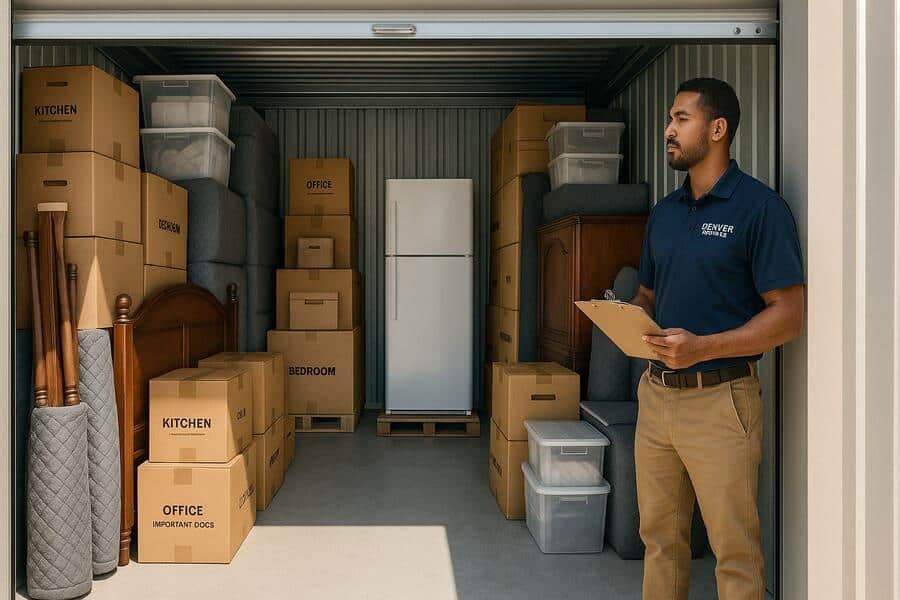
- Detailed Labeling: Label all boxes clearly on at least two sides with their contents and the room they belong to. Assign numbers to boxes and keep a master inventory list (physical and digital) that details what’s in each numbered box. This is invaluable for finding items later.
- Disassemble Furniture: Take apart beds, tables, and shelves. Remove legs from chairs and sofas if possible. Bag and label all hardware, taping it securely to the corresponding furniture piece or storing it in a clearly marked “hardware” box that’s easily accessible.
2. Aisle Planning and Accessibility
One of the most common mistakes in “storage unit loading” is packing everything in without considering future access. Planning for an aisle or access path is paramount.
- Central Aisle: For larger units, aim to create a central aisle or “walkway” down the middle. This allows you to reach items stored against the back wall without having to unload half the unit.
- Frequent Access Items: Identify items you might need to access periodically (e.g., seasonal decorations, tax documents, specific tools). These should be stored along the planned aisle or near the front of the unit.
- Heavy Items First: Always load the heaviest and sturdiest items (appliances, major furniture pieces, boxes of books) into the unit first, placing them towards the back and along the sides. They form the base of your storage structure.
- Furniture Placement: Stand mattresses, sofas, and large flat items (like disassembled tabletops or headboards) upright against the walls to save floor space, if ceiling height allows. Protect them with covers or blankets.
💡 Key Takeaway: Efficient “storage unit organization” starts with decluttering, cleaning, and using sturdy, well-labeled boxes. Plan for a central aisle for easy access, placing heavy items and furniture (upright against walls) towards the back. Keep frequently needed items near the front.
Optimizing Space and Protecting Belongings
3. Smart Stacking Techniques
Effective stacking is where you truly maximize vertical space and protect your belongings during “storage unit loading.”
- Heaviest on Bottom, Lightest on Top: This is a fundamental rule. Stack heavy, durable boxes at the base and progressively lighter boxes on top. This prevents crushing and maintains stability.
- Fill Boxes Completely: Partially filled boxes are prone to crushing when stacked. Use packing paper, bubble wrap, towels, or linens to fill any empty spaces in boxes.
- Create a Flat Surface: When building upwards, try to create as flat and stable a surface as possible at each layer before adding the next. This ensures even weight distribution and prevents stacks from toppling.
- Leave Space for Airflow: Especially in climates with humidity fluctuations, avoid pressing items directly against exterior walls if possible. A slight gap can aid in air circulation and help prevent moisture buildup. Place a pallet or cardboard barrier on the floor to keep items off the concrete.
- Protect Delicate Items: Wrap fragile items individually in bubble wrap or packing paper. Place them in clearly labeled boxes and stack them only on top of other sturdy, heavy boxes, never directly underneath anything.
4. Final Touches for Long-Term Organization
Before you lock up, a few last steps can make a big difference for future access and peace of mind.
- Don’t Overload the Unit: While maximizing space is key, don’t pack the unit so tightly that you can’t move anything. Leave a little breathing room, especially if you anticipate needing to access items often.
- Keep an Inventory List Visible: Tape a copy of your master inventory list to the inside of the storage unit door. This way, you can quickly see where things are without digging through boxes.
- Consider Climate Control: If storing sensitive items like electronics, antiques, wooden furniture, or artwork, a climate-controlled unit is highly recommended to protect against extreme temperature and humidity swings. Even in dry climates, temperature shifts can cause issues.
- Secure the Unit: Use a high-quality, disc-style padlock for enhanced security.
Storage Unit Loading & Organization Checklist
| Category | Action Points |
|---|---|
| Preparation |
|
| Layout |
|
| Stacking |
|
| Final Touches |
|
💡 Key Takeaway: Optimize space by stacking heaviest boxes on the bottom and lightest on top, ensuring boxes are full to prevent crushing. Prioritize stability in layers. Remember to leave space for airflow, especially for sensitive items, and keep a visible inventory list for easy access.
Conclusion
Mastering “how to pack a storage unit” is an art that pays dividends in both convenience and protection. By approaching “storage unit loading” with a strategic mindset—from meticulous pre-packing and detailed inventory management to thoughtful aisle planning and smart stacking techniques—you transform a utilitarian space into an organized, accessible extension of your home. These practices not only make the most of every square foot, potentially saving you money on unit size, but also ensure your belongings remain in excellent condition until you need them again. A well-organized storage unit is a testament to mindful planning, reducing stress now and in the future.
Have questions about how to storage unit organization? Reach out to our team today.
Frequently Asked Questions About Storage Unit Organization
How can I protect items from moisture and pests in a storage unit?
To protect against moisture, use a pallet or sturdy wooden planks to keep all items off the concrete floor, allowing for air circulation. Consider moisture absorbers or desiccants, especially in humid climates. For pest control, ensure all food items are removed, clean appliances thoroughly, and use plastic bins with airtight lids for clothing and linens instead of cardboard boxes, as pests can easily chew through cardboard.
Is it better to use plastic bins or cardboard boxes for storage?
Both have their pros and cons. Cardboard boxes are generally more affordable and recyclable, but they are susceptible to moisture, pests, and crushing if not properly stacked. Plastic bins (especially clear ones) are more durable, weatherproof, pest-resistant, and can be easily stacked. For long-term storage or valuable items, plastic bins are often the superior choice, despite the higher upfront cost.
How do I prevent my wooden furniture from warping or cracking in storage?
Wooden furniture is sensitive to temperature and humidity fluctuations. If possible, opt for a climate-controlled storage unit. Otherwise, clean and polish furniture before storing, then cover it with breathable moving blankets or sheets (avoid plastic wraps that can trap moisture). Disassemble large pieces to reduce stress on joints and place them on pallets to keep them off the floor.
Should I leave an aisle in my storage unit, or fill it completely?
It is almost always recommended to leave at least a narrow aisle, especially in larger units. A dedicated aisle allows you to access items without having to unload a significant portion of the unit. Without an aisle, retrieving items from the back of the unit becomes a frustrating and time-consuming task, potentially leading to damage as you try to dig things out. If you’re certain you won’t need to access anything until you move out, you could fill it completely, but this is rarely the case for most people.