
A piano is a magnificent instrument, a complex masterpiece of wood, felt, and metal, all working in harmony to produce beautiful music. However, this intricate construction makes it highly sensitive to environmental factors, especially when it comes to “how to store a piano.” Whether you’re moving, renovating, or simply need temporary space, improper “piano storage” can lead to irreversible damage: warped soundboards, rusted strings, sticky keys, and a complete loss of its tuning stability and tonal quality. The primary culprits? Fluctuating temperatures and, more significantly, inconsistent humidity levels. These elements can silently degrade your instrument, transforming a cherished heirloom into an expensive repair project or even firewood.
This guide will delve into the essential principles of “climate controlled piano storage,” explaining why maintaining a stable environment is paramount. We’ll cover ideal temperature and humidity ranges, discuss strategic positioning within a storage unit, and advise on covering your piano without inadvertently trapping damaging moisture. Understanding these basics is key to preserving your piano’s condition, even in challenging environments such as dry climates. For delicate and heavy instruments like pianos, always consider consulting with professional piano movers who understand the unique requirements for their transport and storage.
💡 Key Takeaway: Learning “how to store a piano” is crucial because these instruments are highly sensitive to environmental fluctuations, especially humidity and temperature. Improper “piano storage” can cause significant damage like warped soundboards, rusted strings, and sticky keys. Prioritizing “climate controlled piano storage” in a stable environment is essential for preserving the instrument’s integrity and value.
Why Climate Control is Non-Negotiable for Piano Storage
1. The Critical Role of Temperature and Humidity
Pianos are primarily made of wood, a natural material that reacts significantly to its environment.
- Wood Expansion and Contraction: Wood naturally expands in high humidity and contracts in low humidity. This constant movement, or worse, rapid fluctuations, can lead to:
- Soundboard Warping/Cracking: The soundboard is the heart of the piano. Warping or cracking here severely impacts tone and tuning.
- Pin Block Damage: The pin block holds the tuning pins. If it swells or shrinks, the piano will lose its tune and eventually become untunable.
- Key and Action Issues: Keys can become sticky or sluggish, and the intricate action mechanism can seize up or become misaligned.
- Metal Components: High humidity also leads to rust on strings, tuning pins, and other metal parts, degrading their performance and appearance.
- Felt and Leather: These materials in the action can swell, stiffen, or attract mold in damp conditions, impacting the piano’s touch and response.
- Ideal Ranges:
- Temperature: Maintain a stable temperature, ideally between 65-72°F (18-22°C). Avoid extreme heat or cold.
- Humidity: The most crucial factor. Aim for a relative humidity (RH) between 40-55%. Some sources say 40-60% is acceptable, but stability is key. Use a hygrometer to monitor.
2. Choosing the Right “Climate Controlled Piano Storage”
Not all storage units are created equal, especially for something as delicate as a piano.
- Avoid Standard Self-Storage: Unregulated storage units, garages, basements, and attics are generally unsuitable for “piano storage.” They are prone to:
- Extreme Temperature Swings: Hot summers, freezing winters, and diurnal fluctuations can wreak havoc.
- Uncontrolled Humidity: Basements can be damp and prone to mold; attics can be hot and dry. Both are problematic.
- Pests: Rodents and insects can damage felt, wood, and strings.
- Opt for Professional “Climate Controlled Piano Storage”:
- These facilities maintain consistent temperature and humidity levels year-round.
- They often have robust security and pest control measures.
- Look for facilities specifically designed for sensitive items like musical instruments or antiques.
- Placement Within the Unit:
- Away from Walls: Position the piano away from exterior walls of the storage unit to protect against temperature transfer and potential dampness.
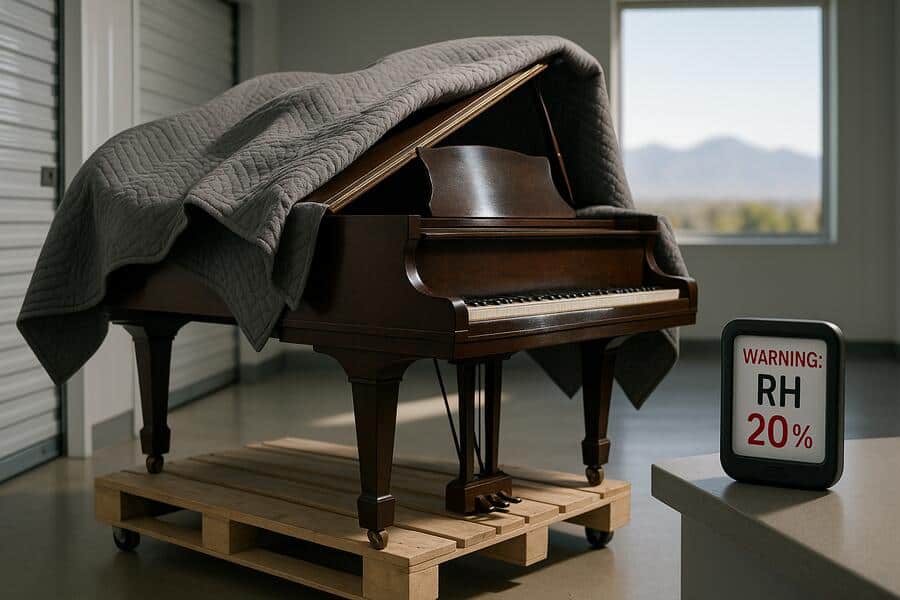
- Off the Floor: Ideally, place the piano on a pallet or sturdy blocks to elevate it off the concrete floor, further protecting it from ground moisture.
💡 Key Takeaway: For “how to store a piano,” maintaining stable temperature (65-72°F) and especially humidity (40-55% RH) is paramount, as wood expands and contracts, potentially warping the soundboard, damaging the pin block, or affecting keys. Professional “climate controlled piano storage” units are essential, as standard storage, garages, or basements with their extreme environmental fluctuations will almost certainly harm the instrument.
Protecting Your Piano in Storage
3. Covering Your Piano Without Trapping Moisture
Proper covering provides protection without creating new problems.
- Avoid Plastic Sheeting: Never cover a piano with airtight plastic sheeting. While it might seem protective, plastic traps moisture, creating a microclimate where mold and mildew can thrive, or amplifying the effects of humidity swings directly on the instrument’s finish and internal components.
- Use Breathable Materials: Opt for breathable, padded moving blankets or a specialized piano cover made of canvas or thick fabric. These protect against dust, scratches, and minor impacts while allowing air circulation.
- Securely Wrap: Ensure the cover completely envelops the piano, but isn’t so tight that it compresses any parts. Secure it gently with moving tape or straps that don’t directly touch the piano’s finish.
4. Special Considerations for Dry Climates
Areas with naturally low humidity require specific attention when considering “how to store a piano.”
- Humidity Control is Critical: In dry climates, the primary concern is the wood drying out too rapidly, leading to cracking and shrinkage. Even in a climate-controlled unit, you might need to take extra steps.
- Internal Humidity Control Systems: Consider installing an internal humidity control system (like a Dampp-Chaser Piano Life Saver system) directly inside your piano. This system automatically adds or removes humidity as needed, creating an optimal microclimate for the instrument. This is a significant investment but highly effective for long-term “piano storage” or in consistently dry environments.
- Regular Monitoring: Use a hygrometer both inside the storage unit and, if possible, inside the piano itself to monitor humidity levels diligently.
Piano Storage Best Practices
| Aspect | Recommendation | Why It Matters |
|---|---|---|
| Temperature | Stable 65-72°F (18-22°C) | Prevents rapid wood expansion/contraction, preserves tuning. |
| Humidity | Stable 40-55% Relative Humidity | Crucial to prevent warping, cracking, rust, sticky keys. Use a hygrometer. |
| Storage Type | Professional climate-controlled facility | Guarantees stable environment, pest control, security. Avoid standard units. |
| Positioning | Away from walls, elevated off floor on a pallet. | Protects from temperature transfer and ground moisture. |
| Covering | Breathable moving blankets or fabric covers. | Protects from dust/scratches without trapping moisture. NEVER use airtight plastic. |
| Dry Climates | Consider internal humidity control system (Dampp-Chaser). | Prevents rapid drying, cracking, and shrinkage of wood. |
💡 Key Takeaway: When “how to store a piano,” avoid airtight plastic covers which trap moisture and promote mold; instead, use breathable moving blankets or fabric covers. In inherently dry climates, consider investing in an internal humidity control system for your piano to prevent rapid drying and cracking, and diligently monitor humidity levels within the “climate controlled piano storage” unit.
Conclusion
Storing a piano, whether for a short duration or an extended period, demands meticulous attention to its environmental conditions. Understanding the delicate balance of wood, felt, and metal within the instrument underscores why “climate controlled piano storage” is not merely a luxury, but a necessity. By maintaining stable temperature and humidity, positioning the piano thoughtfully, and covering it with breathable materials, you safeguard its intricate mechanisms and preserve its resonant beauty. Taking these proactive steps for “how to store a piano” ensures that when it’s time to bring your instrument back into use, it will be ready to fill your home with music once again, rather than requiring costly and extensive repairs.
Have questions about how to how to store a piano? Reach out to our team today.
Frequently Asked Questions About Storing A Piano: Temperature And Humidity Basics
Why is humidity control so crucial when figuring out “how to store a piano”?
Humidity control is paramount when figuring out “how to store a piano” because pianos are primarily made of wood, which is highly susceptible to moisture changes. High humidity can cause wood to swell, leading to warped soundboards, sticky keys, and rusted metal parts. Low humidity causes wood to shrink, leading to cracking and loosening of critical components like the pin block, ultimately causing the piano to lose its tune and potentially suffer irreversible damage.
What are the ideal temperature and humidity ranges for “piano storage”?
For ideal “piano storage,” aim for a stable temperature between 65-72°F (18-22°C) and, most critically, a relative humidity (RH) level between 40-55%. Consistency is key; rapid fluctuations in either temperature or humidity are more damaging than slightly off but stable conditions. Using a hygrometer to monitor these levels in your storage environment is highly recommended.
Can I use a standard self-storage unit for “climate controlled piano storage”?
No, standard self-storage units are generally not suitable for “climate controlled piano storage.” They typically lack the consistent temperature and humidity regulation that a piano requires. These units often experience extreme heat in summer, freezing cold in winter, and significant humidity swings, which can severely damage the piano’s wood, felt, and metal components over time. Always opt for a professional climate-controlled facility.
How should I cover my piano in “piano storage” to protect it?
When preparing for “piano storage,” cover your piano with breathable materials like padded moving blankets or a specialized fabric piano cover. These protect against dust, scratches, and minor impacts while allowing air to circulate. Crucially, avoid using airtight plastic sheeting, as this can trap moisture against the piano’s surface, promoting mold, mildew, and amplifying the damaging effects of humidity fluctuations.

