
A pool table is often the centerpiece of a game room, a significant investment, and a heavy, complex piece of furniture. When the time comes to move it, many wonder if it can be transported in one piece. For most standard slate pool tables, the answer is a resounding no. Understanding why you must “disassemble a pool table for moving” is crucial to protecting your investment and preventing costly damage.
Attempting to move a slate pool table while it’s fully assembled risks serious harm to the table’s core components: the fragile slate, the precision-leveled frame, and the felt. This guide will explain the inherent dangers of moving an assembled slate table and outline the general sequence of a proper “pool table disassembly,” highlighting why professional pool table movers are often the best choice for this intricate task.
💡 Key Takeaway: Slate pool tables must be fully disassembled for any significant move to prevent catastrophic damage to the slate, frame, and felt.
The Risks of Moving an Assembled Slate Pool Table
1. Fragile Slate: The Heart of the Table
The playing surface of most quality pool tables is made of heavy slate, typically in three precisely cut and leveled pieces. This material is incredibly heavy but also surprisingly brittle.
- Cracking and Breaking: The primary risk of moving an assembled slate pool table is cracking the slate. When a fully assembled table is tilted, lifted, or dragged, the immense weight of the slate is not evenly supported by the frame in the way it’s designed to be. This uneven stress can cause the slate pieces to crack or even shatter, rendering the table unplayable and requiring expensive replacement.
- Shearing Waxed Seams: The individual slate pieces are joined with a special wax or bond, which is critical for a perfectly smooth playing surface. Sliding an assembled table can shear these seams, creating unevenness that permanently affects gameplay.
- Improper Handling: Lifting a table by its rails or pockets can put undue pressure on these components, leading to damage beyond repair. The slate itself is not designed to flex or endure lateral stress.
“Slate pool table moving” without disassembly is almost guaranteed to result in damage to this critical component.
2. Warped Frame and Misaligned Components
Beyond the slate, the entire structural integrity of the pool table is at risk.
- Racked Frame: The frame of a pool table is designed to support the slate’s weight evenly when the table is perfectly level. Tilting or dragging an assembled table can twist or “rack” the frame, warping it permanently. A warped frame means the table will never sit level again, making precise shots impossible.
- Damaged Rails and Pockets: The rails and pockets are typically bolted to the frame and slate. Moving an assembled table puts extreme stress on these connection points, leading to broken bolts, damaged rail cushioning, or torn pockets.
- Torn Felt: The felt (or cloth) is stretched tightly and precisely over the slate. Any significant flexing or shifting of the slate or frame during an assembled move can cause the felt to tear, ripple, or become loose, necessitating a complete re-felting, which is a specialized and costly service.
💡 Key Takeaway: Moving an assembled slate pool table risks cracking the fragile slate, warping the precision-leveled frame, damaging rails and pockets, and tearing the felt, leading to unplayable conditions and expensive repairs.
The Proper Pool Table Disassembly Sequence
3. Step-by-Step Disassembly Process
A professional “pool table disassembly” is a methodical process designed to protect each component.
- Remove Pockets: Carefully unhook or unscrew all six pockets. It’s best to label them if they are not identical and store all hardware in labeled bags.
- Detach Rails: The rails, which contain the cushions, are typically bolted from underneath the frame through the slate. These bolts are removed carefully, ensuring each rail is supported as the last bolt comes free. Again, labeling each rail’s position (e.g., “head end left”) is crucial for correct reassembly.
- Remove Felt (if necessary): For most moves, the felt needs to be carefully removed. This involves pulling out staples (if stapled) or gently detaching it if glued. The goal is to preserve the felt for reinstallation. Professional movers can often remove and reinstall the existing felt if it’s in good condition.
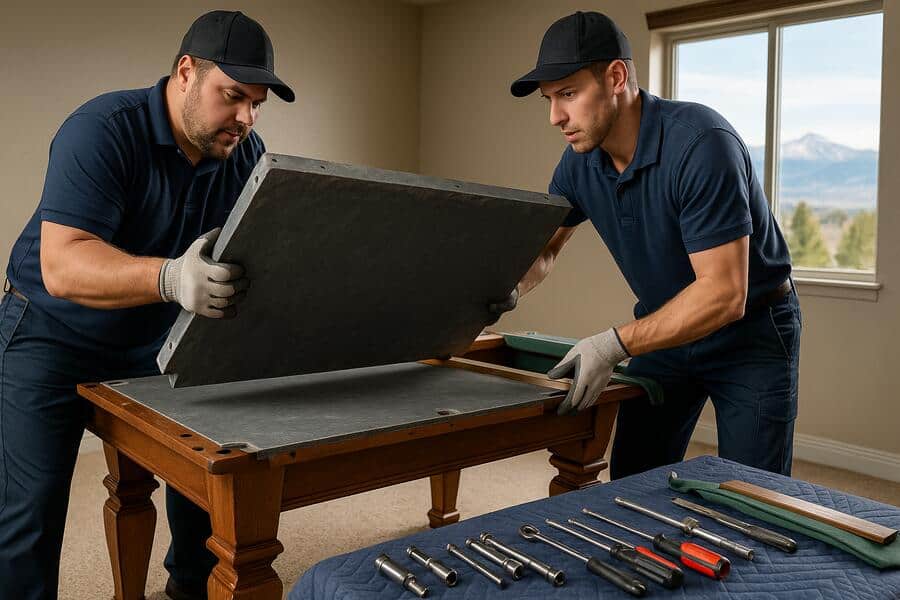
- Lift the Slate: This is the most critical and dangerous step, requiring multiple strong individuals or specialized equipment. The slate pieces are often screwed to the table frame. These screws are removed, and then each slate piece (which can weigh 200-450+ pounds each) is carefully lifted off the frame.
- Disassemble Frame: Once the slate is removed, the frame components (legs, side aprons) can be unbolted and disassembled for easier transport.
4. Packing and Transporting Components
Once disassembled, each component requires specific packing and handling.
- Slate Protection: The slate pieces are the most delicate. They are typically wrapped in heavy-duty moving blankets and often transported vertically on specialized slate dollies or in custom-built crates to prevent cracking under pressure. They should never be laid flat in a moving truck for long-distance transport without proper crating, as road vibrations can cause cracking.
- Rails and Pockets: Rails are wrapped in moving blankets. Pockets and hardware are stored in clearly labeled bags or containers.
- Frame Components: Legs and frame pieces are wrapped in moving blankets and secured.
- Felt: If removed, the felt is carefully rolled (never folded) onto a tube or pipe and placed in a protective bag to prevent creases or damage.
Pool Table Disassembly Overview
| Component | Disassembly Step | Why Disassemble? |
|---|---|---|
| Pockets | Unscrew/unhook, bag hardware, label | Prevent damage to pockets and rails, access rail bolts |
| Rails (with cushions) | Unbolt from underneath, support as removed, label | Access slate, prevent rail/frame damage |
| Felt (Cloth) | Carefully remove staples/adhesive, roll | Access slate, prevent tearing during slate removal |
| Slate (3 pieces) | Unscrew from frame, carefully lift with multiple people | CRITICAL: Prevents cracking, warping, and structural damage |
| Frame & Legs | Unbolt and separate components | Easier transport, prevents warping of frame |
💡 Key Takeaway: A full pool table disassembly involves methodically removing pockets, rails, felt, slate (the most critical step), and the frame, with each component requiring specific protective packing for transport.
Conclusion
While the idea of moving a pool table in one piece might seem appealing for simplicity, the reality is that the delicate and heavy nature of a slate pool table demands complete disassembly. Attempting to move it assembled almost guarantees significant and costly damage to the slate, frame, and felt. A proper “pool table disassembly” is an intricate process best handled by experienced professionals who understand the nuances of each component and possess the right tools and techniques for safe transport and reassembly. Prioritizing careful disassembly ensures your pool table arrives at its new home in perfect playing condition.
Have questions about how to disassemble pool table for moving? Reach out to our team today.
Frequently Asked Questions About Moving Pool Tables
Can I move a slate pool table without taking it apart if it’s just across the room?
For a very short distance within the same room (a few feet for cleaning or carpet replacement), some non-slate or single-slate tables might be shifted minimally using specialized equipment like air sleds or heavy-duty dollies by professionals. However, for most three-piece slate tables, even moving across a room requires at least partial disassembly (like removing legs and slate) to avoid shearing the slate seams or racking the frame. It’s almost always safer to consult a professional.
How much does slate weigh in a pool table?
The slate in a standard 8-foot pool table, typically composed of three pieces, can weigh anywhere from 200 to 450+ pounds in total. Each individual piece of slate can weigh 150-250 pounds or more, depending on its thickness and size. This extreme weight is why slate removal requires multiple strong individuals or specialized lifting equipment.
What tools are needed for pool table disassembly?
A basic disassembly typically requires a socket wrench set (often 1/2″ or 9/16″), screwdrivers (Phillips and flathead), a staple remover (if the felt is stapled), a level, a utility knife (for cutting felt if it’s glued, though not ideal), and a drill with appropriate bits. Protective gear like gloves and safety glasses are also recommended. Specialized tools might be needed for re-felting and leveling.
Why do pool table movers sometimes build custom crates for the slate?
For long-distance moves, especially when the slate pieces will endure extended periods of vibration and potential jostling, professional movers often build custom wooden crates. This provides the highest level of protection for the fragile slate, ensuring it remains secure and upright, preventing any cracking or damage during transit.

