Moving a hot tub is a complex endeavor, and while professional movers handle the physical relocation, the electrical component often requires specialized attention. The “hot tub electrical reconnection” is not a DIY task; it’s a critical job that, if done incorrectly, can lead to severe safety hazards, costly damage, and even violate local building codes. Many hot tubs, especially full-sized models, operate on dedicated 240-volt circuits, demanding a level of electrical expertise far beyond what an average homeowner or even a general moving crew possesses. Attempting to handle this intricate wiring yourself can expose you to risks of electrocution, fire, or permanent damage to your spa’s sophisticated systems.
This guide will explain precisely why a licensed electrician is indispensable for safe and compliant “hot tub electrical reconnection.” We’ll delve into the specific requirements of “hot tub wiring,” including GFCI protection and dedicated circuits, and outline the proper procedures for a “spa electrical disconnect” at your old home and a flawless setup at your new location. Coordinating the electrician’s visit with your moving crew is key to a smooth transition, ensuring your hot tub is operational and safe for enjoyment. For more details on what’s involved in moving your hot tub, see what’s included in a professional hot tub moving service.
💡 Key Takeaway: “Hot tub electrical reconnection” is a job for a licensed electrician, not a DIY task, due to significant safety risks and complex “hot tub wiring” requirements like 240-volt dedicated circuits and GFCI protection. Proper “spa electrical disconnect” and reconnection prevents electrocution, fire, and code violations, making coordination with your moving crew essential.
The Dangers of DIY “Hot Tub Electrical Reconnection”
1. High Voltage & Water: A Deadly Combination
Hot tubs involve a lethal combination of high voltage electricity and water, making “hot tub electrical reconnection” incredibly dangerous for the untrained.
- 240-Volt Circuits: Most full-size hot tubs require a dedicated 240-volt circuit with a 50-amp GFCI breaker. This is significantly more powerful than standard household outlets and can deliver a fatal shock if mishandled.
- Electrocution Risk: Improper wiring, loose connections, or incorrect grounding can create a direct path for electricity into the water, posing an extreme electrocution hazard to anyone in or near the tub. The Consumer Product Safety Commission (CPSC) has issued numerous warnings regarding electrical safety around pools, spas, and hot tubs.
- Fire Hazard: Faulty electrical connections can overheat, leading to insulation melting, short circuits, and potentially a devastating electrical fire. This risk is amplified when components are exposed to the elements or water infiltration.
- Damage to the Spa: Incorrect “hot tub wiring” can instantly fry the spa’s control panel, heater, pump, or other sensitive electronic components, resulting in expensive repairs or even rendering the entire hot tub unusable.
2. Complex “Hot Tub Wiring” & Code Compliance
Modern hot tubs adhere to stringent electrical codes designed for maximum safety, and only a licensed electrician can ensure compliance.
- NEC Article 680: Electrical work near pools, hot tubs, and water features is subject to specialized requirements outlined in the National Electrical Code (NEC) Article 680. These standards are far more stringent than typical outdoor wiring.
- GFCI Protection: All outlets within 20 feet of a hot tub require Ground Fault Circuit Interrupter (GFCI) protection. A dedicated 240-volt circuit for a hot tub typically needs a GFCI circuit breaker installed directly in the main electrical panel. These devices are critical for detecting ground faults and quickly shutting off power, preventing electrocution.
- Testing GFCIs regularly is crucial, and any replacement or installation must be done by a qualified professional.
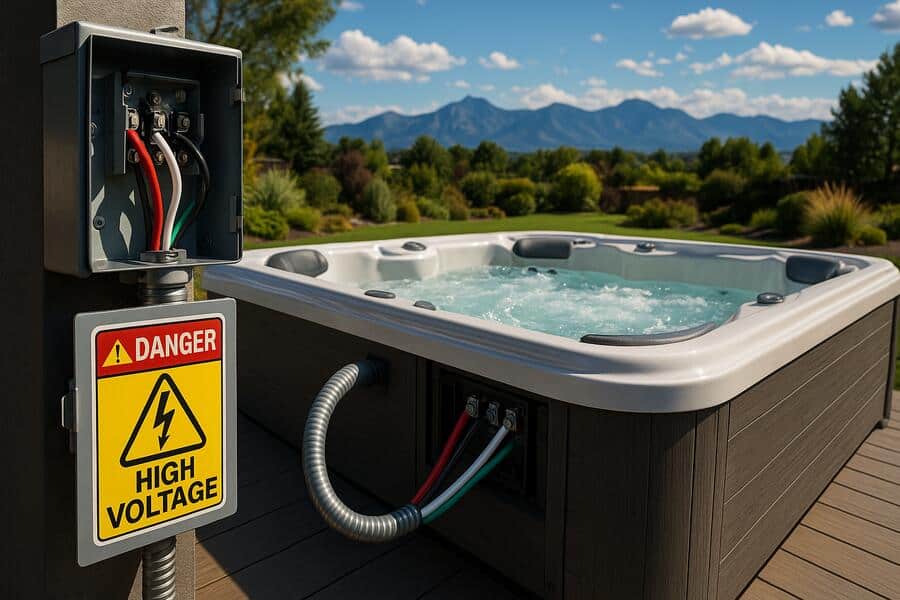
- Disconnect Box: The NEC typically requires a GFCI-protected disconnect box to be installed within sight of the spa, but at least 5 feet away. This allows for quick and safe power cutoff for maintenance or emergencies.
- Permitting and Inspections: In many areas, “hot tub electrical reconnection” requires a permit and subsequent inspection by local authorities to ensure code compliance. A licensed electrician will know these requirements and ensure all work passes inspection, avoiding potential fines or future issues with home insurance.
💡 Key Takeaway: “Hot tub electrical reconnection” is inherently dangerous due to high voltage (240-volt dedicated circuits) and water, posing severe risks of electrocution, fire, and damage to the spa if mishandled. Additionally, “hot tub wiring” must adhere to stringent National Electrical Code (NEC Article 680) standards, including mandatory GFCI protection and disconnect boxes, which only a licensed electrician can correctly install and ensure compliance with local permitting and inspection requirements.
Coordinating the Electrician with Your Move
3. The “Spa Electrical Disconnect” and Reconnection Process
Proper coordination between the homeowner, movers, and electrician is essential for a seamless “hot tub electrical reconnection.”
- Before Movers Arrive (Old Home):
- Schedule a licensed electrician to disconnect the power to your hot tub a day or two before the moving crew arrives.
- The electrician will safely shut off power at the breaker, disconnect the wiring from the spa’s control panel, and ensure all electrical components are safe for the movers to handle.
- They may also cap the exposed wiring in the old location if needed for safety or future use.
- After Movers Place Hot Tub (New Home):
- Once your professional hot tub movers have carefully placed the spa in its final position at the new location, it’s time for the electrician to return.
- The electrician will inspect the new electrical setup (which should ideally be pre-installed and permitted) and perform the “hot tub electrical reconnection.”
- This involves securely wiring the hot tub to its dedicated GFCI-protected circuit, ensuring all connections are watertight and code-compliant.
- They will also test the GFCI and the hot tub’s functions to confirm everything is working safely and correctly.
4. Why Only a Licensed Electrician Is Qualified
The specialized nature of “hot tub electrical reconnection” demands the expertise of a licensed professional.
- Specialized Knowledge: Licensed electricians understand the nuances of high-voltage wiring, GFCI systems, and the specific requirements of NEC Article 680 for wet locations.
- Safety Protocols: They are trained in proper lockout/tagout procedures and other safety protocols to prevent accidental electrocution during installation or servicing.
- Experience: An electrician qualified in pool, hot tub, and spa repairs has hands-on experience with these specific installations, ensuring correct and durable connections.
- Liability and Insurance: Hiring a licensed and insured electrician protects you from liability if an electrical issue arises due to faulty wiring. DIY work can void insurance policies or create significant personal risk.
- Warranty Protection: Many hot tub manufacturers require electrical installation by a licensed professional to maintain the warranty on their products.
Hot Tub Electrical Safety Checklist
| Action Item | Why It’s Critical | Who Should Do It |
|---|---|---|
| Pre-move Electrical Disconnect | Ensures safety for movers and prevents damage to wiring. | Licensed Electrician |
| New Location Electrical Setup | Ensures dedicated 240V GFCI circuit, proper disconnect box. | Licensed Electrician (with permit/inspection) |
| Post-move Electrical Reconnection | Safely wires hot tub, tests GFCI, ensures code compliance. | Licensed Electrician |
| Regular GFCI Testing | Verifies GFCI is functioning to prevent electrocution. | Homeowner (monthly, as per manufacturer) |
| Avoid Wet Electrical Equipment | Prevents short circuits, shocks, and damage. | Homeowner (daily vigilance) |
💡 Key Takeaway: For a successful “hot tub electrical reconnection,” schedule a licensed electrician for the “spa electrical disconnect” at your old home before movers arrive, and again for reconnection and testing at the new location after the hot tub is placed. Only a licensed electrician possesses the specialized knowledge, safety training, and insurance necessary to handle complex “hot tub wiring” and ensure compliance with critical NEC codes like Article 680, protecting both your safety and your hot tub’s warranty.
Conclusion
The “hot tub electrical reconnection” is far from a simple plug-and-play task. It involves high voltage, intricate “hot tub wiring,” and stringent safety codes that demand the expertise of a licensed electrician. Attempting a DIY “spa electrical disconnect” or reconnection puts you at significant risk of electrocution, fire, and expensive damage to your hot tub. By meticulously coordinating with a qualified electrician to handle the electrical work—both before the movers arrive at your old home and after they’ve carefully positioned the spa at your new location—you ensure a safe, compliant, and fully functional installation. Investing in professional electrical services is not just a recommendation; it’s a critical safety measure that protects your family, your home, and your investment, allowing you to enjoy your hot tub with complete peace of mind.
Have questions about how to hot tub electrical reconnection? Reach out to our team today.
Frequently Asked Questions About Why You Need An Electrician For Hot Tub Reconnection
Why is “hot tub electrical reconnection” not a DIY job?
“Hot tub electrical reconnection” is not a DIY job because it typically involves high-voltage 240-volt circuits, which pose a severe risk of electrocution or fire if mishandled. Additionally, “hot tub wiring” must comply with complex National Electrical Code (NEC Article 680) requirements, including specific GFCI protection and disconnect box installations, which require specialized knowledge and experience that only a licensed electrician possesses.
What specific electrical safety features are required for “hot tub wiring”?
For “hot tub wiring,” specific electrical safety features include a dedicated 240-volt circuit with a GFCI (Ground Fault Circuit Interrupter) circuit breaker. This GFCI protection is crucial for quickly cutting power in case of a ground fault, preventing electrocution. Additionally, a GFCI-protected disconnect box must be installed within sight of the spa, following NEC Article 680 standards, to allow for immediate power cutoff.
How should I coordinate the electrician’s visit with my hot tub movers?
You should coordinate the electrician’s visit by scheduling them for two separate appointments. First, have a licensed electrician perform the “spa electrical disconnect” a day or two before your hot tub movers arrive at your old home. Second, once the movers have safely transported and positioned the hot tub at your new location, schedule the electrician to perform the “hot tub electrical reconnection,” ensuring all wiring is safe, secure, and code-compliant.
What could happen if I try to handle “hot tub electrical reconnection” myself?
If you try to handle “hot tub electrical reconnection” yourself, you risk severe consequences. These include potentially fatal electrocution, starting an electrical fire due to faulty wiring, causing expensive damage to your hot tub’s electronic components, violating local electrical codes (leading to fines or insurance issues), and voiding your hot tub’s warranty. It’s always best to rely on a licensed professional for this specialized task.